Many companies view supply chain outsourcing as a way to reduce costs. In practice, the bigger opportunity is often reducing operational complexity. As distribution networks expand, customer expectations increase, and warehouse operations become more demanding, organizations are taking a closer look at which responsibilities are best managed internally and which are better handled by dedicated partners.
The most successful strategies rarely outsource everything. Instead, they identify the activities where experienced partners can strengthen operations and allow internal teams to focus on higher-value work. Increasingly, supply chain leaders are using outsourcing to build organizations that are more adaptable, predictable, and prepared for future growth.
Key Takeaways
- Start by outsourcing the operational responsibilities that create the most complexity, not just the highest costs.
- Outsource selected logistics activities while keeping core business functions in-house.
- The best outsourcing partnerships improve consistency, scalability, and operational performance.
- Choose outsourcing partners based on expertise, technology, and long-term value—not price alone.
- Pallet management is one example of strategic outsourcing that helps simplify operations and support long-term business performance.
What is Supply Chain Outsourcing
Supply chain outsourcing is the practice of hiring an external provider to manage specific logistics or operational functions instead of performing them internally. Depending on the organization’s goals, that may include transportation, warehousing, order fulfillment, manufacturing, procurement support, inventory management, or pallet management.
The decision is rarely about handing off the entire supply chain. Many organizations keep core activities such as product strategy, customer relationships, and production planning in-house while relying on outsourced experts for functions that require dedicated assets, expertise, or infrastructure.
Done well, supply chain outsourcing helps simplify operations, improve predictability, and give staff more time to focus on work that directly supports business growth.
Why Companies Outsource Supply Chain Functions
As supply chains grow, they also become more complex. Expanding into new markets, managing seasonal demand, adopting new technology, and meeting customer expectations all require additional time, resources, and expertise. According to Supply Chain Dive, recent pressures—including tariffs, labor disruptions, and extreme weather—continue driving companies to build more resilient and adaptable supply chains.
That shift is changing how organizations think about their operating models. Gartner recently reported that only 29% of supply chain organizations have developed at least three of the capabilities it identifies as critical for future readiness, including agility, resilience, and integrated ecosystems.
Rather than building every capability internally, many organizations are outsourcing selected activities to industry experts while keeping strategic business functions in-house.
Common reasons companies outsource include:
- Reducing administrative workload by shifting specialized or resource-intensive activities to experienced providers.
- Improving flexibility to handle seasonal demand, business growth, or network expansion without major capital investments.
- Accessing expertise in areas such as transportation, warehousing, customs, or fulfillment.
- Making better use of internal resources by allowing employees to focus on strategic priorities instead of day-to-day logistics management.
- Standardize processes across the network through established processes, technology, and scalable infrastructure.
For example, a food manufacturer may continue producing its products in-house while outsourcing transportation to a third-party logistics provider and pallet management to a pooling company. Each partner supports a different part of the supply chain, allowing the manufacturer to reduce day-to-day management without giving up control of its core business.
This approach is becoming increasingly common. Companies no longer view outsourcing as an all-or-nothing decision. Instead, they evaluate which activities create the most value internally and which are better managed by organizations with industry expertise.
Which Supply Chain Functions Can Be Outsourced?
Organizations don’t need to hand over every part of their logistics network. Many choose a hybrid approach, keeping strategic responsibilities in-house while working with specialized providers where they can add the most value.
| Activity | Why companies work with a specialized provider |
|---|---|
| Transportation and third-party logistics (3PL) | Access established carrier networks, transportation expertise, and scalable capacity without managing fleets or freight operations internally. |
| Warehousing and order fulfillment | Expand storage capacity, improve order processing, and support changing demand without investing in additional facilities or labor. |
| Manufacturing and procurement support | Supplement internal capabilities, improve sourcing efficiency, or increase production capacity as business needs change. |
| Pallet management and pooling* | Eliminate pallet purchasing, retrieval, repair, storage, and recycling by using a managed pallet pool that keeps shipping platforms available when and where they’re needed. |
The right approach depends on the organization’s goals. Some companies outsource a single activity, while others build relationships with multiple providers that support different parts of their operation. In both cases, the goal is to reduce day-to-day management while allowing internal teams to focus on higher-value work.
Best Practices for Outsourcing the Supply Chain
The most successful outsourcing initiatives don’t happen by accident. They begin with clear business goals, thoughtful planning, and partners that understand how their work supports the broader operation.
Start With Operational Bottlenecks
Outsource the activities creating the greatest operational friction instead of trying to change everything at once.
- Look for recurring delays, labor-intensive processes, or capacity constraints.
- Prioritize responsibilities that consume significant time without directly supporting your competitive advantage.
- Start with one area before expanding the relationship.
Choose Partners With Specialized Expertise
A provider should strengthen your operation, not simply perform the same work externally.
- Look for experience in your industry and distribution environment.
- Evaluate technology, customer support, geographic reach, and the ability to scale.
- Confirm they have established processes that standardize execution over time.
Define Performance Metrics Before You Transition
Clear expectations help both organizations work toward the same operational goals.
- Agree on service levels, response times, and performance measures before implementation.
- Decide how results will be tracked and reported.
- Schedule regular performance reviews to identify opportunities for improvement.
Maintain Visibility Across Your Operation
Responsibility may shift to a partner, but accountability remains with your business.
- Ensure operational data remains accessible.
- Establish regular communication and issue-resolution processes.
- Review performance trends to support continuous improvement rather than reacting only when problems occur.
Benefits of Supply Chain Outsourcing
Organizations often begin exploring outsourcing when existing processes become difficult to scale, require specialized expertise, or consume resources that could be better invested elsewhere. Increasingly, organizations are selecting partners that contribute specialized knowledge, technology, and operational capabilities, not simply lower costs.
When the right responsibilities are matched with the right partners, the impact often extends beyond a single department and supports broader business objectives.
| Business outcome | What changes |
|---|---|
| Lower operating costs and better resource allocation | Reduce investment in facilities, equipment, and specialized resources Shift routine management activities to experienced providers Allow internal teams to focus on planning, customer service, and business growth |
| Greater flexibility during growth and demand changes | Expand into new markets more efficiently Adjust capacity during seasonal demand or business growth Add capabilities without significantly increasing fixed overhead |
| Access to specialized technology and expertise | Leverage established logistics systems and industry experience Improve execution through proven processes Gain capabilities that may be difficult or costly to build internally |
| More consistent operational performance | Standardize processes across locations and partners Improve visibility and coordination throughout the network Support more predictable service levels and day-to-day execution |
Pallet management illustrates how outsourcing can create value beyond a single department. Because nearly every shipment depends on a pallet, outsourcing pallet procurement and management can reduce labor, administrative work, and ownership costs while improving transportation efficiency, warehouse productivity, and product flow throughout the distribution network. That’s why many organizations evaluate pallet pooling as an operational improvement rather than simply another outsourced service.
Common Supply Chain Outsourcing Risks
Every business relationship involves tradeoffs. Identifying potential challenges early allows organizations to plan for them, establish clear expectations, and build stronger partnerships from the start.
| Potential challenge | How to reduce the risk |
|---|---|
| Limited visibility and communication | Establish regular reporting and performance reviews Define communication channels and escalation procedures Ensure operational data remains accessible |
| Choosing a provider based only on cost | Evaluate experience, service levels, and long-term value Consider scalability, technology, and customer support Look beyond initial pricing when comparing providers |
| Technology and process integration challenges | Confirm systems can support data sharing and reporting Develop a transition plan before implementation Test new processes before full deployment |
| Operational Disruptions During Transition | Phase implementation when possible. Train employees on new processes. Monitor performance closely during rollout. |
Conclusion
No two outsourcing strategies look exactly alike, but the goal is often the same: build a supply chain that is more efficient, adaptable, and easier to manage. The most successful strategies don’t outsource everything. They identify the activities where specialized expertise and proven systems can strengthen day-to-day operations while allowing internal teams to focus on the work that creates the greatest business value.
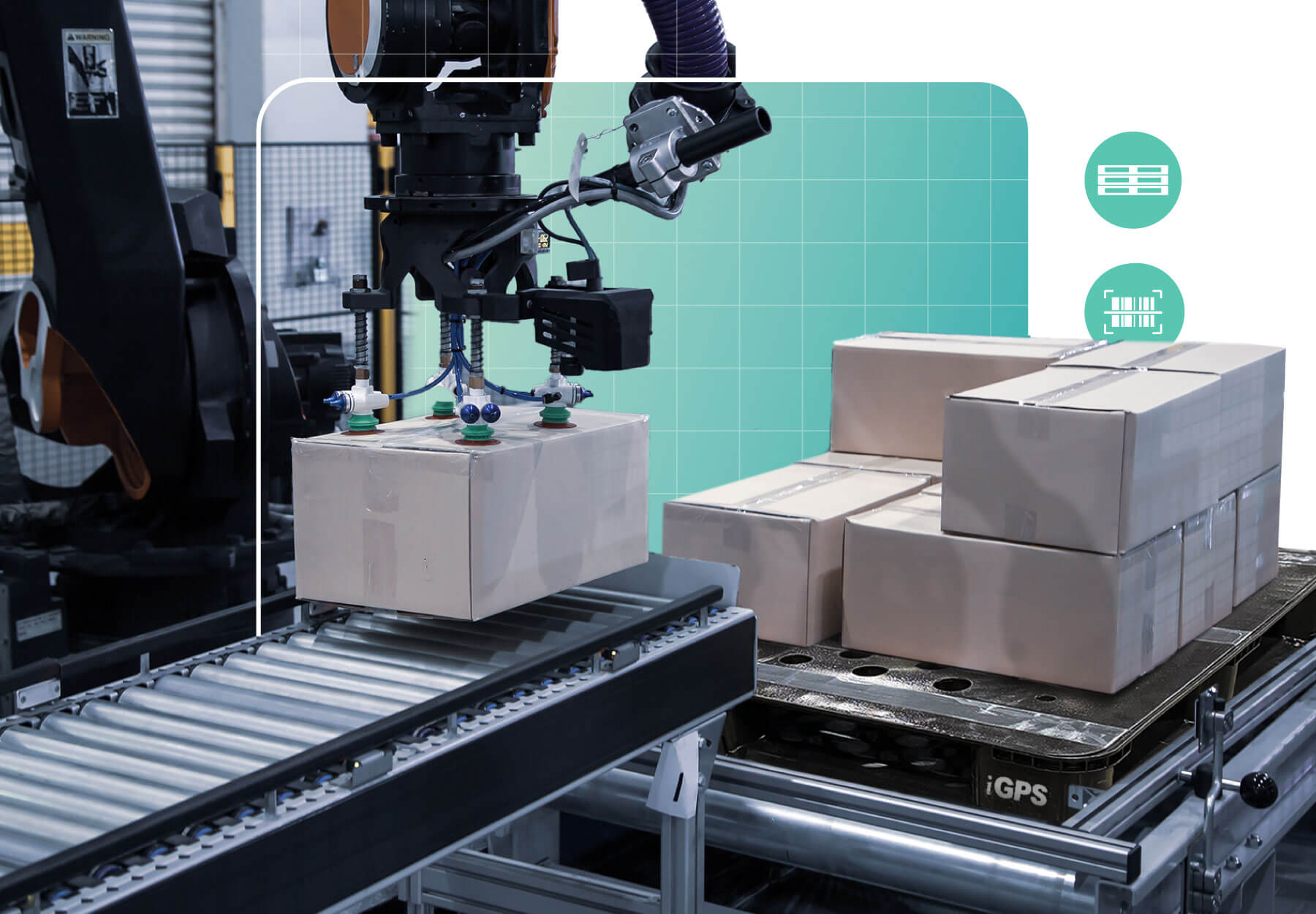
Pallet management is one example. Unlike transportation or warehousing, pallets move with every shipment throughout the distribution network. That means decisions about pallet ownership and management can influence transportation efficiency, warehouse productivity, automation performance, and product flow across the entire supply chain.
At iGPS Logistics, we’ve found that pallet pooling delivers the greatest value when both the service and the shipping platform are designed to improve the operation. A managed pooling network simplifies pallet logistics by eliminating pallet purchasing, recovery, repair, and storage, while standardized HDPE pallets help improve transportation efficiency, support automation, and provide consistent performance over more than 100 trips. Together, those advantages help organizations build supply chains that are more predictable, scalable, and prepared for long-term growth.
FAQs
Which Supply Chain Functions Can Be Outsourced?
Organizations can outsource a wide range of logistics and operational activities, including transportation, warehousing, order fulfillment, inventory management, manufacturing support, procurement support, reverse logistics, and pallet management. Many organizations take a selective approach, outsourcing specialized activities while keeping strategic responsibilities such as product development, customer relationships, and business planning in-house.
Can You Outsource Just Part Of Your Supply Chain
Yes. Many organizations outsource only the activities where specialized expertise, infrastructure, or technology provide the greatest operational value. For example, a company may manage manufacturing internally while using third-party providers for transportation, warehousing, or pallet pooling. This approach allows businesses to improve specific parts of their operation without changing their entire logistics strategy.
How To Choose The Right Outsourcing Partner?
Look beyond pricing when evaluating potential partners. Industry experience, geographic coverage, technology, customer support, scalability, and performance reporting all influence long-term success. The best partnerships are built on shared goals, clear communication, and a proven ability to support your operational requirements as your business grows.
When Should a Company Outsource Supply Chain Operations?
Companies often consider outsourcing when internal operations become difficult to scale, labor or warehouse capacity becomes constrained, costs continue to rise, or expansion creates new operational demands. Outsourcing can also provide access to specialized expertise or technology that would be costly or time-consuming to develop internally.
How Does Pallet Pooling Fit Into Supply Chain Outsourcing?
Pallet pooling is one example of outsourcing a specialized logistics activity. Instead of purchasing, storing, repairing, retrieving, and replacing pallets, companies rent pallets from a managed pool. The pooling provider is responsible for pallet delivery, retrieval, maintenance, and recycling, allowing businesses to simplify pallet management while maintaining a reliable supply of shipping platforms.
Does Supply Chain Outsourcing Reduce Costs?
It can, but cost savings are only one part of the equation. Outsourcing may reduce capital investments, labor requirements, facility costs, and ongoing management of specialized activities. Many organizations also benefit from improved efficiency, greater flexibility, and the ability to focus employees on strategic priorities that support long-term business growth.
Every outsourcing decision should help make the supply chain more efficient, consistent, and easier to manage. iGPS plastic pallet pooling supports that goal by combining durable HDPE pallets, embedded RFID technology, and a professionally managed pooling network that eliminates the need to purchase, recover, repair, and store shipping platforms. To learn how iGPS can help simplify pallet management and support a more efficient supply chain, call 1-800-884-0225, email switch@igps.net, or visit our contact page.