Key Takeaways
- Warehouse slotting optimization improves productivity without adding space, labor, or automation.
- Intentional slotting reduces travel time, congestion, and picking errors across warehouse operations.
- Labor shortages and rising costs make efficient slotting a critical cost-control strategy.
- Slotting accuracy depends on consistency in handling equipment, especially pallet dimensions and condition.
- Standardized plastic pallets and pallet pooling help slotting strategies stay effective over time.
Warehouse slotting optimization is one of the most effective ways to improve warehouse productivity without expanding space, adding labor, or investing in new automation. When inventory is placed intentionally—based on demand, movement, and workflow—warehouses move faster, pick more accurately, and operate at a lower cost.
As order volumes grow and fulfillment expectations tighten, slotting is no longer a secondary task. It is a core operational discipline that directly impacts labor efficiency, space utilization, safety, and service levels.
What is Slotting Optimization?
Slotting optimization is the process of strategically assigning inventory to specific storage locations within a warehouse to minimize travel time, reduce handling, and improve picking efficiency.
Rather than placing products wherever space is available, slotting uses operational data—such as order frequency, velocity, size, and handling requirements—to determine the most effective location for each SKU.
Effective slotting answers practical questions such as:
- Which items should be closest to pick paths?
- Which SKUs should be stored together?
- How should inventory move from receiving to outbound?
The objective is simple: place the right product in the right location to support faster, safer, and more predictable workflows.
The Optimal Approach to Slotting Optimization
Slotting optimization is not a one-time project. It is an ongoing process built on data, discipline, and regular review.
An effective approach typically includes:
- Analyzing order history and SKU velocity
- Grouping products by movement patterns and handling needs
- Aligning slot locations with pick paths and material flow
- Establishing re-slotting rules as demand shifts
The strongest slotting programs balance structure with flexibility. They avoid overly rigid layouts that cannot adapt to seasonality, promotions, or changes in customer demand.
Why Is It Important to Slot Your Warehouse?
Warehouse labor challenges continue to strain operations. In 2024, 43% of U.S. warehouses reported lost revenue due to staffing shortages.
Poor slotting creates hidden inefficiencies that compound daily. Extra forklift travel, double-handling, and congestion increase labor cost and slow fulfillment.
- Slotting optimization helps warehouses:
- Reduce travel time for pickers and forklifts
- Lower error rates caused by confusing layouts
- Improve throughput without increasing headcount
- Reduce congestion in high-traffic zones
- Support safer, more ergonomic work conditions
When inventory is poorly slotted, even experienced teams struggle to maintain speed and accuracy. Slotting brings consistency to daily operations.
Slotting Best Practices
High-performing slotting programs follow a few proven principles:
- Slot by velocity, not SKU count – Fast movers belong closest to pick paths
- Re-slot regularly – Quarterly reviews are common for high-velocity operations
- Group complementary SKUs – Items ordered together should be stored together
- Right-size slots – Oversized slots waste space; undersized slots slow handling
- Keep layouts simple – Over-engineered rules are difficult to sustain
Slotting works best when it reflects how work actually happens on the floor.
Key Benefits of Warehouse Slotting Optimization
Improved Picking Efficiency
Slotting reduces travel distance and decision-making during picks. When high-velocity items are easy to access, pickers complete more orders per hour with fewer errors and less fatigue.
Enhanced Space Utilization
Intentional slotting improves use of both floor and vertical space. Right-sized slots reduce wasted cube and help prevent congestion caused by awkward product placement.
Reduced Labor Costs
Labor is one of the largest warehouse cost drivers. Slotting reduces unnecessary motion, double-handling, and congestion—lowering labor cost per unit moved without sacrificing service.
Types of Slotting Strategies
Fixed Slotting
Each SKU has a permanent location. This approach is easy to train but less flexible when demand changes.
Random Slotting
Inventory is placed in any available location, typically guided by a WMS. While space-efficient, it requires accurate data and disciplined execution.
ABC Slotting
SKUs are categorized by velocity:
- A items: High-velocity, closest to pick paths
- B items: Moderate movement
- C items: Slow movers
ABC slotting is one of the most widely used and effective strategies.
Common Challenges in Warehouse Slotting Optimization
Labor shortages remain a persistent issue. One industry study found 37% of organizations reported significant workforce shortages, with 56% saying those shortages slowed warehouse operations.
Other common challenges include:
- Rapid demand or SKU mix changes
- Inaccurate or outdated inventory data
- Congestion caused by inconsistent pallet sizes or damaged platforms
- Resistance to change from operations teams
- Limited system visibility
Many slotting problems are not caused by layout design, but by variability in handling equipment. Consistency matters.
The Role of Plastic Pallets & Pallet Pooling in Warehouse Slotting Optimization
Slotting strategies depend on predictable dimensions, clear pick paths, and repeatable handling. When pallets vary in size, condition, or weight, even the best WMS and slotting software struggle to maintain accuracy.
Pallet Consistency Supports Slotting Accuracy
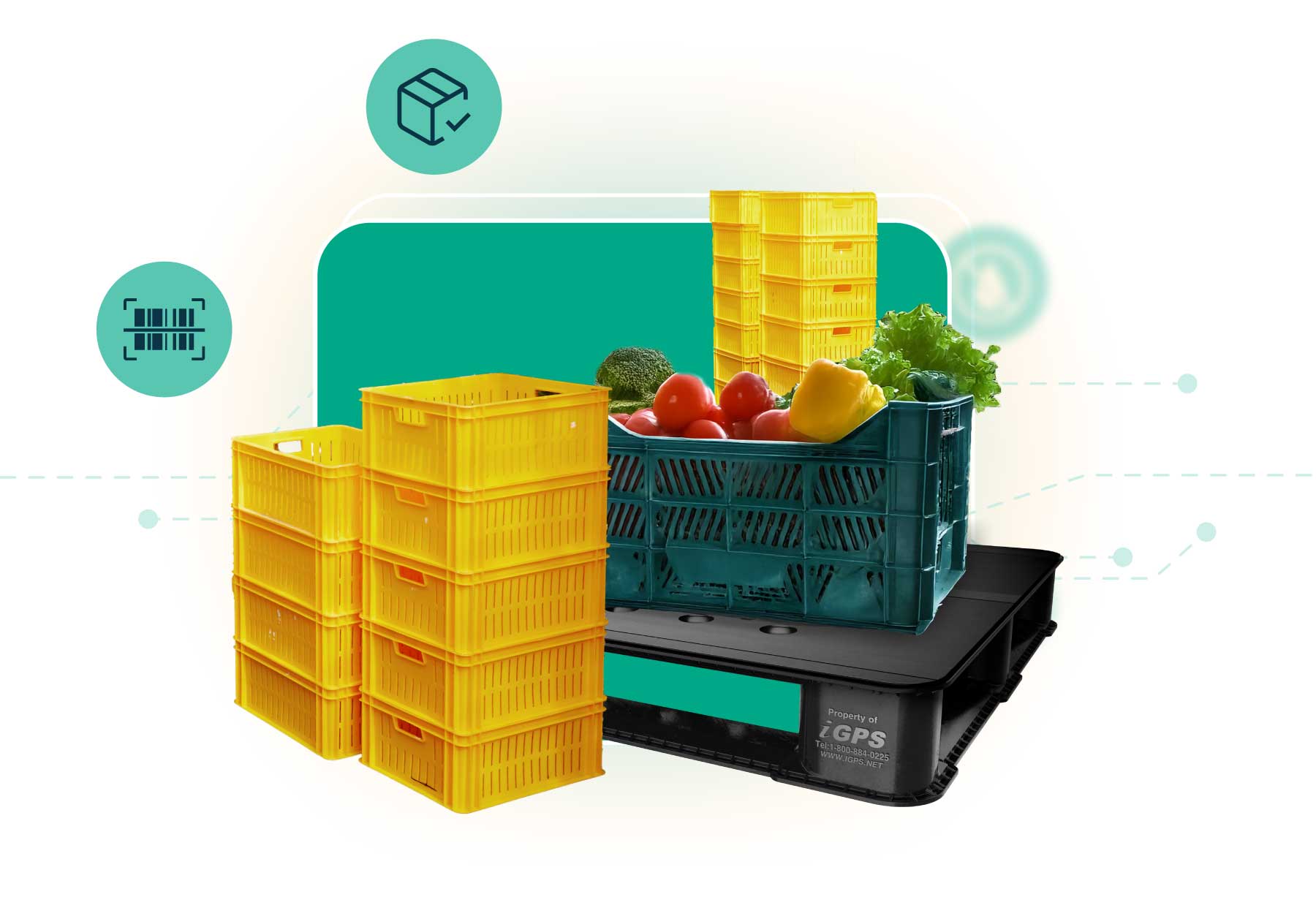
Plastic pallets provide uniform dimensions and stable performance. Slot sizes stay aligned, racks remain usable, and re-slotting caused by pallet damage is reduced.
Improved Velocity and Reduced Travel Time
Plastic pallets move smoothly through forklifts, conveyors, and pallet flow systems. Higher velocity reduces aisle congestion and improves picker productivity.
Cleaner Layouts and Better Space Utilization
Pallet pooling prevents empty pallet buildup. Fewer empties free space, keep aisles clear, and support accurate slotting.
Lower Labor Costs and Fewer Exceptions
Consistent pallets reduce double-handling and rework. Warehouse teams spend less time fixing issues and more time moving product.
Conclusion
Warehouse slotting optimization is a powerful lever for improving productivity, reducing labor costs, and maximizing space, without expanding facilities or adding headcount. But even the best slotting strategy depends on consistent execution on the floor.
Standardized pallets play a critical role in keeping slotting plans intact. When pallet dimensions, condition, and availability are predictable, warehouses maintain cleaner layouts, higher velocity, and more reliable performance as demand changes.
FAQ
How does warehouse slotting improve picking efficiency?
Warehouse slotting improves picking efficiency by reducing travel distance and simplifying decisions during the pick process. When fast-moving items are placed closer to pick paths and grouped logically, pickers spend less time walking or driving and more time completing orders.
Better slotting also reduces errors by making locations more intuitive and predictable.
How to improve warehouse efficiency with slotting optimization tools
Slotting optimization tools use order history, SKU velocity, and layout data to recommend better product placement. These tools help warehouses identify high-impact changes, simulate new layouts, and re-slot inventory with less disruption.
When paired with consistent handling equipment and standardized pallets, slotting tools deliver faster, more sustainable improvements.
How do pallets impact warehouse slotting optimization?
Pallets affect how products fit, move, and flow through the warehouse.
When pallets are damaged or inconsistent in size, slots no longer align with the planned layout. This creates wasted space, unstable stacks, and blocked aisles.
High-quality, consistent pallets support accurate slot dimensions, safer stacking, and smoother forklift movement. When pallets perform predictably, slotting plans stay intact and picking runs more efficiently.
Does pallet size consistency affect slotting accuracy?
Yes. Pallet size consistency is critical to slotting accuracy.
Even small differences in pallet width, height, or deck condition can cause overhang, misalignment, or wasted rack space.
Consistent pallet dimensions allow planners to design slots that fit correctly the first time. This improves space utilization, reduces re-slotting, and keeps pick paths clear and predictable.
How does pallet pooling support slotting optimization?
Pallet pooling supports slotting by removing variation and excess inventory.
Pooled pallets arrive in consistent condition, size, and weight. This allows slotting plans to stay stable over time instead of being adjusted for mixed pallet types.
Pooling also prevents empty pallet buildup. With fewer pallets cluttering staging and aisles, warehouses maintain cleaner layouts and more usable space for product movement.
How often should warehouse slotting be reviewed?
Warehouse slotting should be reviewed regularly.
Most operations benefit from a review every 6 to 12 months. High-volume or seasonal warehouses may review slotting quarterly.
Slotting should also be reassessed when product mix changes, demand shifts, or new equipment is added. Consistent pallets reduce how often re-slotting is needed by keeping layouts predictable.
Warehouse slotting performance is only as strong as the foundation it’s built on. iGPS plastic pallet pooling helps distribution centers maintain consistent pallet dimensions, cleaner layouts, and predictable material flow, supporting better slotting accuracy, higher inventory velocity, and stronger supply chain KPIs.
By removing pallet variability and excess empties, iGPS helps supply chain teams improve productivity, control labor costs, and gain a competitive advantage as volumes grow.
To learn how iGPS supports smarter slotting and more efficient warehouse operations, call 1-866-983-3874, email switch@igps.net, or visit the contact page.