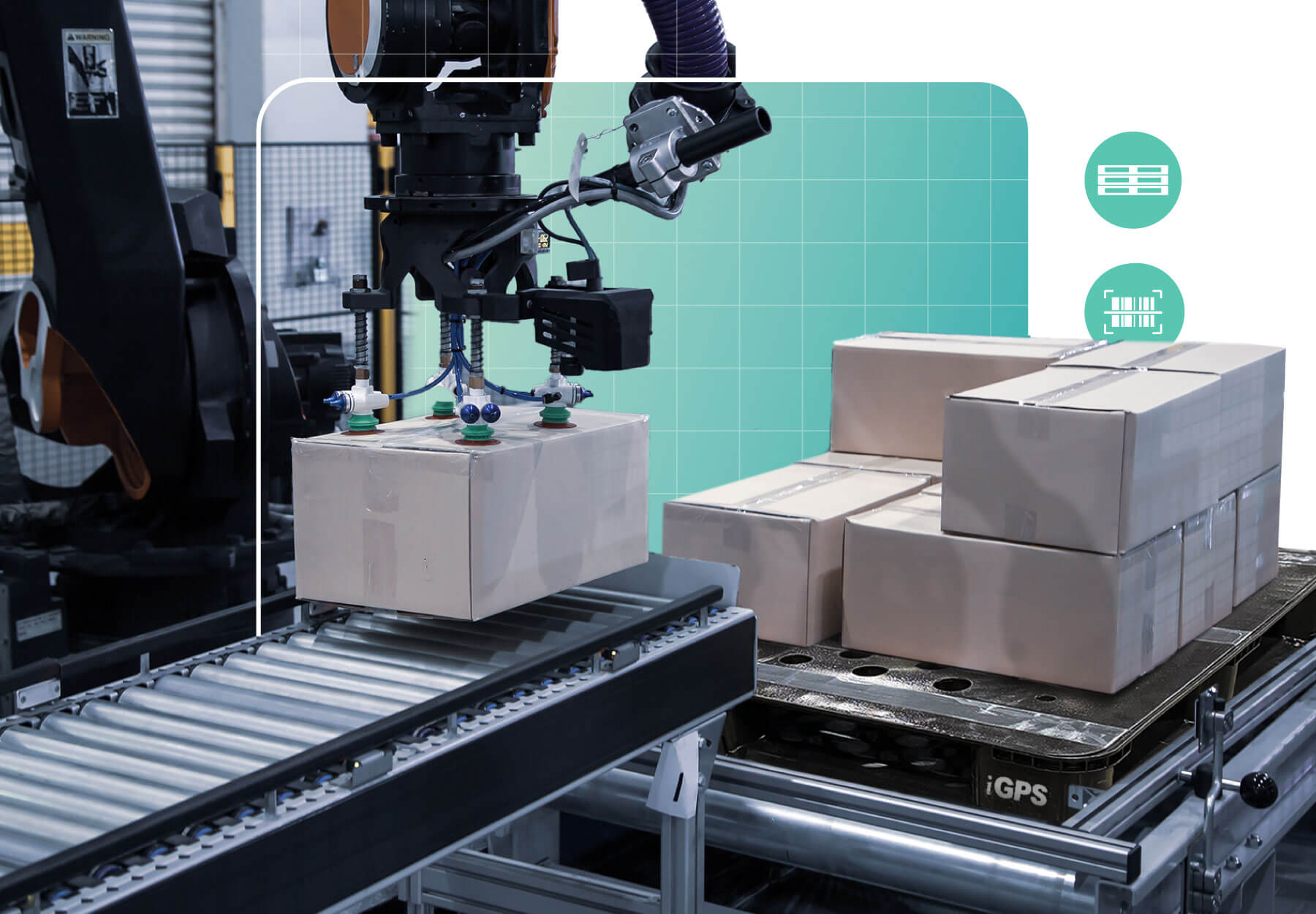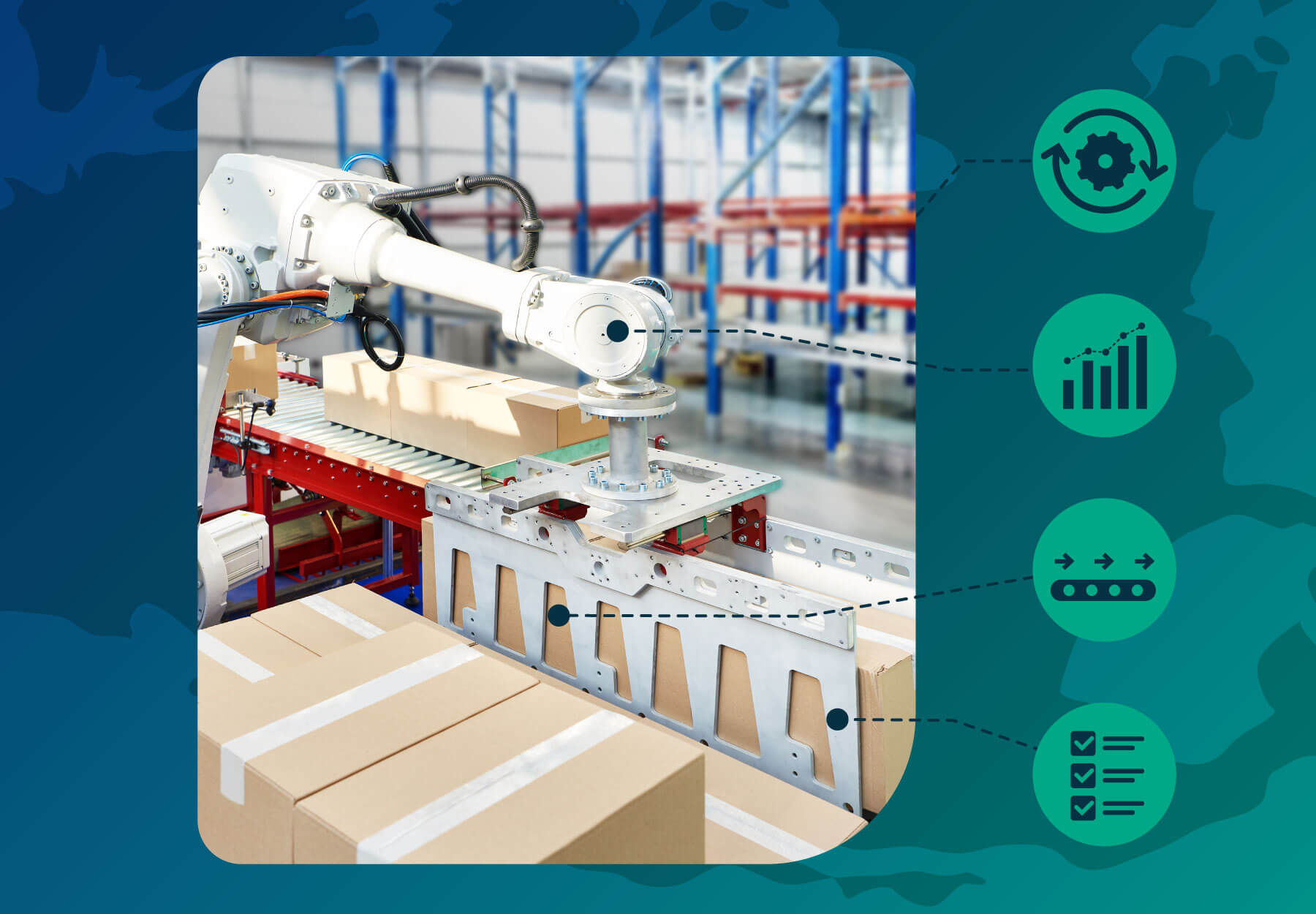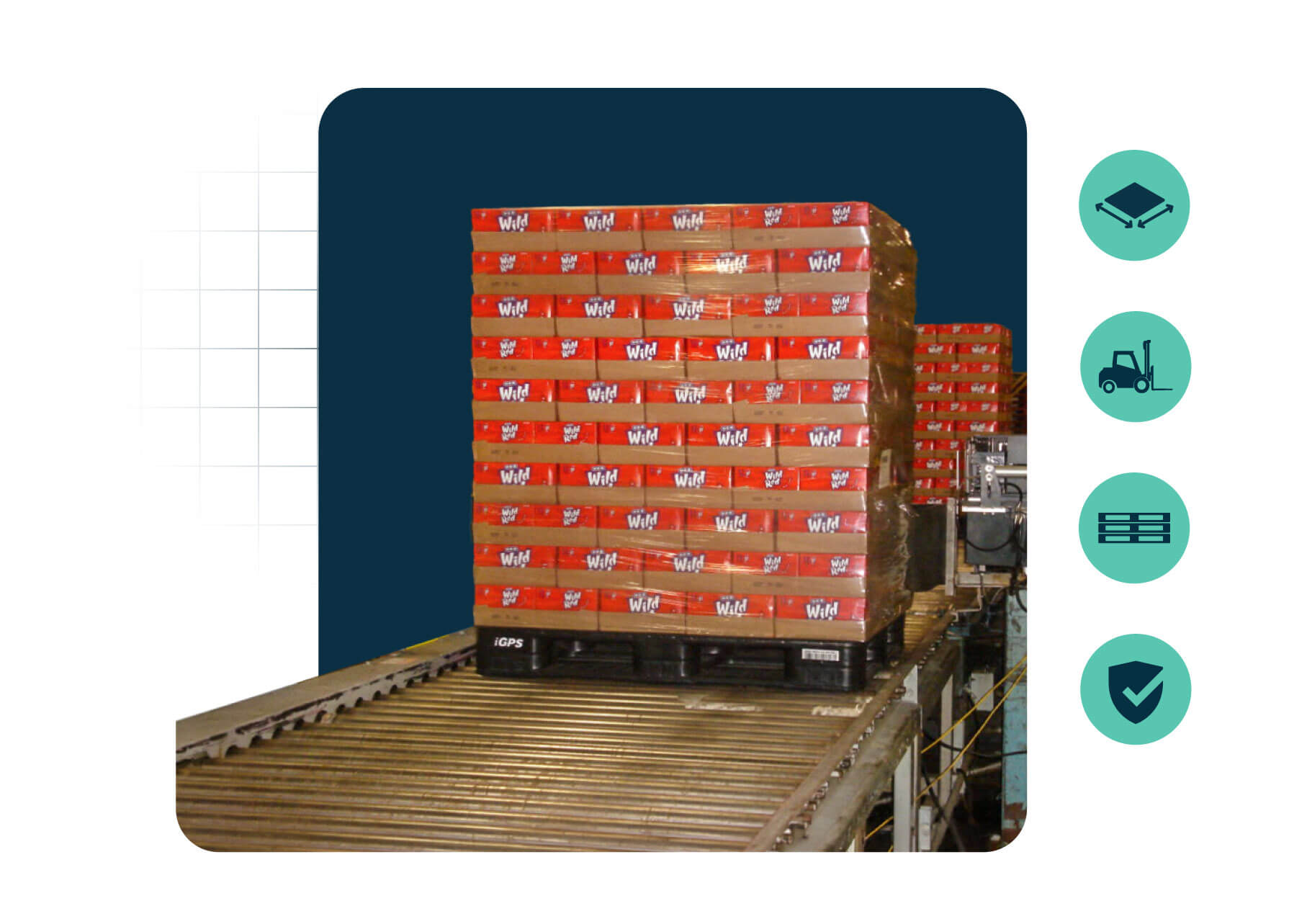
A pallet load can look secure on the warehouse floor and still shift, lean, or collapse once it starts moving. Forklift handling, conveyor transfers, braking, turns, and vibration all put additional forces on the load, increasing the risk of product damage, rejected shipments, and safety issues.
For warehouse and logistics teams, improving pallet load stability means looking at the complete unit load. Product placement, weight distribution, packaging, friction, load securing, and the pallet itself all affect how well a shipment holds together through handling and transport. Understanding how these factors work together can help operations build safer, more repeatable loads from the start.
Key Takeaways
- Pallet load stability must hold up through handling, storage, and transportation.
- Weight distribution, product placement, friction, and load securing all affect stability.
- Pallet dimensions, condition, deck design, and capacity influence how well a load is supported.
- Consistent plastic pallets help make load configurations more repeatable across high-volume operations.
- Pallet pooling helps extend standardized pallet performance across facilities and shipments.
What Causes Poor Pallet Stability?
Pallet load stability refers to how well a unit load stays secure and upright during storage, handling, and transportation. Several factors can make a load more likely to shift, lean, or collapse:
| Cause | What to Watch For |
|---|---|
| Poor pallet quality | Damage, uneven surfaces, or dimensional differences that affect support beneath the load. |
| Unbalanced weight distribution | Heavy products concentrated on one side or too high in the load, creating an off-center or top-heavy configuration. |
| Improper stacking patterns | Large gaps, overhang, unsupported edges, or a pattern that does not suit the product or packaging. |
| Insufficient friction | Products or layers that slide easily against each other or across the pallet deck. |
| Improper load securing | Too little containment, uneven stretch-wrap tension, or securing materials that do not hold the load to the pallet. |
| Environmental factors | Moisture, humidity, and temperature changes that affect packaging or pallet materials. |
Poor Pallet Quality
Damaged or uneven pallets can have broken components, excessive flex, or dimensional differences that change where products are supported and how weight is distributed across the deck. A load configuration developed around one pallet may perform differently when the platform underneath it is damaged or out of specification.
Unbalanced Weight Distribution
Top-heavy and off-center loads are more likely to lean or tip during handling. Keep heavier products lower when possible and avoid concentrating too much weight in one area.
Improper Stacking Patterns
A stacking pattern affects how weight and movement are transferred through the load. Poorly supported cases, misaligned layers, or large gaps can create weak points that allow individual products or entire sections of the load to shift during handling.
Insufficient Friction Between Products
Smooth cartons, bags, and shrink-wrapped products may slide between layers as the load moves. The same problem can occur between the bottom layer and the pallet deck.
Improper Load Securing
Stretch film, straps, and other cargo-securing materials help products move with the pallet as one unit. Poor tension or inadequate containment leaves more opportunity for individual products or entire layers to shift.
Environmental Factors
Wet or humid conditions can make a stable load less reliable. Corrugated cases may soften, and wood pallets can absorb moisture, swell, or warp, leaving products with less support. This is a common concern in cold storage, wet loading areas, and other places where pallets regularly encounter moisture.
7 Methods to Achieve Pallet Load Stability
Pallet load stability depends on controlling how weight is supported, distributed, and secured across the unit load. These seven methods address the main factors warehouse and packaging teams can control when building a load for storage, handling, and transportation.
| # | Method | What It Controls | Why It Matters |
| 1 | Set a safe load height | Center of gravity | Keeps tall loads more manageable during lifting, turning, and braking. |
| 2 | Stay within weight limits | Structural support | Keeps the load within the capacity of the pallet, racks, and handling equipment. |
| 3 | Choose the right stacking pattern | Product support | Helps cases support one another and resist movement. |
| 4 | Distribute weight evenly | Balance | Reduces leaning, shifting, and tipping during handling. |
| 5 | Use the pallet footprint effectively | Load configuration | Reduces unsupported product, overhang, and unnecessary space within the load. |
| 6 | Add anti-slip sheets when needed | Friction | Helps control sliding between products, layers, or the pallet deck. |
| 7 | Apply stretch wrap correctly | Containment | Helps the products and pallet travel as one unit. |
Keep a Safe Pallet Stacking Height
Taller loads have a higher center of gravity and can be harder to control during forklift movement, turns, or sudden stops. Set maximum heights based on the product, packaging strength, pallet capacity, equipment, and transportation requirements rather than one standard height for every shipment.
Don’t Exceed Pallet Weight Limits
Know which pallet rating applies. Static capacity covers a pallet at rest, dynamic capacity applies while it is being moved, and racking capacity applies when the pallet is supported in a rack.
The load must also stay within the limits of its packaging, racks, forklifts, conveyors, and other equipment it will encounter.
Choose the Right Stacking Pattern
Match the pattern to the product and packaging. Column stacking can preserve the compression strength of corrugated cases, while interlocking layers can provide more resistance to lateral movement.
Mixed or irregular loads may require a combination of patterns based on case size, weight, and packaging strength. The goal is to avoid unsupported edges and gaps that create weak points within the load.
Distribute Weight Evenly
Place heavier products toward the bottom and spread weight across the pallet. This keeps the center of gravity lower and avoids putting too much weight on one side or section of the deck.
Use the Pallet Footprint Effectively
Keep products within the pallet footprint when possible. Overhang leaves product edges unsupported and exposed to damage, while large gaps can give products more room to move.
Aim for a centered load that uses the available deck space without sacrificing support.
Add Anti-Slip Sheets
For products that tend to slide, anti-slip sheets or mats can increase friction between layers or between the first layer and the pallet deck.
They work best as part of a sound load configuration rather than as a fix for uneven weight distribution or poor product placement.
Apply Stretch Wrap
Stretch film is one of the most common tools for securing palletized loads, but using more film does not automatically improve containment. Effective pallet wrapping depends on tension, containment force, coverage, and attachment to the pallet.
Pay close attention to the base. A tightly wrapped load can still shift if it is not properly secured to the pallet.
The Effect of Pallet Choices on Load Stability
Good product placement and load securing can only do so much if the platform underneath the load is damaged, uneven, or unpredictable. The pallet determines where products are supported, how weight is carried, and how the finished load interacts with forklifts, racks, conveyors, and other equipment.
For warehouse teams building the same loads day after day, a known pallet size, deck surface, and load capacity make established configurations easier to repeat.
How Plastic Pallet Design Supports Load Stability
Plastic pallets can be molded to uniform dimensions and specifications, reducing variation at the base of the unit load. Several design characteristics can support more repeatable load building:
- Dimensions: A true 48 × 40-inch pallet makes it easier to repeat established case patterns and control overhang.
- Deck coverage: More surface area beneath the load provides support for cartons, bags, and other packaging.
- Structural design: Unibody construction supports pallet durability without the separate boards, blocks, and fasteners used in conventional wood pallets.
- Load ratings: Known static, dynamic, and racking capacities help teams match the pallet to how a load will actually be stored and moved.
- Moisture resistance: Plastic does not absorb water, helping the pallet maintain its size, weight, and shape in wet or humid conditions.
- Load-contact features: The iGPS Gen 6 pallet includes 88% top-deck coverage, thermoplastic elastomer strips for stacking and load safety, and a perimeter lip designed to support stretch-wrap application.
The operational impact can be measurable. One iGPS customer reported reducing retailer pallet rejections from as many as 20 per month to as few as zero after switching to plastic pallets, according to a 2024 Inbound Logistics report.
For warehouse and packaging teams, that kind of predictability makes established loading and securing practices easier to repeat.
How Pallet Pooling Extends That Consistency
Even a well-designed pallet loses some of its operational advantage if facilities regularly have to work around different pallet types, specifications, or conditions. A managed pallet pool provides a standardized shipping platform while shifting pallet recovery and maintenance to the pool operator.
| With a Managed Pallet Pool | What It Means for the Operation |
| Standard pallet specifications | Established load configurations can be built around a known platform. |
| Managed cleaning and repair | Helps keep damaged or out-of-spec pallets from becoming another variable in established load configurations. |
| Predictable pallet dimensions | Forklifts, conveyors, palletizers, racks, and other equipment have fewer pallet variables to accommodate. |
| Network availability and recovery | A common pallet standard can move through manufacturing plants, distribution centers, warehouses, and receiving locations. |
For high-volume operations, fewer pallet variables can mean fewer adjustments to established load configurations and equipment settings.
Pallet design establishes the standard. Pooling helps maintain it across loads and facilities.
Conclusion
For warehouse and distribution teams, repeatability is just as important as getting one load right. A process that depends on constant adjustments becomes harder to manage as shipment volumes increase and more loads move through conveyors, palletizers, racks, forklifts, and transportation networks.
The pallet is one variable operations can standardize. Plastic pallets provide consistent dimensions, structural performance, and resistance to moisture, while a managed pallet pool helps carry those standards across facilities and shipments. When the platform is predictable, teams have a better foundation for applying the loading and securing practices that keep products stable through handling and transport.
Load stability should be built into the operation, not solved one shipment at a time.
FAQ
How should items be arranged on a pallet for maximum load stability?
Place heavier products near the bottom and distribute weight evenly across the pallet. Keep the load centered and minimize gaps and overhang. Choose a stacking pattern suited to the product and packaging, then secure the finished load to the pallet so it can withstand handling and transport without excessive shifting.
How much weight can a pallet withstand?
Pallet capacity varies by material, design, condition, and how the pallet is being used. Check the manufacturer’s ratings for static, dynamic, and racking capacity rather than relying on a general pallet weight limit. For example, iGPS plastic pallets are rated for 30,000 pounds static, 5,000 pounds dynamic, and 2,800 pounds when edge-racked. The load must also remain within the limits of racks and handling equipment.
What OSHA requirements apply to pallet storage and load stability?
OSHA does not set one universal maximum height for palletized loads. Under 29 CFR 1910.176(b), materials stored in tiers must be stacked, blocked, interlocked, and limited in height so they remain stable and secure against sliding or collapse. Warehouses should also follow applicable rack capacities, equipment limits, and workplace-specific safety requirements when determining safe pallet storage and load configurations.
How is pallet load stability tested or measured?
Pallet load testing assesses how a complete unit load responds to forces it may encounter during handling and transport. Transport simulation can reproduce vibration, impacts, acceleration, deceleration, compression, and other distribution hazards. The International Safe Transit Association (ISTA) provides standardized test procedures for packaged products and unitized loads, including testing designed to evaluate load stability under horizontal impacts.
Do plastic pallets provide more consistent load stability?
Plastic pallets can make load stability more consistent by providing a uniform platform from one load to the next. Their molded construction maintains its dimensions and shape and does not absorb moisture, reducing some of the variability that can occur with wood pallets due to damage, repairs, moisture exposure, or differences in construction. This is especially useful for high-volume and automated operations that rely on repeatable load patterns, palletizer settings, wrapping applications, and material-handling equipment.
Take one variable out of pallet load stability with durable, consistent iGPS plastic pallets built for reliable performance across your supply chain. For more information, call 1-800-884-0225, email a specialist at switch@igps.net, or visit our contact page.