Key Takeaways:
- As we look ahead, a key supply chain trend isn’t just the implementation of new technology, it’s a shift in how supply chain managers use these tools to make decisions and be more strategic.
- Today’s supply chain managers spend much of their time fighting fires and solving problems; AI-driven systems will help with decision making and reducing operational burdens.
- Control towers will become more sophisticated, moving from monitoring to actively orchestrating supply chain operations.
- Manual spreadsheets will be used less often for planning in favor or dynamic systems that can make decisions as new information comes in.
- The role of procurement will also evolve, as AI-driven systems can manage tasks in days that would usually take weeks.
- This will allow procurement leaders to focus on strategic tasks like building relationships and identifying opportunities for long-term value.
Supply chain management has always been about finding the right balance between efficiency, resilience, and cost. While that hasn’t changed, what is changing is how swiftly and effectively this balance can be achieved. As we look ahead, not only into 2026 but through the next five years, the key trend isn’t simply the implementation of more AI-driven technology.
It is a fundamental shift in how we use these tools to make decisions and how human supply chain managers will be able to operate more strategically in meeting customer needs. People won’t vanish from the equation, but their work will be different. They will function more proactively, working with systems that act less like tools and more like trusted decision-making partners.
Greater Autonomy
Today’s supply chain managers are firefighters. They spend an outsized amount of time chasing late shipments, expediting materials, and resolving forecasting problems. They often find themselves reacting to disruptions after damage has already been done and slowdowns have already occurred. It can be stressful and repetitive work.
In the coming years, AI-driven systems will absorb more of this operational burden. They will monitor transportation activities and supplier performance in real time, often making automatic adjustments within predefined guardrails — for example, deciding to optimize a transportation route or replenish inventory levels without a human manager even needing to get involved.
As a result, human supply chain managers will shift from tactical problem-solvers to strategic operators. Their focus will move toward enhanced customer and supplier relationships. Whereas they previously may have asked themselves, “How do we fix this problem today?” they will instead be able to ask, “How can we prevent this entire category of issues from occurring?”
The Role of Control Towers
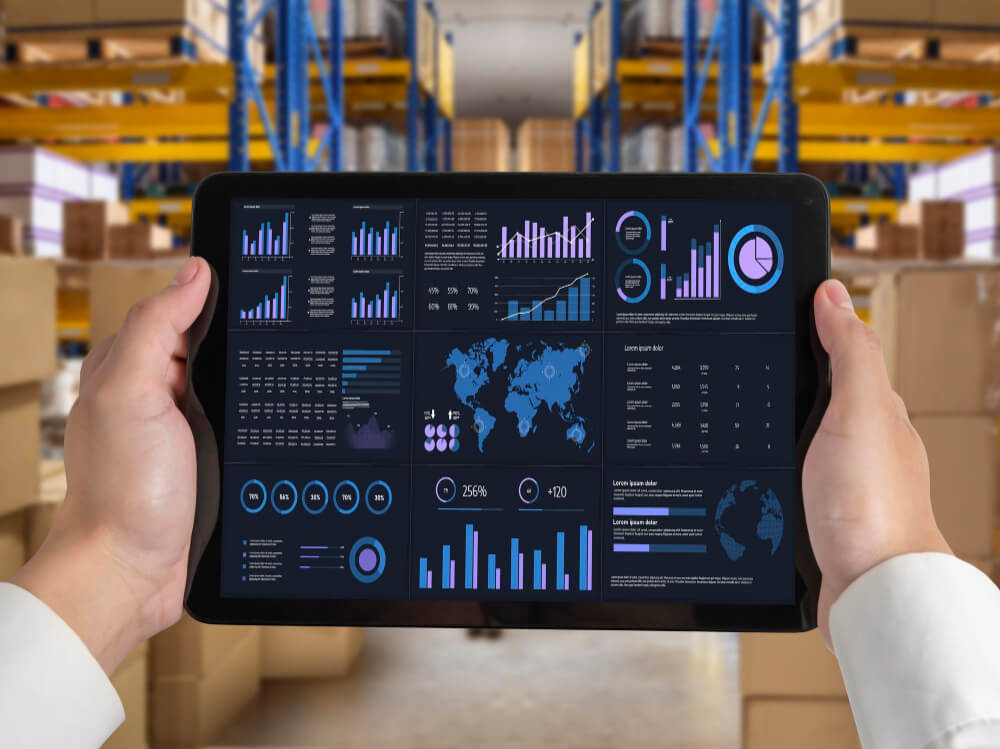
While control towers are already a familiar concept in supply chain management, their capabilities are continually evolving. Today’s dashboards primarily provide visibility: for example, showing inventory levels or shipment status information, providing insights that humans can use to make decisions. In the coming years, control towers will become more autonomous and predictive. They will move beyond monitoring to actively orchestrating operations across planning, execution, and response.
Among the most transformative advancements will be the evolution of scenario planning. Today, AI-driven tools can simulate changes and their ripple effects, such as adding a new distribution center, or adjusting transportation modes. A forecast that is perhaps 70 percent correct can be helpful, but it leaves room for doubt about how the real-world scenario will play out. The coming years will bring enhanced data quality, richer historical datasets, and more sophisticated planning models that allow control towers to test numerous scenarios simultaneously with much greater confidence. Supply chain managers will be able to evaluate risks and what-if situations before changes and investments are made in reality, not after.
The Decline of the Spreadsheet
Spreadsheets have been both the backbone and a significant bottleneck in supply chain management for decades. Demand forecasting, capacity planning, and safety stock calculations are still frequently managed through complex, manually maintained files using what is essentially decades-old technology. The dependence on spreadsheets is now beginning to fade, and this will only accelerate. Tasks that rely on structured logic and large volumes of organized data are prime candidates for autonomous systems. As new data arrives, AI-driven systems can forecast demand, update plans, and make decisions without needing a human to tweak a formula or refresh a pivot table.
This doesn’t mean that spreadsheets will vanish overnight, but perhaps they will function more as ad-hoc tools for analysis and internal communication, while the real work is done in more sophisticated platforms that make decisions dynamically. This isn’t only about efficiency. It’s about reducing errors and freeing up supply chain professionals to use their insights and instincts to add more value.
The Evolution of Procurement
Procurement is and will remain a critical supply chain function, but its execution will look different in the coming few years. So much of today’s procurement workload is process-intensive: issuing RFPs, collecting bids, comparing terms, and managing routine contract negotiations. Large portions of this process can be automated.
Imagine, for example, an AI engine that can instantly identify qualified suppliers, issue bid requests, receive and analyze responses, and present detailed recommendations in minutes rather than weeks, without the need for lengthy email chains. Such a shift does not eliminate procurement professionals; it elevates them to focus on strategic sourcing, more productive supplier relationships, and more nuanced risk management. Negotiation can become more focused on relationship-building and long-term value rather than feeling continuously transactional.
Looking Ahead
So much of the supply chain is automated today. But the future of supply chain management isn’t about the nonstop race to replace people with robots. It’s about redefining the core business areas where human expertise matters the most. As autonomy increases, control towers evolve, cumbersome spreadsheets fade away, and supply chains become more efficient and resilient. The organizations that embrace these changes will be rewarded not only with operational success, but with the confidence that their supply chains are prepared to weather the challenges and uncertainties of tomorrow.
Frequently Asked Questions
What are key future supply chain trends?
Future supply chains are becoming more digital, resilient, and regionally diversified. Companies are investing in AI-driven forecasting, real-time visibility, and nearshoring to reduce risk. Sustainability is no longer optional, with pressure to track carbon footprints and ethical sourcing. Flexibility is king, because global disruptions have made “just in time” feel a bit too just-incredibly-stressful.
How are supply chains becoming more autonomous?
Supply chains are becoming more autonomous through AI, machine learning, and advanced automation that reduce human intervention in planning and execution. Systems can now forecast demand, reroute shipments, and manage inventory in real time. Robotics and autonomous vehicles are transforming warehouses and transport. Humans still oversee decisions—but more as pilots than rowers.
What are the hottest supply chain management topics?
The hottest topics include supply chain resilience, AI and predictive analytics, and end-to-end visibility. Sustainability and ESG reporting are major priorities, as are cybersecurity risks tied to digital supply networks. Talent shortages and upskilling are also front and center. In short, everyone wants smarter, greener, safer supply chains—preferably yesterday.