Key Takeaways
- Most pharma supply chain issues trace back to variability and limited visibility—not isolated failures.
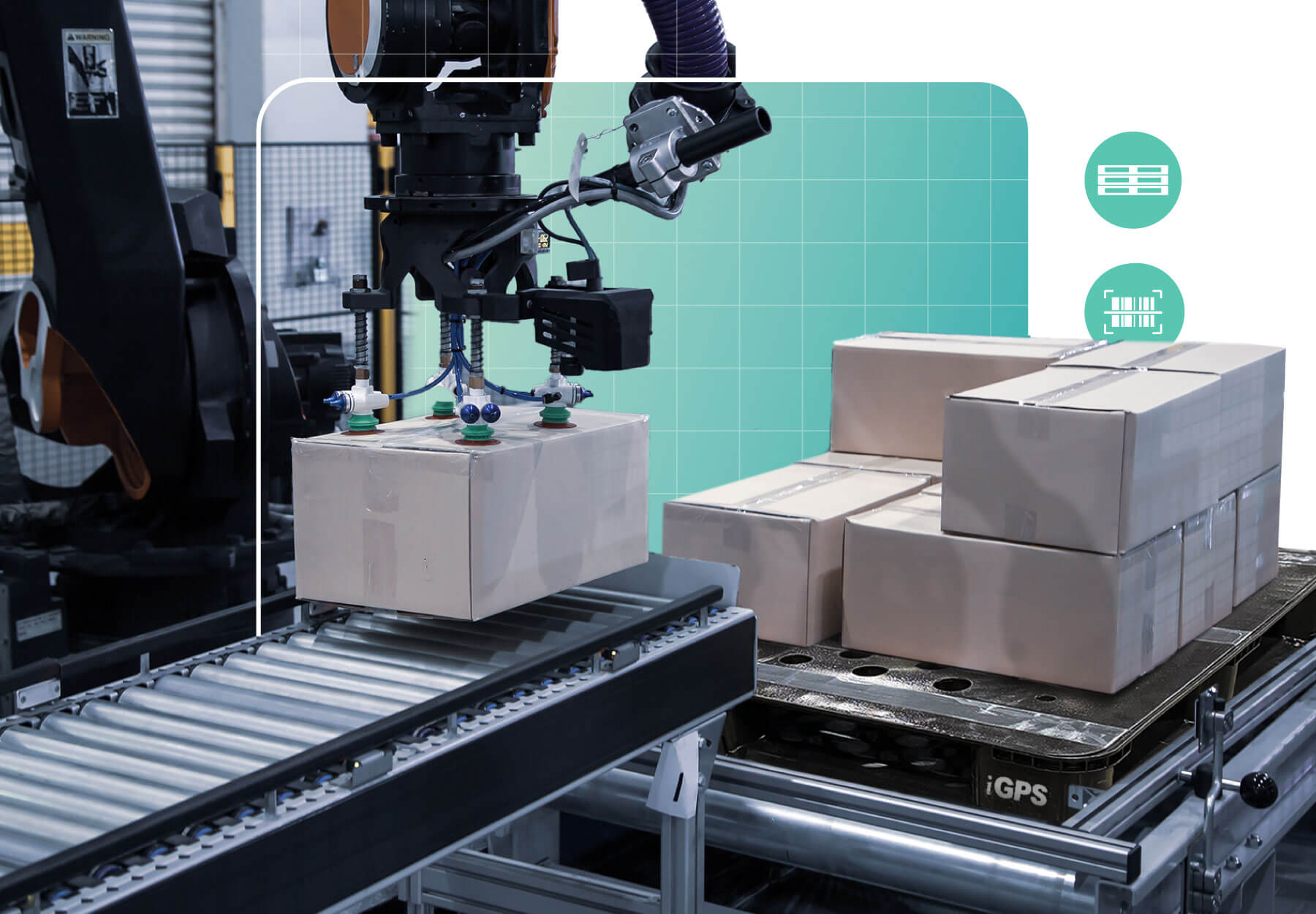
- Plastic pallets reduce contamination risk, improve consistency, and support automation across facilities.
- RFID-enabled pallets improve tracking by capturing movement at key points across the network.
- Pallet pooling removes internal handling, storage, and repair, reducing cost and operational friction.
- Standardizing pallet systems improves flow, lowers product loss, and strengthens control across the supply chain.
How Does the Pharma Supply Chain Work?
The pharma supply chain connects sourcing, production, and distribution into one controlled system. It starts with raw material and active pharmaceutical ingredient (API) sourcing, often from global suppliers in regions like China and India. Materials move into pharmaceutical manufacturing, where products are produced, packaged, and prepared for distribution.
From there, products move through temperature-controlled logistics networks, including third-party logistics providers, distribution centers, and pharmacies. Each step requires strict regulatory compliance, controlled handling, and precise inventory management to protect patient safety.
Unlike other supply chains, this system must operate with tight coordination across the value chain. Expiration dates, cold chain requirements, and regulatory oversight leave little margin for error. When breakdowns occur—whether in handling, visibility, or timing—they don’t stay isolated.
The FDA notes that drug shortages can stem from manufacturing and quality problems, delays, and product discontinuations. In practice, those disruptions often extend beyond production, affecting inventory planning, distribution timing, and patient access across the network.
9 Common Challenges in the Pharmaceutical Supply Chain and How to Overcome Them
Pharmaceutical supply chain challenges rarely show up in one place. They surface across sourcing, production, storage, distribution, and recovery—often at the points where control breaks down.
Most issues trace back to two things: variability in physical handling and limited visibility across the network. When those aren’t controlled, delays, product loss, and compliance risk follow.
The table below outlines the most common failure points across the pharmaceutical supply chain and why they matter.
Where Pharma Supply Chains Break Down
| Challenge | Where It Breaks + Impact |
|---|---|
| Regulatory Compliance & Sanitation | Inconsistent cleaning and porous materials increase contamination risk and audit exposure |
| Cold Chain Integrity | Delays at transfer points lead to temperature excursions and product loss |
| Traceability & Counterfeiting | Gaps in tracking reduce visibility and increase security risk |
| Product Damage & Waste | Load instability and pallet variability drive product loss and rework |
| Rising Operational Costs | Manual handling and inefficiencies increase cost per shipment |
| Inventory Imbalance & Expiration Risk | Misaligned stock levels lead to waste, stockouts, and working capital strain |
| Network Fragmentation Across Facilities | Inconsistent processes slow movement and increase errors across sites |
| Throughput Constraints in Distribution & Automation | Inconsistent inputs reduce throughput and create bottlenecks |
| Reverse Logistics & Asset Recovery | Manual tracking and empty returns add cost and operational friction |
Regulatory Compliance & Sanitation
Pharmaceutical operations require strict control over cleanliness and handling conditions. Sanitation issues often stem from the materials and surfaces used throughout storage and transport.
Where it breaks:
- Handling platforms that absorb moisture or contaminants
- Inconsistent cleaning processes across facilities
- Storage environments with limited control over exposure
Why it matters:
- Increases contamination risk for pharmaceutical products
- Creates compliance gaps during audits
How to improve control:
- Use non-porous, cleanable materials across handling systems
- Standardize sanitation practices across facilities
- Reduce variability in assets that move between sites
Cold Chain Integrity
Temperature-controlled logistics must be maintained from production through delivery. Breakdowns typically occur at transition points where product sits or is transferred.
Where it breaks:
- Loading docks and staging areas
- Delays during cross-facility transfers
- Inconsistent handling in temperature-sensitive environments
Why it matters:
- Leads to product loss and spoilage
- Introduces compliance risk tied to temperature excursions
How to improve control:
- Minimize dwell time between movements
- Use materials that perform consistently in cold environments
- Align handling practices across all facilities
Traceability & Counterfeiting
Traceability depends on accurate, consistent data capture across the entire supply chain. Gaps in tracking create blind spots.
Where it breaks:
- Manual data entry or delayed updates
- Disconnected systems between partners
- Lack of standardized tracking across facilities
Why it matters:
- Limits chain visibility and response time
- Increases exposure to counterfeit or diverted products
How to improve control:
- Capture movement data at defined scan points
- Use serialized assets to support tracking
- Align data systems across the network
Product Damage & Waste
Damage often results from inconsistent handling and unstable loads. Variability in pallet condition or design can increase risk during movement.
Where it breaks:
- Mixed pallet quality across shipments
- Automated systems that rely on consistent dimensions
- Load instability during transport
Why it matters:
- Drives product loss and disposal
- Increases rework and operational cost
How to improve control:
- Standardize load platforms across facilities
- Improve load stability during handling and transport
- Reduce variability in materials used for movement
Rising Operational Costs
Recent logistics coverage in Forbes highlights the need to balance efficiency and cost control as transportation and delivery pressures continue. For pharmaceutical operations, that same pressure applies inside the network: every extra touch, delay, return trip, or storage requirement adds cost without improving product movement.
Where it breaks:
- Manual handling and rework
- Inefficient movement across facilities
- Storage and management of empty assets
Why it matters:
- Increases cost per shipment
- Reduces overall supply chain efficiency
How to improve control:
- Reduce manual processes tied to asset management
- Improve asset utilization across the network
- Identify inefficiencies through better visibility
Inventory Imbalance & Expiration Risk
A 2025 GAO report notes that FDA has identified manufacturing quality issues as a primary cause of drug shortages. For pharma operations, that risk shows up downstream as inventory imbalance: too much product in one location, not enough in another, and tighter windows before expiration.
Where it breaks:
- Misaligned stock levels across facilities
- Limited visibility into inventory across the network
- Over-reliance on safety stock without adjustment
Why it matters:
- Leads to expired product and waste
- Creates stockouts in other parts of the supply chain
How to improve control:
- Improve visibility into inventory levels across facilities
- Align supply chain planning with real-time data
- Reduce excess inventory where movement is slow
Network Fragmentation Across Facilities
Pharmaceutical supply chains often span multiple sites, partners, and regions. Each may operate differently.
Where it breaks:
- Inconsistent processes across manufacturing sites and 3PLs
- Lack of standardization in handling materials
- Poor coordination between partners
Why it matters:
- Slows movement across the network
- Increases variability and errors
How to improve control:
- Standardize materials and processes across facilities
- Align partners around consistent operating practices
- Reduce variation in how products move through the system
Throughput Constraints in Distribution & Automation
Automation improves efficiency, but only when inputs are consistent. Variability in handling platforms can disrupt flow.
Where it breaks:
- Inconsistent pallet dimensions or condition
- Equipment interruptions due to debris or damage
- Bottlenecks in high-volume distribution centers
Why it matters:
- Reduces throughput and system efficiency
- Increases downtime and delays
How to improve control:
- Use consistent, automation-compatible load platforms
- Reduce variability in materials entering automated systems
- Maintain clean, stable surfaces for equipment interaction
Reverse Logistics & Asset Recovery
Managing pallet returns and asset recovery adds complexity across the supply chain. This is often handled manually.
Where it breaks:
- Tracking empty pallets across facilities
- Coordinating returns from customers or partners
- Storage of unused assets
Why it matters:
- Adds transportation and labor cost
- Increases storage requirements
- Creates inefficiencies in asset utilization
How to improve control:
-
- Reduce internal handling of pallet returns
- Improve tracking of assets across the network
- Shift toward systems that keep assets in continuous circulation
Why These Challenges Persist—and What Improves Control
Many of these challenges come back to inconsistent materials and limited visibility across the network.
Control improves when handling platforms are standardized and movement is trackable. That’s where pallet design and pooling models begin to impact performance across the pharmaceutical supply chain.
Hygiene Risks: Why Wood Pallets Fail Pharma Standards
Wood pallets can introduce variability into pharmaceutical logistics operations. Because wood is porous, it may absorb moisture, chemicals, or bacteria during use. Over time, this can create sanitation challenges in environments that require strict hygiene control.
Wood pallets can also vary in size and condition. Splinters, loose boards, or debris may impact product stability and equipment performance.
In pharmaceutical environments, these risks create exposure in:
- Clean storage areas
- Temperature-controlled facilities
- Automated systems that depend on consistent dimensions
This is not a failure of all wood pallets, but variability in material and condition can make standardization difficult at scale.
Improved Traceability with RFID-Enabled Shipping Platforms
Traceability improves when physical movement is tied to digital records. RFID-enabled pallets support this by providing a unique pallet ID that can be captured at defined scan points across the supply chain.
RFID provides:
- Location visibility when scanned
- Movement history across facilities
- Load association when paired with product data
This allows supply chain teams to:
- Track assets across the network
- Identify delays or bottlenecks
- Improve inventory accuracy
RFID does not monitor pallet condition and does not track products unless linked through system data. Its value comes from consistent scanning and integration into existing systems.
How to Overcome These Challenges with Plastic Pallet Pooling
Many pharmaceutical supply chain challenges are tied to inconsistency in handling materials and lack of control across facilities.
Plastic pallet pooling addresses both.
In a pooled system:
- Pallets are rented instead of owned
- The provider manages delivery, retrieval, cleaning, and repair
- Assets remain in circulation across a shared network
This reduces:
- Storage of empty pallets
- Internal labor tied to sorting and repair
- Variability in pallet condition
At the same time, pooling improves:
- Consistency across facilities
- Chain visibility through serialized tracking
- Alignment between logistics partners
For pharma companies, this creates a more controlled operating environment without adding internal complexity.
The Advantages of Plastic Pallets in the Pharma Industry
Plastic pallets support pharmaceutical supply chains by reducing handling variability and improving system performance.
Key advantages include:
- Consistent dimensions
Support automated systems and reduce handling issues - Non-porous surfaces
Do not absorb moisture, chemicals, or bacteria - Durability
Maintain performance across repeated use cycles - Lighter weight
Improve handling and reduce transportation strain - Clean design
No nails or splinters; lower risk of debris - Automation compatibility
Smooth surfaces reduce equipment disruption
These characteristics support an efficient supply chain by improving flow, reducing damage, and maintaining hygiene standards.
Conclusion
The pharmaceutical industry is facing unique challenges—pressure to move faster, stay compliant, and reduce risk at the same time. The constraint isn’t effort—it’s control.
Variability in handling, inconsistent pallet performance, and gaps in visibility create friction across the system. That friction shows up in real ways: product loss, delays at transfer points, audit exposure, and higher operating costs.
Control improves when handling, movement, and materials are consistent at every step.
Standardized plastic pallets reduce variability in storage, transport, and automation. Non-porous surfaces support sanitation in regulated environments. Embedded RFID enables tracking, improving visibility across the network. A pooled model removes the burden of ownership, reducing labor, storage, and recovery costs while keeping assets in circulation.
These supply chain strategies strengthen supply chain resilience, improve performance across facilities, and reduce the total cost of business tied to handling, damage, and inefficiency.
FAQs
What are the biggest challenges in the pharmaceutical supply chain today?
The biggest challenges include regulatory compliance, cold chain management, limited visibility, product damage, and rising operational costs. These issues often occur across multiple parts of the supply chain and require coordinated solutions.
How do pallet choices impact pharmaceutical safety?
Pallet materials affect sanitation, load stability, and handling consistency. Inconsistent or porous materials can increase contamination risk and disrupt controlled environments, which directly impacts patient safety.
Why is traceability important in pharma logistics?
Traceability supports compliance, inventory accuracy, and product security. It allows teams to track movement across the supply chain and respond quickly to disruptions or risks.
How does automation help solve pharma supply chain issues?
Automation improves consistency and reduces manual handling. Systems like conveyors and AS/RS rely on uniform load platforms to maintain flow and reduce errors.
Can pallet pooling reduce pharma shipping costs?
Pallet pooling can reduce costs by eliminating asset ownership, lowering labor tied to pallet management, and improving asset utilization across the network.
How do pharmaceutical companies improve supply chain visibility?
Visibility improves through standardized tracking systems, RFID-enabled assets, and better data integration across facilities. Capturing movement at defined points allows teams to monitor flow and respond to delays more quickly.
Why are plastic pallets preferred in pharmaceutical logistics?
Plastic pallets provide consistent dimensions, non-porous surfaces, and compatibility with automation systems. These features support sanitation, reduce product damage, and improve reliability in controlled environments.
Pharma companies working to reduce product loss, improve flow, and lower total cost of business are adopting iGPS plastic pallets through a pooled network. Standardized, non-porous pallets improve handling consistency and support sanitation, while pooling reduces labor, storage, and asset management costs across facilities.
To learn more, call 1-800-884-0225, email switch@igps.net, or visit our contact page.