Key Takeaways
- Supply chain resilience depends on visibility, standardization, and faster recovery planning
- Disruptions now spread quickly across suppliers, transportation networks, and regions
- Standardized plastic pallets help reduce operational variability and automation downtime
- Pallet pooling improves continuity by maintaining pallet availability across the network
- Embedded RFID supports better traceability, inventory accuracy, and operational visibility
The last several years exposed how quickly operational flow can break down when transportation networks tighten, suppliers miss production targets, or weather events shut down key regions. Rising transportation costs, labor volatility, and ongoing inventory balancing pressures continue to challenge supply chain operations across North America.
Disruption has remained persistent across global supply networks. According to McKinsey’s 2024 Global Supply Chain Leader Survey, nine in ten supply chain leaders reported experiencing supply chain challenges in 2024, including transportation instability, regional conflict, weather events, and supplier disruptions.
For many organizations, supply chain resilience is no longer treated as a backup strategy. It has become part of daily operational planning focused on maintaining continuity, reducing friction, and recovering faster when disruption occurs.
A Quick Definition of Supply Chain Resilience
Supply chain resilience is the ability to maintain operational continuity and recover quickly during disruptions such as transportation delays, labor shortages, supplier instability, and natural disasters.
Supply chain resilience refers to the ability of a supply chain to anticipate, respond to, and recover from disruptions while maintaining operational continuity.
That includes natural disasters, transportation delays, labor shortages, supplier instability, cyber incidents, and sudden shifts in demand.
Building supply chain resilience involves more than adding inventory or finding secondary suppliers. Strong operations rely on coordinated planning, standardized processes, reliable equipment, and systems that improve visibility across the entire supply chain.
A resilient supply chain allows companies to adapt quickly without creating excessive cost, confusion, or operational downtime.
The Core Pillars of a Resilient Supply Chain
Most resilience strategies are built around a few operational fundamentals. Companies that maintain flow during disruption typically have stronger visibility, more consistent processes, diversified sourcing strategies, and better operational data.
| Pillar | Operational Focus | How It Supports Resilience |
|---|---|---|
| Visibility Across the Network | Tracking inventory, shipments, assets, and operational flow | Helps teams identify issues earlier and respond faster |
| Standardization | Consistent equipment and processes across facilities | Reduces variability, downtime, and handling disruptions |
| Supplier Diversification | Expanding sourcing and supplier strategies | Lowers dependency on a single supplier or region |
| Technology and Data | Operational data, analytics, automation, and forecasting tools | Improves planning, response time, and decision-making |
Visibility Across the Network
Visibility refers to how well companies can track inventory, shipments, assets, and operational activity across facilities and trading partners. It has become a major factor in disruption recovery speed. According to Anvyl’s 2025 State of Supply Chain Report, companies with high supply chain visibility were nearly five times more likely to recover from disruptions in under a week compared to organizations with low visibility.
Limited visibility slows response times during disruption. Operations teams cannot adjust routing, inventory allocation, or production planning if information is delayed or incomplete.
Strong visibility supports a resilient supply chain by helping companies:
- Monitor shipment and transportation status in real time
- Track inventory levels across facilities
- Identify bottlenecks and delays earlier
- Improve warehouse and dock coordination
- Support faster operational decision-making
- Reduce manual tracking and reconciliation work
- Improve communication across supply chain partners
Many organizations now rely on RFID, transportation management systems, warehouse management software, and analytics platforms to improve visibility across the network.
Standardization
Standardization creates consistency across transportation, warehousing, and material handling operations.
Variation in pallet quality, dimensions, or equipment performance can create friction inside automated systems and increase operational delays during periods of instability.
Standardization supports resilience by helping companies:
- Reduce conveyor jams and equipment interruptions
- Improve automation reliability
- Maintain more predictable warehouse flow
- Simplify handling and storage processes
- Reduce product damage during transport
- Improve labor efficiency across facilities
- Create more consistent operational performance
This becomes especially important inside grocery, beverage, manufacturing, and pharmaceutical environments where throughput and consistency directly affect operational continuity.
Supplier Diversification
Many supply chain disruptions now spread beyond a single facility or supplier. Weather events, port congestion, geopolitical instability, and regional manufacturing slowdowns can quickly affect inventory flow across the network.
As a result, companies are putting more focus on supplier diversification and regional flexibility. According to a 2024 Gartner survey, 73% of organizations had added or removed production locations within the previous two years as companies adjusted their networks to improve flexibility and reduce operational risk.
Diversification helps companies avoid overdependence on a single supplier, sourcing region, or transportation lane. When one part of the network experiences pressure, operations have more options to keep product moving.
That supports resilience by helping organizations:
- Reduce exposure to regional disruptions
- Maintain supply during shortages or transportation delays
- Create backup sourcing options
- Improve procurement flexibility
- Support more stable production planning
- Shorten recovery time during disruption events
Many organizations are also combining diversification strategies with nearshoring and contingency planning to reduce transportation complexity and improve response speed across North American operations.
Technology and Data
Technology helps operations teams respond faster, improve planning accuracy, and maintain better control across the network.
Modern supply chain systems generate operational data that supports forecasting, inventory planning, transportation management, and disruption response.
Technology and data support resilience by helping companies:
- Improve demand forecasting accuracy
- Monitor operational performance more effectively
- Identify patterns and emerging risks earlier
- Support predictive analytics and scenario planning
- Improve inventory management decisions
- Strengthen transportation coordination
- Reduce manual reporting and data entry delays
Many organizations are also investing in automation and artificial intelligence to streamline operations and improve response times during periods of disruption.
How Supply Chain Resilience Works
Supply chain resilience works by reducing operational weak points before disruption occurs and improving recovery speed when pressure hits the network.
A resilient operation combines planning, visibility, standardized systems, and coordinated response across suppliers, transportation providers, warehouses, and distribution facilities.
A Simple Framework for Supply Chain Resilience
| Operational Area | What Companies Put in Place | Operational Outcome |
|---|---|---|
| Planning | Safety stock, contingency planning, diversified sourcing | Reduces exposure during shortages and delays |
| Visibility | RFID, tracking systems, operational data, analytics | Improves response speed and decision-making |
| Standardization | Consistent pallets, handling systems, automation compatibility | Reduces variability and operational friction |
| Transportation Coordination | Alternative routing, carrier flexibility, network planning | Maintains product flow during disruption |
| Automation & Technology | Predictive analytics, AI forecasting, warehouse automation | Improves planning accuracy and operational efficiency |
How Resilient Operations Respond to Disruption
When disruption occurs, resilient supply chains are designed to:
- Identify operational issues earlier
- Maintain inventory accuracy across facilities
- Adjust transportation routing quickly
- Shift sourcing when supplier issues arise
- Reduce dependency on manual processes
- Maintain warehouse throughput during labor shortages
- Improve communication across supply chain partners
- Recover faster without major operational shutdowns
The Role of Technology
Technology plays a growing role in resilience planning and operational recovery.
Many organizations now use supply chain technologies to:
- Analyze transportation and demand trends
- Improve forecasting accuracy
- Monitor supplier performance
- Identify bottlenecks earlier
- Support predictive analytics and scenario planning
- Improve inventory management decisions
- Maintain real-time operational visibility
Artificial intelligence and automation are also helping operations teams reduce delays caused by manual reporting, inconsistent workflows, and fragmented operational data.
Why System Consistency Matters
Strong resilience depends on how well systems work together under pressure.
Equipment consistency, transportation coordination, inventory accuracy, and standardized material handling processes all affect recovery speed during disruption events. Small operational inefficiencies often become much larger problems when the network is under strain.
How Pallet Pooling Enhances Operational Continuity
Operational continuity is the ability to keep products moving through production, warehousing, and distribution during disruption events.
That includes transportation delays, labor shortages, severe weather, equipment downtime, and unexpected demand shifts.
| Operational Challenge | How Pooling Helps Support Continuity |
|---|---|
| Pallet shortages | Shared network helps maintain pallet availability across facilities |
| Transportation disruption | Pool operators reposition pallets across the network |
| Labor constraints | Reduces internal sorting, repair, and recovery work |
| Automation downtime | Standardized pallets improve handling consistency |
| Excess empty pallet storage | Reduces need to store large pallet inventories |
| Equipment variability | Consistent pallet dimensions support stable warehouse flow |
| Product movement delays | Managed supply helps keep outbound shipments moving |
Why Pooling Supports Resilience
Under a pallet pooling model, companies rent pallets from a shared network instead of purchasing, retrieving, repairing, and replacing equipment internally.
The pool provider manages:
- Pallet supply and redistribution
- Retrieval and recovery
- Inspection and repair
- Cleaning and recycling
That structure helps companies maintain access to consistent pallet supply without carrying large empty inventories across facilities.
The Role of Standardized Plastic Pallets
Standardized plastic pallets help improve operational consistency across warehouse and transportation systems by supporting:
- More reliable automation flow
- Reduced conveyor interruptions
- Better load stability
- Cleaner warehouse environments
- Improved handling efficiency
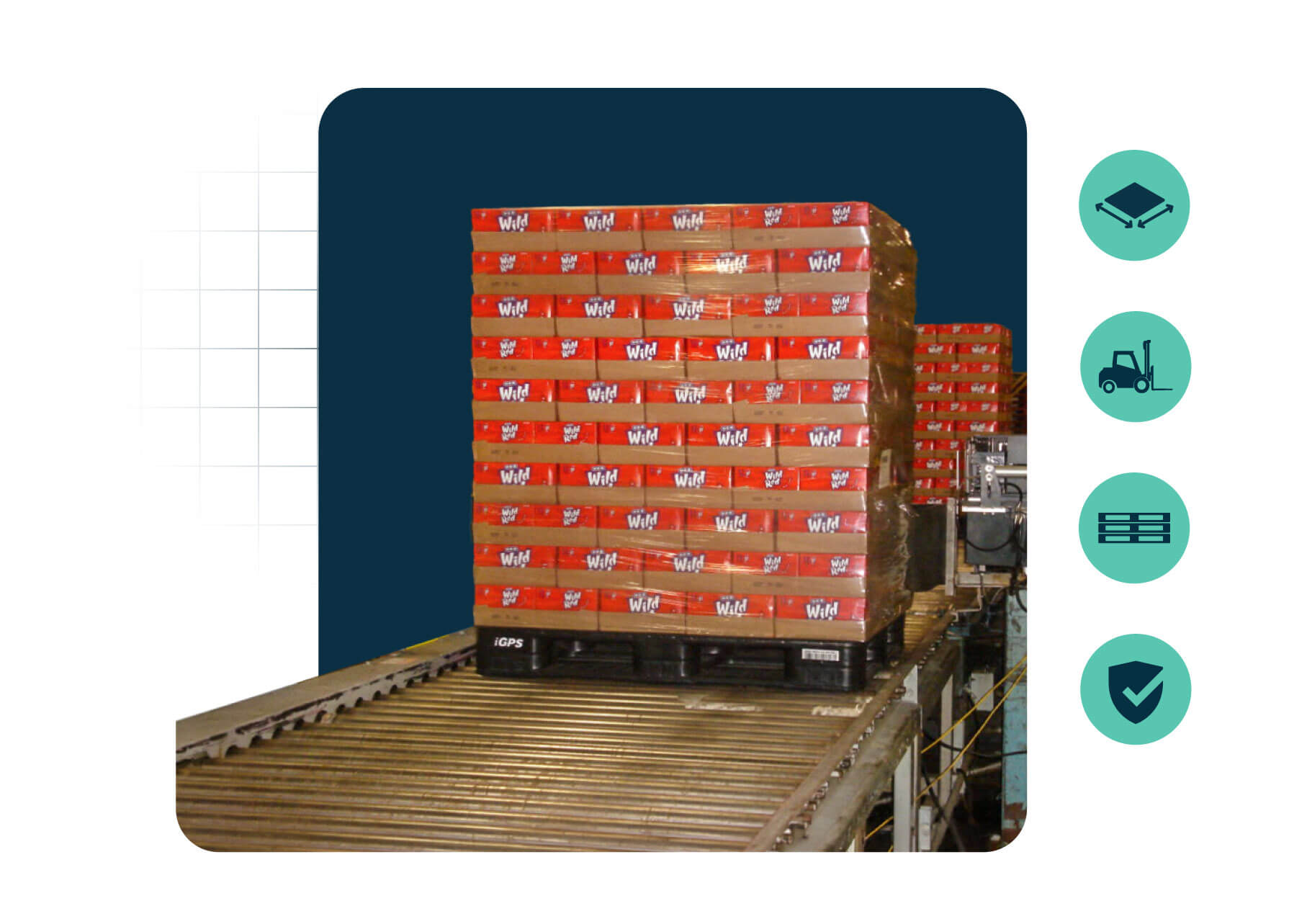
iGPS pallets include embedded RFID tags and serialized IDs that support pallet-level traceability across defined scan points. Consistent 48×40 dimensions and lighter overall weight also help improve handling efficiency across distribution networks.
Top 6 Benefits of a Resilient Supply Chain
1. Faster Recovery From Disruption
Operations recover more quickly when contingency planning, alternate sourcing, and standardized processes are already established.
Recovery speed directly affects transportation cost, service levels, and customer satisfaction.
2. Better Visibility and Control
Improved supply chain data allows operations teams to identify potential issues earlier and respond with greater accuracy.
Visibility also improves communication across facilities, suppliers, and transportation providers.
3. Reduced Operational Risk
Building resilience helps reduce the risk associated with shortages, transportation instability, weather events, and supplier delays.
Organizations can continue operating even when part of the network experiences pressure.
4. Improved Operational Efficiency
Consistent processes and standardized handling systems help streamline movement throughout the network.
That includes warehouse flow, transportation coordination, inventory management, and dock operations.
5. Greater Agility
Agile supply chains can adapt quickly when demand changes or supply conditions shift unexpectedly.
Flexibility has become increasingly important as forecast accuracy remains difficult across many industries.
6. Stronger Competitive Position
Companies with stronger resilience strategies often maintain better service consistency during disruptions.
That operational stability can create a measurable competitive advantage during periods of market volatility.
Leveraging RFID for Risk Mitigation
RFID helps improve pallet visibility and operational traceability across production, warehousing, and distribution networks.
Embedded RFID tags capture pallet movement at defined scan points, creating a digital movement history tied to a unique pallet ID.
| RFID Capability | Operational Benefit |
|---|---|
| Pallet-level tracking | Improves asset visibility across facilities |
| Serialized pallet IDs | Supports traceability and movement history |
| Scan-point event recording | Helps identify bottlenecks and delays |
| Load association | Improves inventory accuracy and reconciliation |
| Operational movement data | Supports faster response during disruption events |
RFID supports resilience by helping operations teams:
- Monitor pallet flow across the network
- Improve inventory accuracy
- Reduce manual tracking and reconciliation
- Identify operational slowdowns earlier
- Improve visibility during disruption events
- Support faster operational decision-making
Combined with automation systems and analytics platforms, RFID data helps support stronger operational planning and risk mitigation efforts.
Conclusion
Supply chain resilience has shifted from contingency planning to daily operational strategy. Companies are under growing pressure to maintain flow despite transportation instability, labor shortages, supplier disruptions, and rising operating costs.
That is pushing many organizations to focus more heavily on visibility, standardization, automation compatibility, and network flexibility across their operations.
Pallet systems play a larger role in that effort than many companies realize. Consistent pallet availability, standardized equipment, and pallet-level traceability all affect warehouse flow, transportation efficiency, and recovery speed during disruption events.
For many supply chain leaders, resilience is no longer about reacting faster after disruption occurs. The focus is increasingly on building systems that create less operational friction before disruption happens.
FAQs
What is the difference between supply chain agility and resilience?
Agility focuses on how quickly operations can respond to change. Resilience focuses on maintaining continuity and recovering from disruption. Strong supply chain management strategies often require both.
Why is equipment standardization important for resilience?
Standardized equipment improves consistency across warehouse operations, transportation systems, and automation processes. That helps reduce handling variability, equipment downtime, and operational delays during periods of instability.
How does pallet pooling reduce supply chain disruption?
Pooling provides access to a managed pallet network without requiring companies to maintain large internal inventories or repair operations. The model helps support continuity during shortages, transportation delays, and unexpected spikes in demand.
What role does IoT play in supply chain resilience?
IoT-connected systems help improve visibility by collecting operational data from equipment, facilities, and transportation assets. That information supports faster response times and stronger operational planning.
How can companies measure their supply chain resilience?
Many organizations track recovery speed, inventory accuracy, lead time stability, supplier performance, transportation reliability, and service continuity during disruption events. Those metrics help identify operational vulnerabilities and improvement opportunities.
How do plastic pallets support supply chain resilience?
Plastic pallets support resilience through consistent dimensions, automation compatibility, and improved durability across warehouse and transportation operations. Their standardized design helps reduce handling variability, equipment interruptions, and product damage during periods of operational pressure.
Why is visibility important in supply chain resilience?
Visibility helps operations teams identify delays, inventory issues, and transportation disruptions earlier. Better visibility improves decision-making, supports faster response times, and helps companies maintain operational continuity during disruption events.
Companies focused on strengthening supply chain resilience turn to iGPS plastic pallets for consistent performance, embedded RFID tracking, and reliable pooled availability. Standardized pallets and built-in traceability help reduce operational friction and maintain visibility across the network without added internal handling or recovery processes. For more information, call 1-866-557-0184, email switch@igps.net, or visit our contact page.