Key Takeaways
- Warehouse cube utilization measures how effectively a facility uses its total available space within the building, not just floor space.
- Improving cube utilization requires disciplined layout planning, slotting strategy, inventory control, and the right storage systems.
- Maximizing vertical space, tightening aisle width, and deploying automation can significantly increase storage capacity without expanding the warehouse footprint.
- Consistent pallet dimensions support tighter rack spacing, reliable load placement, and better compatibility with automation.
- Plastic pallet pooling reduces pallet variability, lowers the need for empty pallet storage, and supports long-term warehouse space optimization.
What Is Warehouse Cube Utilization?
Warehouse cube utilization measures how much of the total available space within your facility is actively used for storage. Cube utilization is the total storage volume used divided by the building’s full cubic capacity, expressed as a percentage.
Most operators focus on floor space; high-performing teams evaluate vertical space, rack height, and total storage capacity. An operation may show high floor occupancy while leaving upper rack levels underutilized space.
Warehouse space utilization reflects layout and storage discipline, slotting strategy, pallet selection, and inventory management practices. Leaders track current cube utilization to understand how effectively they use every square foot across the operational space.
How To Measure Warehouse Cube Utilization
Start by calculating total available space within the building. Multiply length × width × clear height to determine the full cubic capacity.
Next, measure the volume occupied by inventory storage. Include rack systems, mezzanine levels, and high-density storage systems; exclude aisles, staging zones, and non-storage areas.
Divide used cube storage by total available space, then convert to a percentage. This figure becomes your utilization rate or capacity utilization rate.
Example: A 200,000-square-foot building with a 30-foot clear height offers 6 million cubic feet. If inventory occupies 3.6 million cubic feet, the warehouse utilization ratio equals 60 percent.
Track this metric over time. Compare by zone, product family, and season to identify lower utilization pockets and wasted space.
Strategies to Improve Cube Utilization in the Warehouse
Improving cube utilization requires layout and storage discipline, process alignment, and the right storage solutions. Senior supply chain leaders focus on sustainable gains rather than short-term compression that harms warehouse efficiency.
The Role of the Physical Platform in Cube Utilization
Most cube utilization initiatives focus on rack configuration, aisle width, and storage systems. The physical load base also affects storage density and vertical clearance.
Variations in pallet dimensions can require larger safety gaps between rack levels. Over time, inconsistent platforms reduce usable cubic capacity and limit how tightly beams can be set.
Standardized plastic pallets maintain consistent sizing and structural stability. That dimensional reliability supports tighter rack spacing, predictable load placement, and better compatibility with warehouse automation systems.
When leaders evaluate storage volume and capital efficiency, pallet performance should be part of the equation.
Hidden Space Loss: Empty Pallet Storage
Empty pallet storage often consumes significant floor space inside the warehouse. Ownership models require buffer inventory to manage loss, damage, and seasonal demand swings.
Stacks of idle pallets reduce available storage capacity and shrink the space allocated to revenue-generating inventory. This hidden footprint directly affects overall warehouse utilization.
Plastic pallet pooling reduces the need to store large volumes of empty pallets on-site. The pooled pallet network shifts retrieval, repair, and recycling to the provider which helps free space and improve warehouse space optimization without expanding the building.
Maximize Vertical Space
Maximizing vertical space increases storage density without expanding the facility footprint. Evaluate clear height and adjust rack levels to safely capture unused airspace.
Install higher rack beams, add mezzanine structures, or implement narrow-aisle configurations where appropriate. Confirm material handling equipment can reach upper positions safely and consistently.
Vertical expansion often delivers immediate gains in available storage capacity.
Optimize Layout & Aisles
Warehouse layout drives movement, travel time, and available storage locations. Review aisle width, slot placement, and pick paths to reduce wasted space.
Narrower aisles paired with compatible lift equipment can unlock significant cube storage. Rebalancing fast-moving SKUs closer to shipping areas also improves warehouse operations while freeing prime rack positions.
Optimizing warehouse space requires balancing access, safety, and throughput.
Implement Dynamic Slotting & Zoning
Dynamic slotting aligns product velocity with storage location. High-turn items move to accessible positions; slow movers shift upward or deeper into storage zones.
A data-driven slotting model supports improving cube utilization while strengthening inventory management. Zoning by temperature, handling requirements, or product type also enhances warehouse efficiency.
Regular audits prevent drift and protect long-term space utilization.
Use High-Density Storage
High-density storage systems increase storage efficiency by reducing aisle count and consolidating SKUs. Options include drive-in rack, push-back rack, pallet flow systems, and cube storage blocks.
These storage solutions work well for stable SKU profiles and larger lot sizes. Evaluate product mix and replenishment frequency before implementation.
High-density approaches maximize warehouse cube utilization where product variety is manageable.
Leverage Technology (WMS)
A warehouse management system supports better space management through real-time visibility of available storage space. The system tracks open slots, directs putaway, and monitors inventory accuracy.
Accurate data reduces empty positions and prevents double-booking of storage locations within rack systems. Leaders use WMS reporting to track utilization ratio trends and identify underperforming zones.
Technology enables consistent optimizing warehouse practices across shifts and teams.
Adopt Automated Systems (AS/RS)
An automated storage and retrieval system increases storage density and reduces human travel. AS/RS solutions leverage vertical space and narrow aisle configurations to maximize storage capacity within the existing warehouse footprint.
Automation supports high utilization by stacking loads safely at greater heights and improving picking accuracy. These systems also reduce labor strain and increase throughput consistency.
Industry reporting from SupplyChainBrain highlights how automation enables higher warehouse throughput and improved storage density within existing facilities, reinforcing the link between automation investment and cube efficiency.
Warehouse automation requires capital planning; long-term gains often justify the investment for high-volume operations focused on improving cube utilization.
Proper Pallet & Product Management
Pallet selection directly affects storage efficiency. Consistent dimensions and structural reliability support tighter rack spacing and predictable load placement.
Plastic pallets with unibody construction maintain shape under load and resist moisture absorption. In contrast, wood platforms can vary in size or absorb moisture, which may impact rack fit and automation performance.
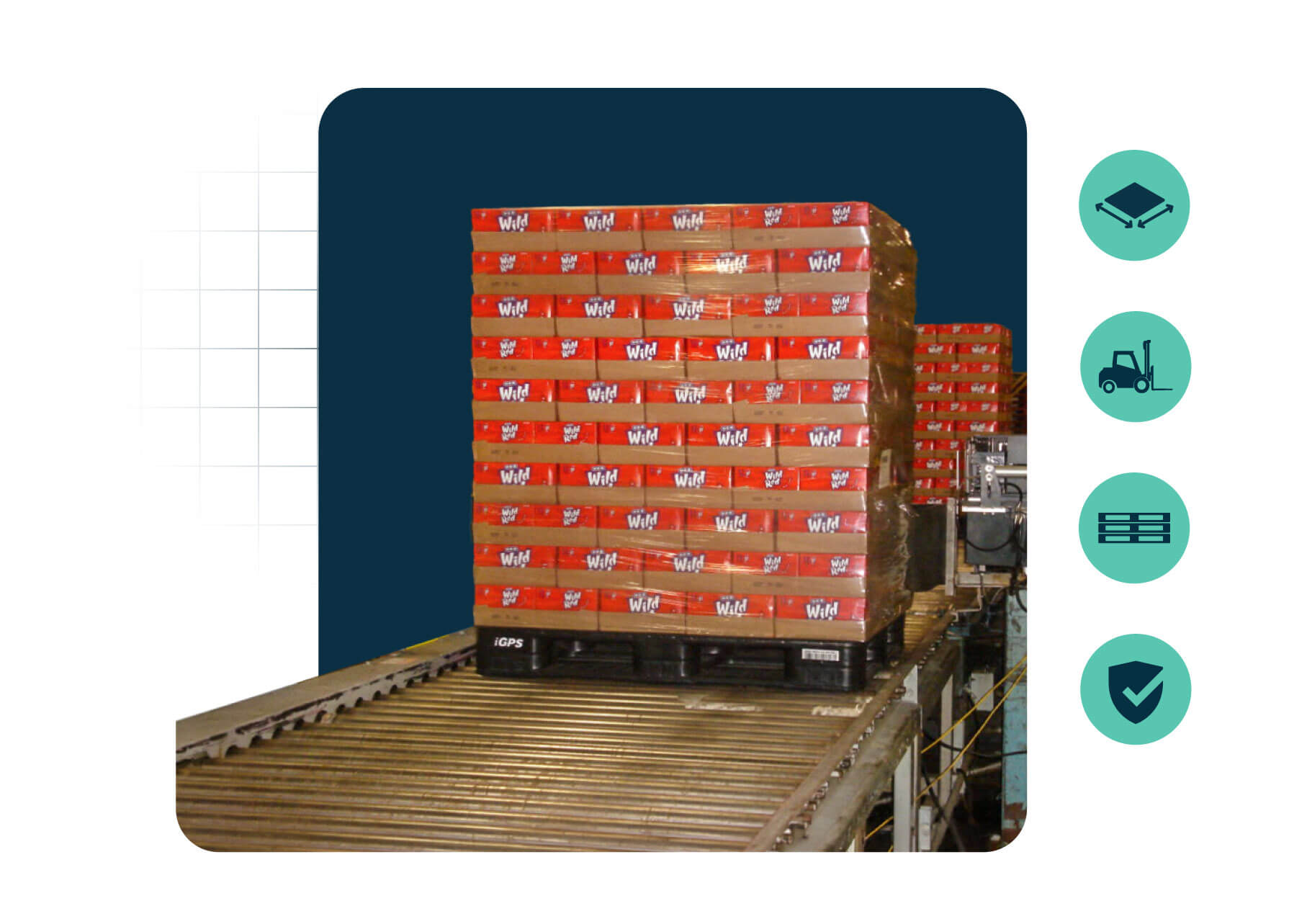
iGPS pallets offer true 48×40 dimensions, high top-deck coverage, and smooth surfaces. Their dimensional consistency supports optimizing space in automated storage and retrieval environments while reducing product shift and equipment interference
Reduce Excess Inventory
Excess inventory reduces available storage capacity and lowers utilization quality. Overstock forces overflow staging, temporary storage, and inefficient slotting.
Strengthen demand planning and cycle counting to align inbound flow with outbound demand. Lean inventory storage improves warehouse processes and protects long-term space efficiency.
Improving warehouse utilization often starts with disciplined inventory control.
With warehouse leasing prices remaining firm in many markets, as reported by The Wall Street Journal, inefficient inventory storage directly increases operating costs.
Actionable Steps
Senior operators move from analysis to execution quickly. These steps help enhance your warehouse without disrupting throughput.
Map Current Space:
Document rack height, beam levels, aisle width, and available storage locations. Identify dead zones and partial-height racks that limit maximizing warehouse space.
Compare current cube utilization across departments to highlight imbalance.
Audit Slotting
Review SKU velocity and slot assignments. Relocate slow movers to higher positions and free accessible areas for high-frequency picks.
Use WMS data to validate decisions and monitor utilization over time.
Adjust Rack Levels
Evaluate beam spacing and pallet clearance. Tighten vertical gaps where safe to improve storage density.
Confirm lift equipment compatibility and load ratings before changes.
Consolidate Locations
Combine partial pallets and eliminate fragmented storage positions. Remove redundant safety stock that occupies rack space.
Consolidation often reveals hidden available space within your warehouse.
Conclusion
Warehouse cube utilization reflects how well leaders align space, inventory management, storage systems, and material handling equipment. Strong performance depends on data discipline, layout control, and predictable physical platforms.
With industrial real estate costs remaining firm in many markets, operational space efficiency has become a capital discipline decision as much as a warehouse management initiative.
Consistent pallets, integrated warehouse management systems, and automation-friendly infrastructure strengthen storage density and protect throughput. When organizations treat pallet selection and pooling strategy as part of warehouse design, they create measurable gains in storage efficiency and operational stability.
FAQ
How does cube utilization impact supply chain efficiency?
Higher warehouse cube utilization increases storage efficiency and reduces the need for new warehouse expansion. Efficient use of total available space lowers real estate costs and shortens travel paths inside the facility.
Improved space utilization also supports smoother warehouse operations and better inventory management accuracy.
What is the ideal warehouse space utilization ratio?
There is no universal target. Many operations aim for 80 to 85 percent utilization ratio to balance capacity and flexibility.
Operating near 100 percent warehouse cube utilization often restricts movement and limits surge capacity. Sustainable high utilization supports growth without compromising safety or service levels.
How can plastic pallets help improve cube utilization impact in the warehouse?
Plastic pallets support storage density through dimensional consistency and structural durability. Uniform size allows tighter rack spacing and predictable load placement.
iGPS pallets include embedded RFID tags and serialized IDs that enable pallet-level tracking when read by scanners. RFID tags support inventory visibility and slot accuracy, which strengthens warehouse space optimization.
Consistent platforms help maximize warehouse efficiency across manual and automated environments, supporting long-term cube utilization strategies.
Can pallet variability affect warehouse space utilization?
Yes. Variations in pallet size or deck condition can reduce rack fit and limit vertical clearance.
Inconsistent platforms may require additional safety gaps between beam levels, which lowers storage density. Standardized plastic pallets support tighter rack spacing and more efficient use of vertical space.
How does pallet pooling improve warehouse space utilization?
Pallet pooling reduces the need to store empty pallets on-site, freeing floor and rack space for inventory. Standardized plastic pallets support tighter rack spacing and protect vertical clearance, which increases usable cubic capacity and strengthens overall warehouse space optimization.
Can improving cube utilization delay warehouse expansion?
Increasing storage density through layout changes, automation, and standardized pallets often extends the life of an existing facility.
Higher utilization ratio reduces pressure to lease or build a new warehouse. Leaders protect capital by maximizing available space within current operations.
Warehouse space utilization improves when the physical platform is consistent, reliable, and built for automation. iGPS plastic pallet pooling supports improving cube utilization by providing standardized, lightweight pallets that maintain dimensional accuracy and perform predictably in rack, conveyor, and automated storage and retrieval environments.
By combining uniform plastic pallets with a managed pooling network, iGPS helps organizations reduce empty pallet storage, improve storage density, and lower total warehouse operating costs. To learn how iGPS can support your warehouse space optimization strategy, call 1-800-884-0225, email switch@igps.net, or visit the iGPS contact page to connect with a pallet pooling specialist.