Key Takeaways
- 4-way pallets and 2-way pallets differ primarily in entry access and handling flexibility
- 4-way entry pallets improve dock flow and warehouse movement in high-throughput environments
- 2-way pallets may reduce upfront cost but can limit space utilization and trailer efficiency
- Pallet design influences forklift travel, storage layout, and shipping density
- Plastic 4-way pallets retain access advantages while reducing weight, maintenance, and waste
Pallet design plays a direct role in how efficiently warehouses operate under growing pressure. Global investment in pallet handling and material movement equipment reached nearly $48 billion in 2024, driven by demand for faster loading, tighter storage, and reduced equipment downtime.
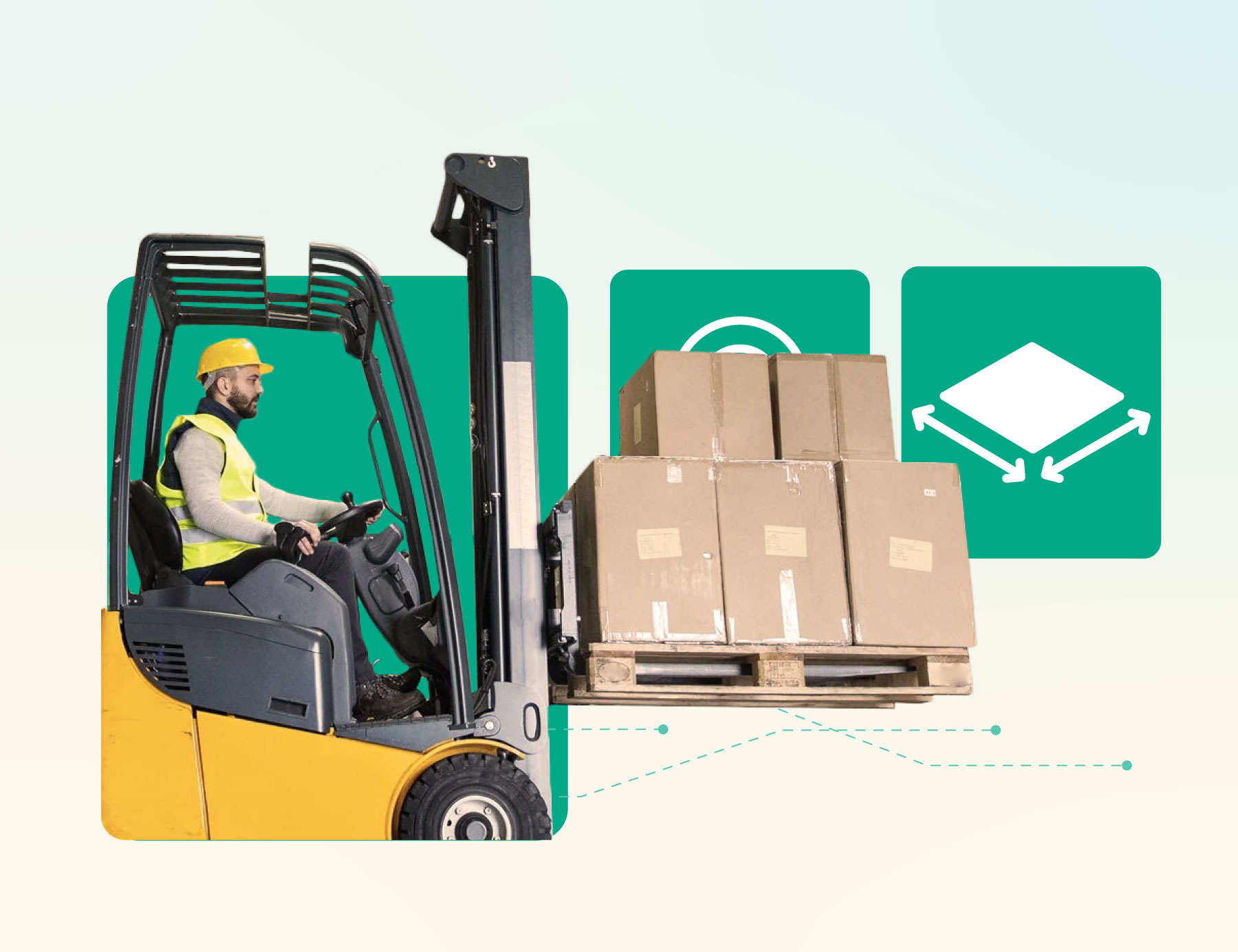
As facilities push for higher throughput, the difference between 2-way and 4-way pallets becomes operational, not theoretical. Entry from all four sides affects forklift access, dock congestion, trailer loading, and how well space gets used across the warehouse floor.
4-Way Block Pallets
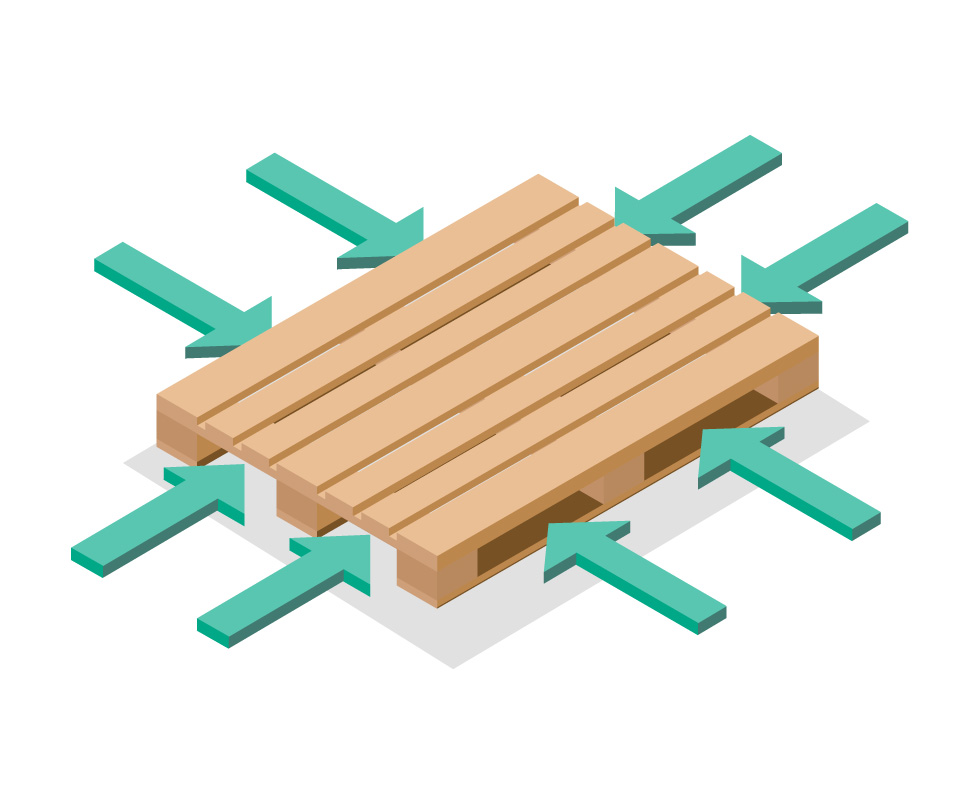
A 4-way pallet allows forklifts or pallet jacks to access the pallet from all four sides. Most true 4-way designs use a block construction, with blocks placed between deck boards to support the load.
This structure enables the tines of a forklift to enter the pallet from any direction, improving handling flexibility in busy facilities.
Partial 4-Way Pallets
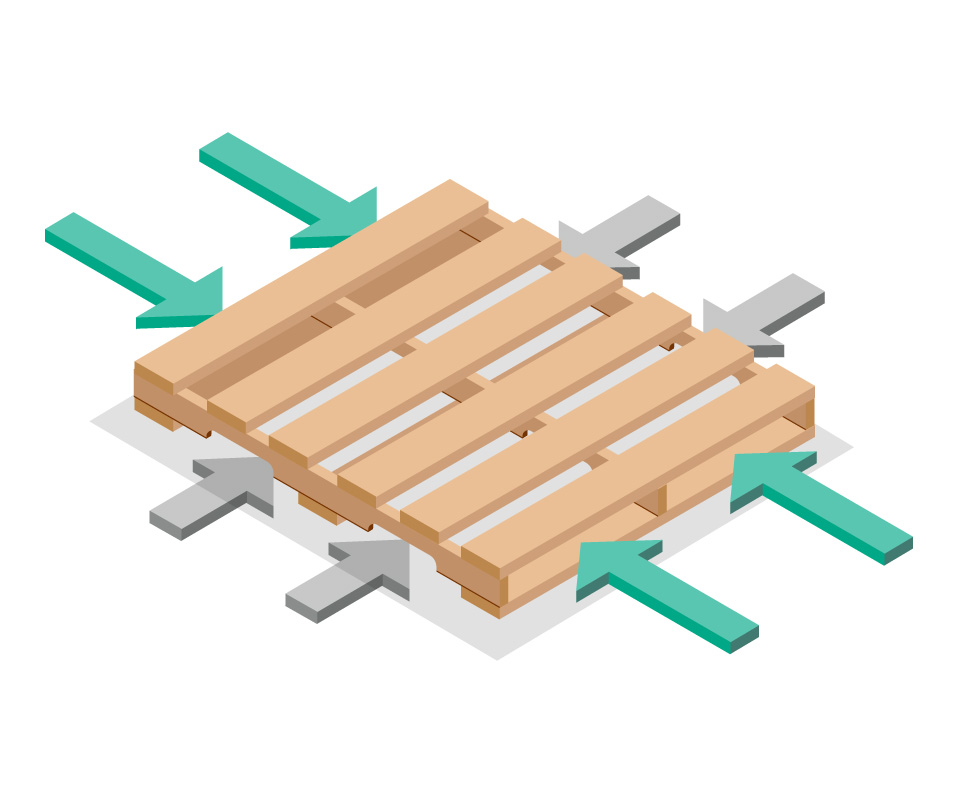
Partial 4-way pallets use stringer designs with notched openings. Forklifts can enter from all sides, though pallet jack entry is often limited to two.
These platforms sit between full block pallets and traditional stringer pallets in both performance and cost.
The Pros a 4-Way Pallet
4-way entry pallets improve handling flexibility across docks and warehouse aisles. Operators can approach loads without repositioning equipment.
Storage layouts become simpler. Loads can be staged without regard to fork approach, which supports smoother pallet handling and faster movement.
Block-style platforms also support higher load ratings than notched stringer designs.
The Cons of a 4-Way Pallet
Block pallets require more material and labor to produce. That design complexity often results in a higher cost difference between 4-way pallets and simpler alternatives.
Wood block pallets are heavier than stringer designs. Added pallet weight can reduce payload efficiency during transport.
Material sourcing and shorter usable life may increase replacement frequency over time.
2-Way Pallets
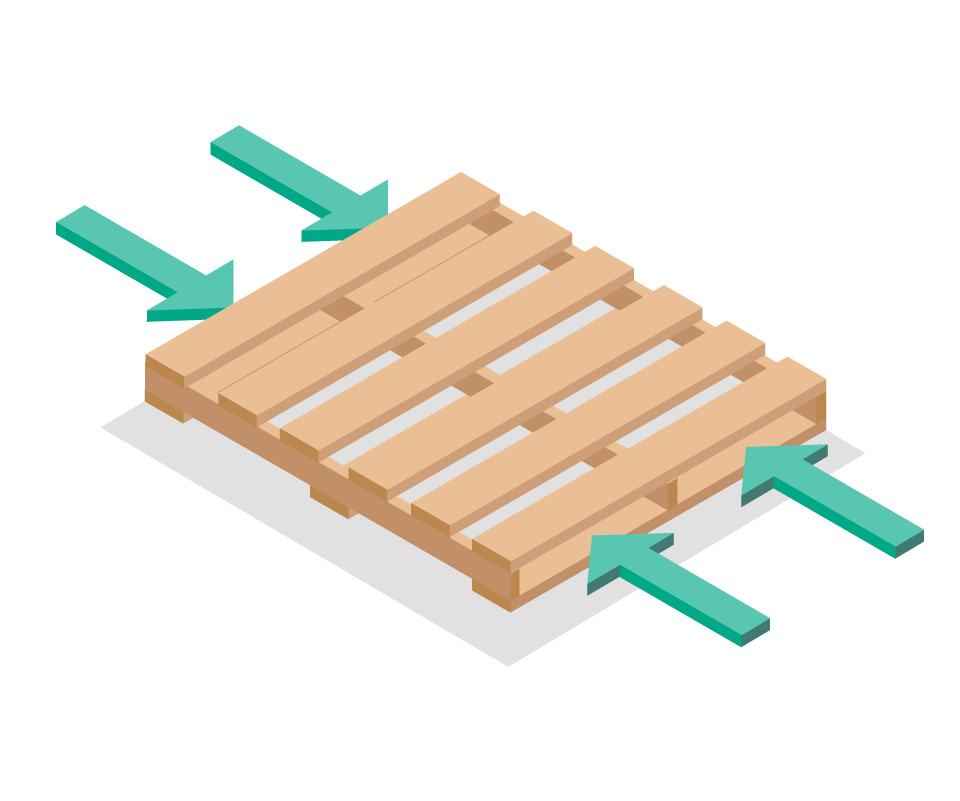
A 2-way pallet allows forklifts or pallet jacks to enter the pallet from two opposite sides only. Most use solid stringers that run the full pallet length.
This design remains common in fixed routes or lower-handling environments.
The Pros a 2-Way Pallet
Solid stringers provide strength across the pallet base. This structure can reduce damage during static storage.
Manufacturing is simpler. That keeps pallet prices lower compared to block-style designs.
Weight capacity often exceeds that of notched stringer pallets.
The Cons of a 2-Way Pallet
Limited pallet entry restricts handling flexibility. Operators must reposition forklifts to access loads.
Storage layouts require more planning. Improper orientation can slow staging and retrieval.
Trailer loading becomes less efficient. Restricted access can reduce pallet density per shipment.
4-way vs. 2-way Pallets: Key Differences
The 4-way vs 2-way pallets comparison centers on access, efficiency, and flow. 2-way vs 4-way pallets differ in how equipment can approach and move loads.
4-way pallets prioritize flexibility and speed. 2-way pallets emphasize simplicity and lower upfront cost.
Choosing between them depends on how often pallets move, how space is used, and how freight transfers between facilities.
Plastic Pallets for 4-Way Platforms
Plastic pallets are commonly molded for true 4-way entry. This design allows forklifts and pallet jacks to access the pallet from all four sides without weakening structural components.
Consistent dimensions support automation, conveyors, and racking systems. Smooth surfaces reduce handling friction and debris.
Lower pallet weight improves trailer utilization and reduces strain during manual handling.
How Plastic Pallets Eliminate the Downsides of 4-Way Platforms
Both 4-way and 2-way pallets serve specific operational needs. Entry access, weight, and handling frequency shape which design works best in a given environment. That decision no longer has to be limited to traditional wood platforms.
Wood block pallets offer flexibility and higher load ratings, though weight and material use can increase long-term costs. Plastic 4-way pallets retain the access advantages of block designs while addressing these operational limits through lighter weight and consistent construction.
Most plastic pallets are designed for 4-way entry using unibody construction. This removes fasteners and joint failure points while maintaining strength under evenly distributed loads.
Lower pallet weight supports cost savings through improved trailer utilization and reduced fuel use. Unibody construction also supports automation and reduces handling friction across docks and warehouse floors.
Plastic 4-way pallets deliver access flexibility without the tradeoffs associated with traditional block platforms. Consistent performance and longer service life support lower total cost of business across modern distribution networks.
Conclusion
Pallet entry design shapes how freight moves through the supply chain. Access, weight, and consistency influence labor time, trailer utilization, and warehouse layout.
Plastic 4-way pallets provide a consistent platform that supports efficient handling, automation compatibility, and lower transport weight. When paired with pooling, they remove ownership burdens while keeping pallets in circulation and aligned with modern logistics demands.
FAQ
Is a 4-way pallet the same as a block pallet?
Most true 4-way pallets use a block design. Partial 4-way pallets rely on notched stringers and are not considered block pallets.
How much does a standard 4 way pallet weigh?
Wood block pallets often weigh between 65 and 80 pounds. Plastic 4-way pallets typically weigh less, depending on design and material.
Which pallet type is best for international shipping?
Plastic pallets avoid ISPM-15 treatment requirements. Consistent sizing and lower weight support cross-border freight and container efficiency.
How do 4-way pallets affect warehouse space utilization?
4-way entry simplifies storage orientation. Loads can be staged without regard to fork approach, improving slotting flexibility.
How do 2-way and 4-way pallets compare in terms of warehouse space savings?
4-way pallets reduce aisle congestion and repositioning time. Faster access allows tighter layouts and more usable floor space.
How does 4-way vs. 2-way pallet design impact total cost of business in the supply chain?
Beyond purchase price, pallet design affects labor time, fuel use, trailer utilization, equipment wear, and storage efficiency. Entry flexibility can lower indirect costs tied to handling and delays.
Which pallet type works best for automated and semi-automated warehouse systems?
Automation systems rely on consistent dimensions and predictable entry points. 4-way pallets with uniform geometry integrate more smoothly with conveyors, AS/RS, and robotic handling than restricted-entry platforms.
How do 4-way pallets improve trailer loading efficiency and reduce transportation costs?
4-way pallets allow more flexible orientation inside trailers. This flexibility can increase pallet density per load and reduce empty space, especially in mixed SKU or cross-dock shipments.
Warehouse efficiency depends on how pallets move through space. Entry access, weight, and consistency influence handling speed, trailer loading, and equipment flow at every touchpoint.
iGPS delivers true 4-way plastic pallets through a pooled network built for modern operations. Standardized dimensions, lighter weight, and embedded RFID support higher utilization while removing the cost and complexity of pallet ownership.
To see how iGPS can support your warehouse and transportation strategy, call 1-800-884-0225, email switch@igps.net, or visit the iGPS contact page to connect with a pallet pooling specialist.