Key Takeaways:
- World Ocean Day highlights the importance of protecting one of the planet’s most valuable natural resources.
- Oceans serve as one of the world’s most vital transportation networks, carrying more than 80 percent of international trade by volume.
- Healthy oceans play an important environmental role while supporting coastal communities, global commerce, and millions of livelihoods worldwide.
- Plastic pollution remains one of the most significant threats to oceans and waterways.
- Circular supply chains reduce waste by emphasizing reusable, repairable, and recyclable assets that remain in productive use longer.
- Plastic pallets made from recycled materials and designed for end-of-life recyclability demonstrate how supply chain assets can support both performance and sustainability.
Each year in June, people around the world observe World Ocean Day, which is dedicated to celebrating and protecting one of our planet’s most vital natural resources.
The idea for World Ocean Day originated in 1992 at the Earth Summit in Rio de Janeiro. Representatives from around the world gathered to discuss environmental stewardship and sustainable development. Today, governments, businesses, and environmental organizations use the occasion to spotlight the importance of oceans and the role we all play in protecting them.
For supply chain professionals, World Ocean Day is an opportunity to reflect on a resource that, despite being essential for global commerce, is too often taken for granted. After all, our global oceans represent one of the most important transportation networks in world history.
How Oceans Connect our Global Economy
About 90 percent of the volume of international goods is carried by sea. Every day, vast cargo ships move raw materials, food, consumer goods, pharmaceuticals, and countless other products between continents. Modern supply chains depend on our ability to move goods efficiently across oceans and through ports that serve as critical economic gateways. Without maritime transportation, the products we rely on every day would either be much more expensive or unavailable altogether.
The economic importance of our oceans extends far beyond the supply chain. Coastal communities depend on oceans for tourism and employment. Entire industries are built around these resources, with millions of families depending on healthy oceans for their livelihoods.
And of course, our oceans perform critical environmental functions. Phytoplankton, algae, and cyanobacteria help with about half the planet’s annual oxygen production. They also absorb carbon dioxide from the atmosphere and regulate global temperatures and weather patterns.
The Challenge of Plastic Pollution
Among the most serious and visible threats facing oceans and fragile waterways is plastic pollution. Every year, millions of tons of plastic waste enter sensitive marine environments through rivers and stormwater systems. Because of its chemical composition, plastic debris can persist in the environment for decades, creating hazards for ecosystems and coastal communities.
While no single organization can tackle this problem alone, businesses across industries are increasingly recognizing that they have a role to play in reducing waste and supporting more sustainable waste management practices. And consumers are increasingly demanding that the companies with which they do business take this responsibility seriously.
In the supply chain sector, this important effort often begins with carefully scrutinizing how materials are obtained, used, and reused.
Building Circularity into the Supply Chain
For decades, supply chains largely followed a linear model: produce, use, and discard. Today, forward-thinking businesses are embracing a circular approach that seeks to maximize the value of materials for as long as possible. Rather than treating materials like plastic as disposable, organizations are developing assets that can be repaired, reused, and recycled.
Reusable totes and containers reduce the need for single-use packaging. Returnable packaging programs allow shipping materials to circulate through the supply chain several times before being recycled. Even simple initiatives, such as more efficient waste management practices, can help prevent materials from entering waterways, as well as landfills.
These efforts enhance operational efficiency — but more importantly, they minimize environmental impact.
Plastic Pallets for Sustainability
Plastic pallets are an important example of how supply chain assets support circular ecosystems. At iGPS, tens of millions of pounds of post-consumer resin have been recycled into lightweight, durable plastic pallets. These pallets help divert plastic waste from landfills and waterways while giving materials a productive second life.
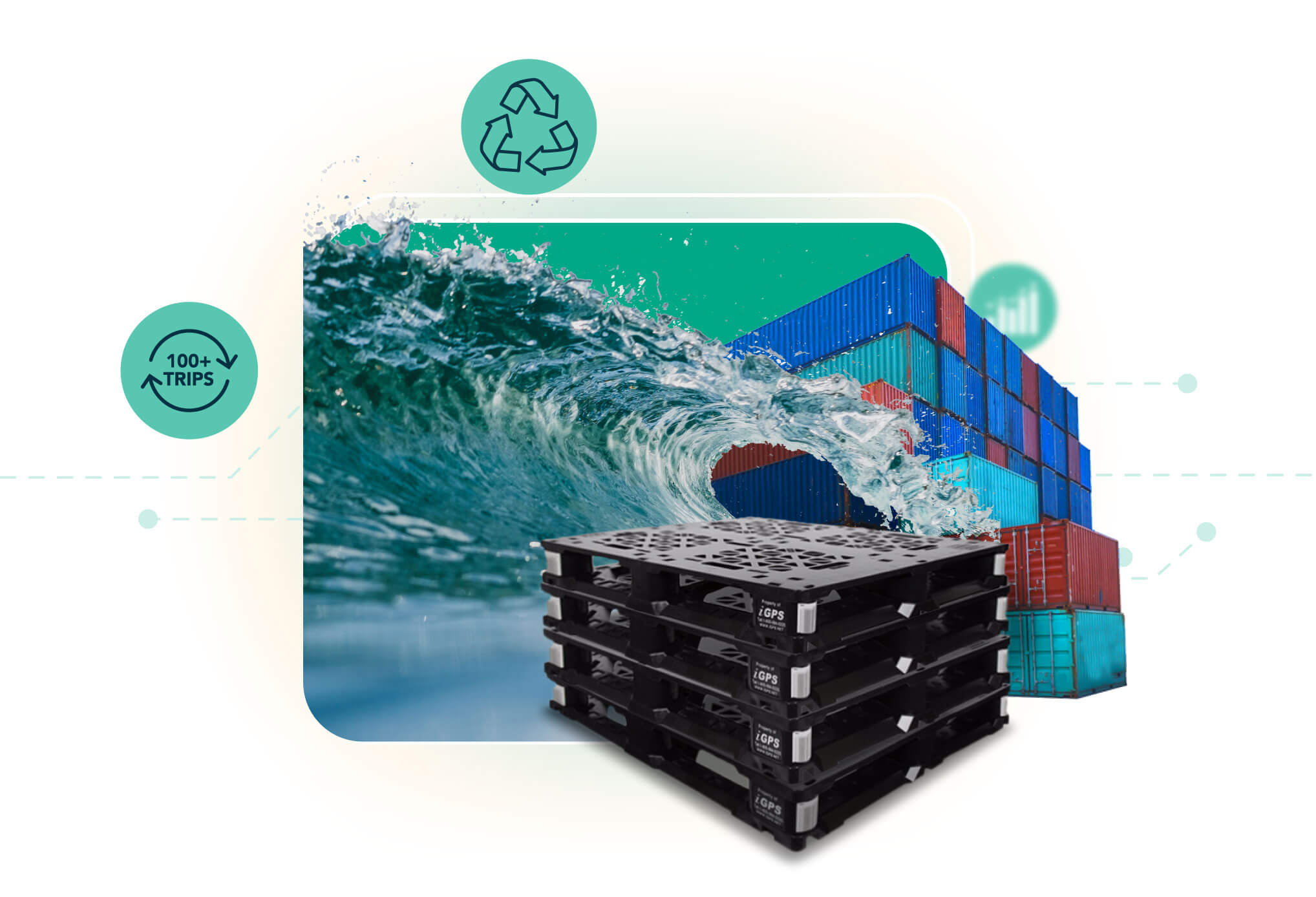
Just as importantly, plastic pallets themselves can be recycled at the end of their service life, usually after taking about 100 trips through the supply chain.
This closed-loop, cradle-to-cradle approach represents a practical example of how supply chain assets contribute to broader sustainability goals while delivering the performance and reliability modern businesses depend on.
Beyond World Ocean Day
World Ocean Day is an annual reminder of the interconnected nature of our global economy and our environment. Our oceans connect communities, support global biodiversity, and enable the movement of vital goods on a scale that would otherwise be impossible.
As supply chain leaders look to the future, protecting these important and delicate resources will demand continued innovation and responsible stewardship. The good news is that many of the technologies and best practices needed to make a positive difference already exist. By embracing circular supply chain practices and investing in recyclable assets, organizations can protect our global oceans while building stronger, more resilient supply chains for generations to come.
Frequently Asked Questions
How do oceans help in trade?
Oceans serve as the backbone of global commerce, providing efficient transportation routes that connect manufacturers, suppliers, and consumers across continents. The vast majority of international trade by volume moves by sea, allowing businesses to transport large quantities of goods economically and reliably while supporting complex global supply chains.
How does the ocean impact the world economy?
The ocean supports the world economy through shipping, fishing, tourism, recreation, and countless coastal industries. Millions of people depend on ocean-related jobs and businesses for their livelihoods. Beyond direct economic activity, healthy oceans help regulate climate and weather patterns, creating conditions that support agriculture, commerce, and community stability worldwide.
Why are circular supply chains important?
Circular supply chains help organizations reduce waste by keeping materials and products in use for as long as possible through reuse, recovery, refurbishment, and recycling. This approach conserves resources, reduces environmental impact, and can lower costs while improving resilience. By extending the life of valuable materials, companies create both operational and sustainability benefits.
Building a more sustainable supply chain often starts with the assets that move products every day. iGPS pooled plastic pallets are designed for reuse, supported by a managed recovery network, and fully recyclable at end of life, helping companies reduce waste while maintaining efficient product movement throughout the supply chain. To learn more about how iGPS supports circular supply chain practices, call 1-800-884-0225, email switch@igps.net, or visit our contact page.