Key Takeaways
- Automation performance depends on consistent inputs across product, pallets, and systems
- Small disruptions compound over time, reducing throughput and increasing labor
- Plastic pallets support automation with consistent dimensions and stable performance across environments
- RFID-enabled pallets improve traceability and inventory visibility at key process points
- Pallet pooling reduces internal labor while maintaining consistent quality across facilities
Warehouse automation in grocery distribution centers is how product gets from receiving to outbound with more control and less manual handling. It connects equipment and software to move, store, and pick product in a way that keeps flow steady across store replenishment, e-commerce, and curbside orders.
That matters because the work inside these buildings has changed. Full pallet moves still exist, but they now run alongside smaller, more frequent orders. Systems are expected to handle both without slowing down.
Automation helps bring that structure. It reduces travel, keeps work in sequence, and supports consistent throughput. But it only performs as well as what moves through it. Details like load quality and pallet consistency shape how smoothly the system runs day to day.
What Is Grocery Warehouse Automation
Grocery warehouse automation is the use of automated systems, software, and material handling equipment to move, store, and pick product with less manual intervention.
In a grocery distribution center, that includes pallet movement, case picking, sortation, and inventory management across ambient, refrigerated, and frozen zones. The goal is consistent throughput, tighter control over inventory, and fewer touches per case. In practice, it replaces manual travel with system-directed movement and reduces how often product is handled.
Automation does not remove labor. It changes where labor is applied and how predictable each task becomes.
How Does Automation Work in Grocery Distribution Centers
Automation in grocery warehouse operations connects physical equipment with software that directs movement and prioritizes work. Pallets, cases, and totes move through defined paths, and each step is tied to a system decision.
A typical flow looks like this:
- Inbound pallets are received and scanned into the warehouse management system
- Storage is assigned based on velocity, temperature, and SKU characteristics
- Automated storage and retrieval or conveyor systems move product to picking zones
- Orders are built through goods-to-person or zone picking processes
- Completed loads are staged and sequenced for delivery
Each step relies on predictable inputs. When one part of the flow becomes unpredictable, the entire system slows down. Most of that variability comes from small differences in how product is built, handled, or supported as it moves through the system.
Partial vs Fully Automated Grocery Distribution Centers
Most grocery distribution centers operate in a hybrid model.
Partial automation uses conveyors, sortation, and selective robotics while still relying on lift trucks and manual picking in certain areas. This is common in facilities managing a wide range of SKUs and product types.
Fully automated environments push more volume through AS/RS, goods-to-person systems, and robotic palletizing. These sites require tighter control over load quality, pallet consistency, and product configuration.
The tradeoff is flexibility versus control. Partial systems adapt more easily to change; fully automated sites deliver higher throughput when inputs stay consistent. Most operations land somewhere in between, applying automation where volume is predictable and manual handling where it is not.
Types of Warehouse Automation Used in Grocery Distribution Centers
Grocery distribution centers don’t rely on a single type of automation. Most run a mix of systems, each handling a different part of the flow depending on volume, SKU mix, and how the building is laid out.
Some systems focus on storage, others on movement or order building. What ties them together is consistency. When product and pallets move the way the system expects, everything stays on pace. When they don’t, the impact usually shows up as slowdowns, not full stops, but those minutes accumulate across a shift.
Automated Storage and Retrieval Systems (AS/RS)
AS/RS is built for dense storage and fast, repeatable pallet handling. It performs best when SKU profiles are stable and loads are uniform.
The system doesn’t leave much room for variation. If pallet dimensions are off or loads aren’t sitting square, cranes may hesitate or stop to reset positioning. Those interruptions aren’t always dramatic, but they break the rhythm the system depends on.
Autonomous Guided Vehicles (AGVs) and Autonomous Mobile Robots (AMRs)
AGVs and AMRs move product between zones without relying on fixed conveyor paths. They reduce forklift traffic and help manage flow in busy areas of the building.
They also depend on clean pickups and consistent drop-offs. When loads are uneven or pallets don’t present the same way each time, movements slow down. Over hundreds of cycles, those added seconds begin to create measurable gaps in efficiency.
Automated Palletizers and Depalletizers
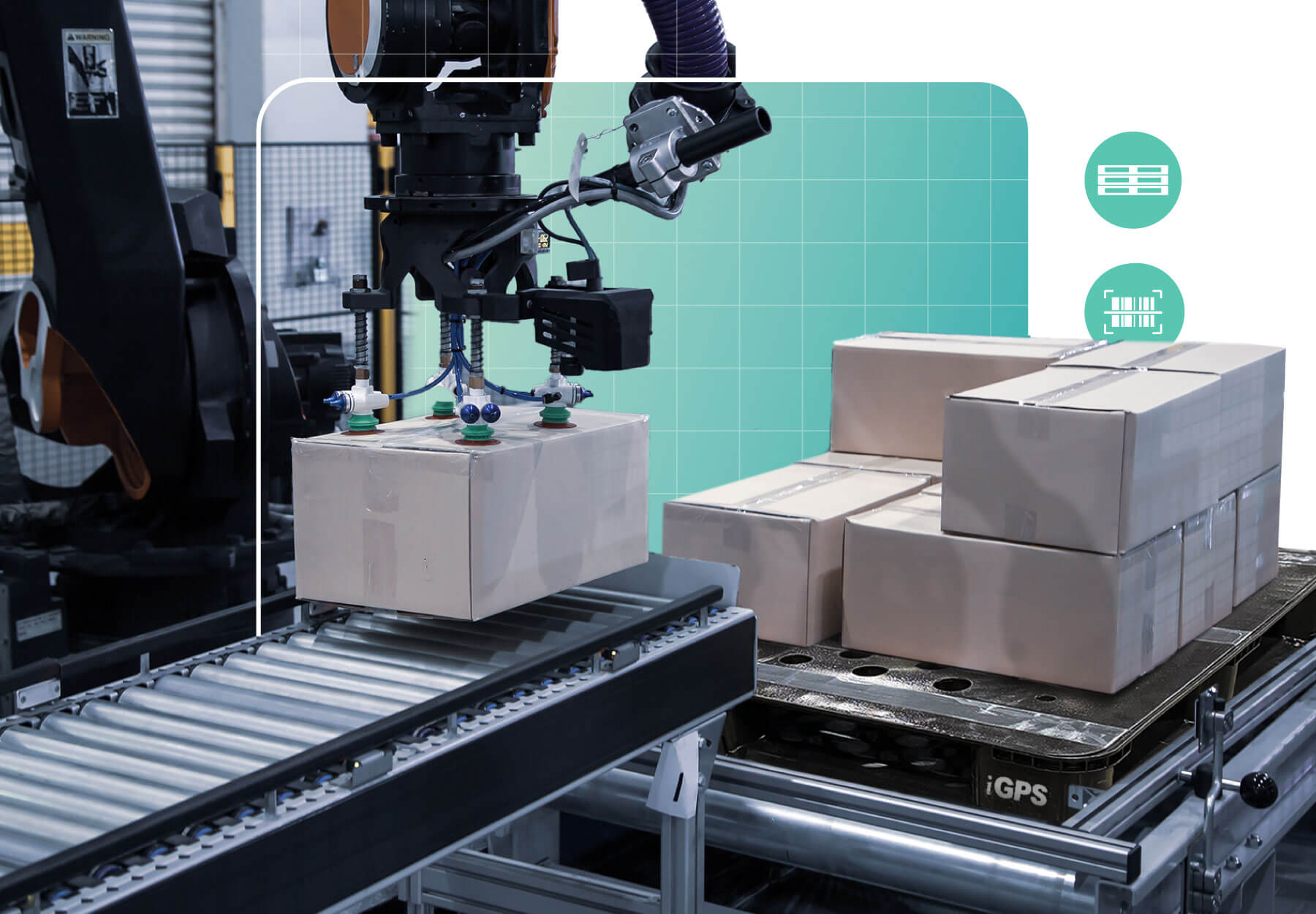
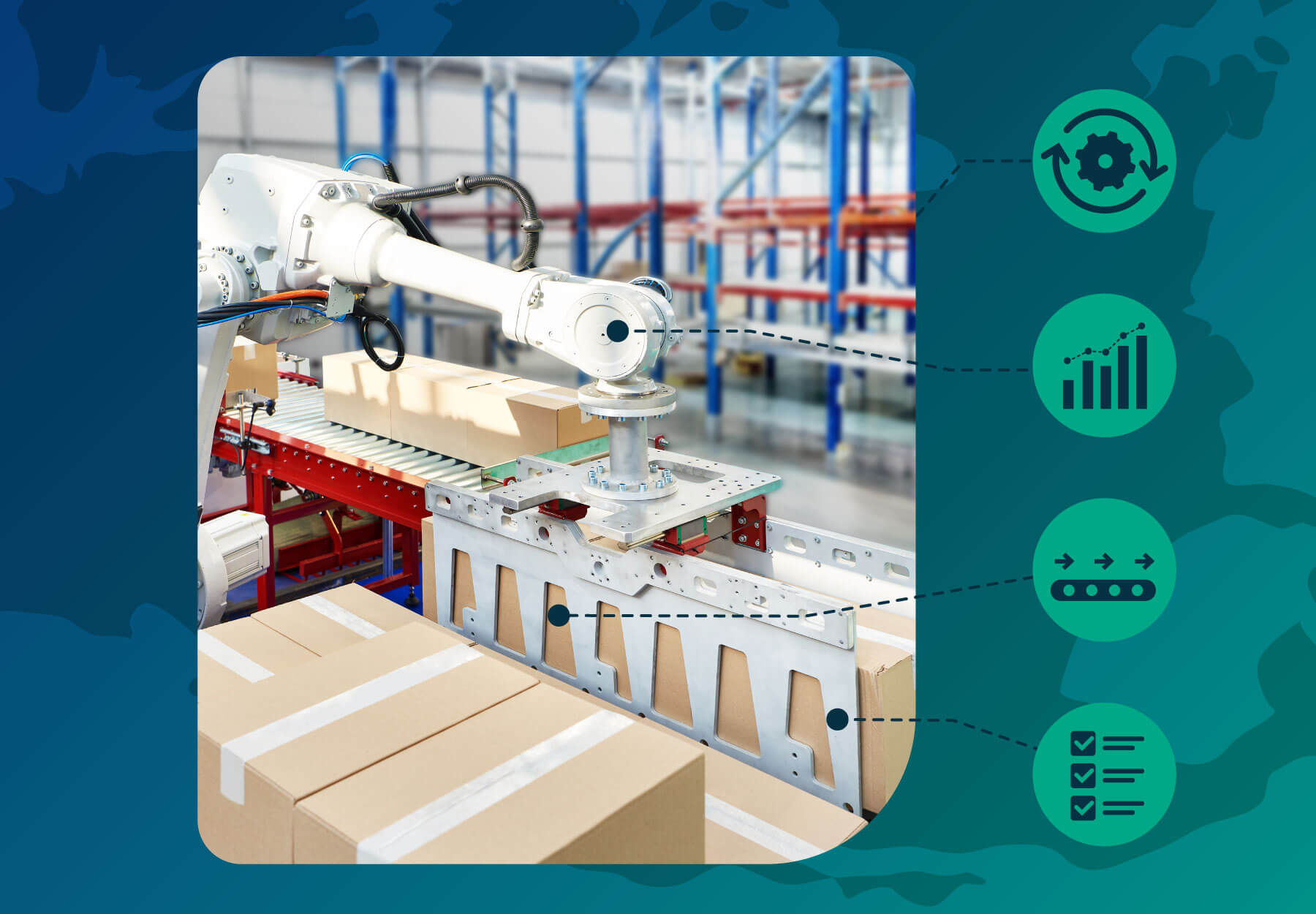
Palletizers and depalletizers handle the build and breakdown of loads. They’re designed to create repeatable, stable configurations for storage and outbound delivery.
When pallets are inconsistent or surfaces aren’t stable, cases don’t always stack or release cleanly. That can lead to minor shifts, resets, or manual intervention. It doesn’t stop the system, but it pulls labor back into a process designed to run with minimal involvement.
Conveyor and Sortation Systems
Conveyors carry product across the facility, while sortation systems direct cases to the right lane for order fulfillment.
These systems rely on smooth, predictable movement. Debris, rough edges, or uneven pallet surfaces can interrupt that flow. A single stop might only take a moment to clear, but when it happens repeatedly, throughput drops and teams have to step in more often to keep orders moving.
Robotic Picking Arms and Goods-to-Person Systems
Goods-to-person systems bring product directly to a picker or robotic arm. This reduces travel time and keeps work concentrated in defined zones, which helps maintain a steady picking rate.
Robotic picking arms are often layered into these systems for high-volume or repetitive SKUs. They perform best when cases arrive in a consistent position and orientation.
When presentation varies, the system slows. A case that’s slightly shifted or a load that settled in transit can force a reattempt or require manual correction. Over time, those small adjustments reduce picking speed and pull labor back into the process.
Warehouse Management Systems (WMS), Execution Systems (WES), and Control Systems (WCS)
Software coordinates how automation systems operate across the facility. Each layer plays a different role, from planning work to moving product.
| System | Role | What It Controls |
|---|---|---|
| WMS | Manages inventory and order logic | SKU locations, picking, replenishment decisions |
| WES | Prioritizes and sequences work | Order flow, task timing, system balance |
| WCS | Controls equipment in real time | Conveyors, AS/RS, sortation, robotic systems |
These systems rely on accurate, consistent inputs. When pallet movement and location data are captured correctly, product flows as expected.
When that consistency breaks down, work falls out of sequence. Product backs up in one area while another slows down, and teams step in to keep the operation moving.
Why Grocery Distribution Centers Are Under Pressure to Automate
Most grocery networks are being asked to move more volume with fewer people while managing more complex order profiles. Automation is driven by those constraints and the need to keep systems running under pressure. According to the MHI Annual Industry Report, more than 80% of supply chain leaders are increasing investment in automation to address ongoing labor constraints.
Labor Shortages Driving Structural Change in Grocery DCs
Labor shortages are not temporary. Hiring and retention remain inconsistent, especially in cold environments and high-volume picking roles.
Automation reduces dependence on manual travel and repetitive tasks. It allows smaller teams to move more volume with less variability.
The Surge in Online Grocery and Omnichannel Fulfillment Demands
Online grocery and e-commerce have changed order profiles. Smaller, more frequent orders increase picking complexity and require faster turnaround. According to National Grocers Association consumer research, 76% of shoppers who have purchased groceries online have used food delivery, reinforcing the need for grocery distribution centers to support more complex fulfillment patterns.
Challenges of Automating a Grocery Distribution Center
Automation brings structure into the building. It also exposes every inconsistency in how product is handled. When inputs vary, systems don’t fail all at once; they slow down in small ways that add up across a shift. In most facilities, these issues show up as repeated small delays rather than a single point of failure.
Temperature-Controlled Zones and Cold Chain Requirements
Cold environments change how materials behave. Equipment has to run in low temperatures while product keeps moving fast enough to protect freshness.
Moisture and condensation create another layer of risk. Pallets that take on moisture or degrade in refrigerated conditions don’t move the same way every time. That shows up as uneven tracking, hesitation at transfer points, or extra adjustments during handling.
In one facility, a recurring issue in a refrigerated zone came down to pallet condition. Loads were arriving slightly misaligned after sitting in cold storage. Nothing stopped completely, but conveyors slowed just enough that operators had to step in every hour to realign product and keep flow moving.
Managing High SKU Variability Across Fresh, Frozen, and Dry Goods
Grocery distribution centers deal with constant variation. Fresh, frozen, and dry goods all move through the same building, each with different handling requirements.
Automation prefers consistency. When SKU profiles shift throughout the day, systems need tighter slotting and more frequent adjustment to maintain flow. Without that, pick paths stretch, sequencing breaks down, and throughput becomes harder to predict.
Product Fragility and Variable Load Profiles
Not every case behaves the same. Some hold shape under pressure; others shift with minimal contact.
That difference matters once product enters an automated flow. A stable load moves cleanly from storage to picking to outbound staging. A less stable one may lean, settle, or shift just enough to affect scanning or picking. The system keeps running, but the work becomes less efficient.
Throughput Peaks Around Promotions and Seasonal Demand
Demand rarely stays even. Promotions, holidays, and seasonal changes create spikes that push systems beyond their steady-state pace.
Automation can handle that volume when flow stays consistent. When it doesn’t, small delays start to stack. A few extra seconds at a transfer point, a reset on a conveyor, a manual adjustment during picking. Labor fills the gaps, and the system runs, but not at the level it was designed for.
The Role of Pallets in Grocery DC Automation
All of these systems depend on how product is physically supported as it moves through the building.
Pallets sit under every move in the building. They carry product into storage, through systems, and out for delivery.
When pallets are consistent, most of that movement happens without friction. When they aren’t, the impact shows up in small ways—slight misalignment, extra handling, minor delays—that repeat throughout the day.
Those moments don’t draw attention on their own. Over time, they turn into lost throughput, added labor, and more maintenance across the operation.
What to Look for in a Pallet for an Automated Grocery DC
Operations teams look for consistency first.
Plastic pallets provide a uniform footprint, stable deck surface, and reliable performance across temperature ranges, especially in food-safe plastic pallets for grocery distribution.
Wood pallets can vary in size and condition. Over time, boards may loosen or surfaces may splinter, which can affect conveyor flow and AS/RS interaction.
Other factors that matter:
- Dimensional consistency for automated handling
- Smooth surfaces to reduce jams
- Strength to support dynamic and racking loads
- Hygiene for food safety and compliance
- Weight that supports safer manual handling
These factors directly influence throughput and maintenance inside the facility. When pallets move predictably, systems stay closer to planned capacity. When they do not, labor and maintenance requirements increase.
How RFID-Enabled Plastic Pallets Improve Track-and-Trace in Automated Environments
RFID-enabled pallets add a layer of visibility to automated systems.
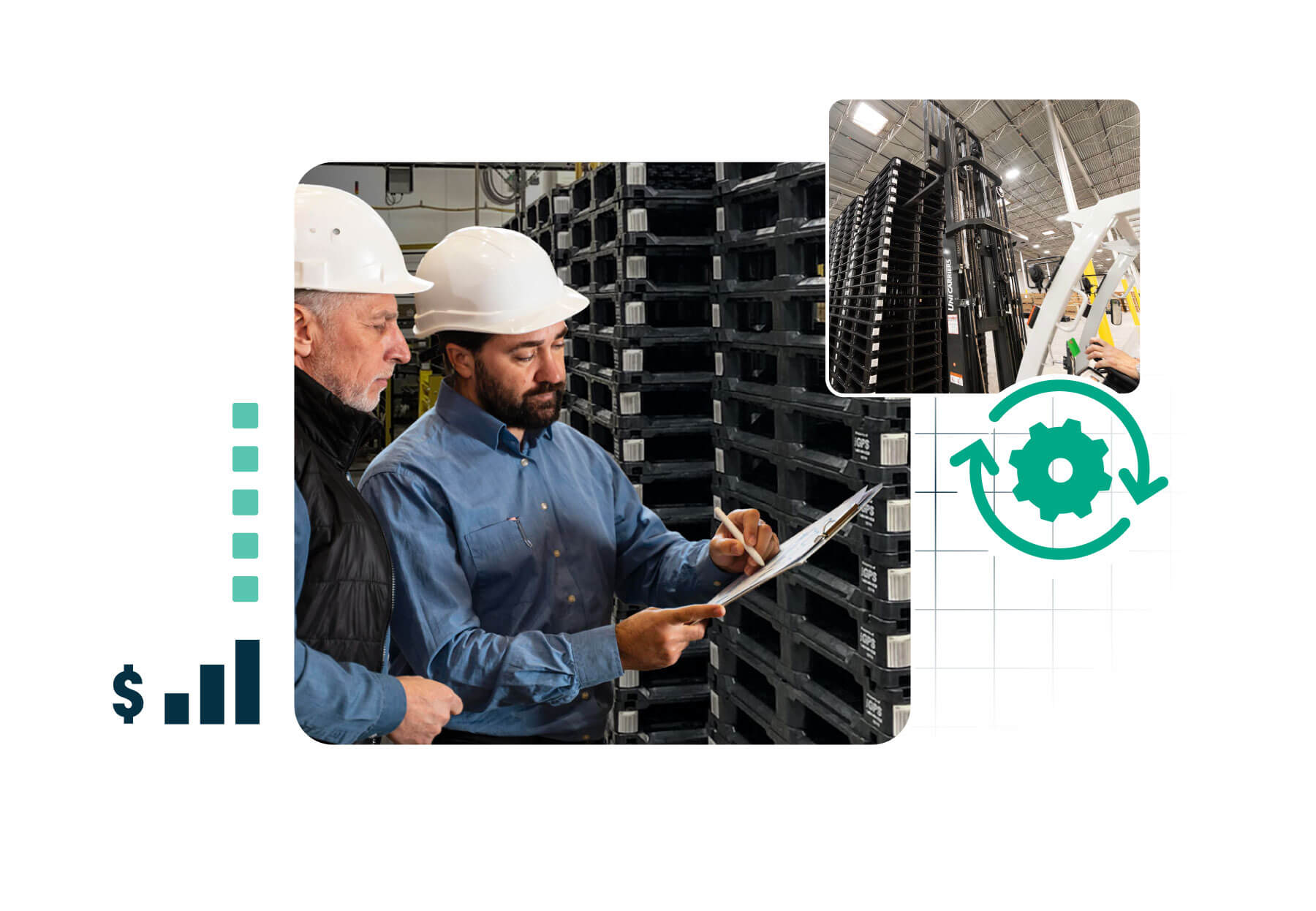
Tags are embedded inside the pallet, which protects them from damage and removal. When pallets pass through defined scan points, the system records location, movement history, and pallet ID.
That data supports:
- Pallet-level tracking across the facility
- Load association for traceability
- Event recording at key process points
- Visibility into dwell time and flow
RFID does not detect pallet condition, and it only works when read at scan points. Within those limits, it improves inventory accuracy and reduces manual data entry.
In a grocery distribution center, that supports faster recalls, better inventory management, and clearer audit trails. Maintaining that level of consistency across multiple facilities can add internal labor tied to sorting, repair, and storage. Pallet pooling shifts that responsibility to a managed network, which helps keep inputs consistent without adding operational overhead.
Conclusion
Automation in grocery distribution centers works when every part of the system behaves predictably. Equipment, software, labor, and materials all need to align.
Pallet choice is part of that equation. It affects how loads move, how systems perform, and how much time teams spend fixing small issues that slow the operation down.
When pallets are consistent, clean, and trackable, automation delivers the throughput and control it was designed to provide. When they are not, costs shift back into labor, maintenance, and lost throughput.
FAQ
How does automation in a grocery DC differ from a standard warehouse?
Grocery distribution centers manage perishable goods, temperature-controlled zones, and higher SKU variability. Automation must handle these conditions while maintaining product quality and freshness.
What operational issues cause automation systems to slow down in grocery warehouses?
Inconsistent pallets, unstable loads, and debris can interfere with conveyors, sensors, and robotic systems. These issues create small delays that add up across the operation.
What ROI can grocery distributors expect from warehouse automation?
ROI comes from labor reduction, improved throughput, fewer errors, and better inventory accuracy. Results depend on system design and how well inputs remain consistent.
What pallet specifications are required for automated grocery distribution systems?
Consistent dimensions, sufficient load capacity, smooth surfaces, and durability under repeated handling are critical. Pallets must support conveyors, AS/RS, and robotic systems without introducing variability.
Why are wood pallets problematic in automated grocery distribution centers?
Wood pallets can vary in size and condition over time. They may splinter, absorb moisture, or shed debris, which can affect equipment performance and increase maintenance.
How do plastic pallets improve AS/RS performance and reduce equipment downtime?
Plastic pallets maintain consistent dimensions and structural integrity. That stability supports smooth interaction with automated storage and retrieval systems and reduces misalignment or jams.
What role does RFID play in automated grocery distribution center operations?
RFID provides pallet identification, location (when scanned), and movement history. It supports traceability, inventory accuracy, and process visibility when integrated with system read points.
How does pallet pooling reduce labor in automated grocery distribution centers?
Pallet pooling removes the need to sort, repair, store, and return empty pallets. That reduces non-value-added work and keeps teams focused on throughput.
Companies seeking to reduce supply chain costs use pooled iGPS plastic pallets for their shipping needs. These pallets support automation performance, improve handling consistency, and help lower total cost of business. For more information, contact us at 1-800-884-0225, email switch@igps.net, or visit our contact page.