More flavors. More package sizes. More limited editions. More retailer and ecommerce formats. Product variety is expanding, and supply chain teams are responsible for making it all work.
SKU proliferation can increase inventory, changeovers, warehouse activity, mixed-SKU loads, and costs long after a new product launches. For operations leaders, the issue is not simply how many SKUs the business carries. It is how much complexity each one adds.
Understanding where those costs show up helps companies decide which products are worth supporting and where the operation needs more consistency or flexibility.
Key Takeaways
- SKU proliferation affects inventory, production, warehousing, transportation, procurement, and data.
- Product variety creates value when the operational requirements are justified by customer demand and profitability.
- SKU rationalization and better forecasting can help control costs, inventory, and operational demands.
- Plastic pallets provide a consistent platform as products, packaging, and load configurations change.
- Pallet pooling adds flexibility as distribution needs change while reducing internal pallet management.
What Is SKU Proliferation in Logistics
SKU proliferation is the growth in the number of individual stock-keeping units (SKUs) a company manufactures, sells, or distributes. It often happens as companies add new flavors, sizes, package formats, seasonal products, or other variations to meet customer demand.
A beverage company that once sold one sports drink in two sizes might add five flavors, zero-sugar options, multipacks, and retailer-specific formats. A small product line can quickly become dozens of SKUs, each with its own inventory, forecast, packaging, production, and fulfillment requirements.
More product variety can support sales and respond to changing consumer behavior, while faster delivery expectations put added pressure on companies to keep that growing product mix moving efficiently.
- Production changeovers and packaging requirements
- Inventory and warehouse locations
- Picking, replenishment, and load configurations
- Purchasing and forecasting decisions
- Data to manage across ERP and warehouse management systems
SKU proliferation reaches well beyond inventory management. As the product mix becomes more varied, companies need to control unnecessary variability in the systems and assets that move those products.
SKU Proliferation Statistics
Manufacturers are being asked to run more products and package formats, often in shorter production runs. That is making SKU growth an equipment and operations issue as much as an inventory issue.
PMMI’s 2026 Packaging State of the Industry report identifies SKU proliferation as one of the factors shaping packaging equipment decisions. The report also points to several trends affecting operations:
- The U.S. packaging machinery market reached an estimated $11.7 billion in shipments in 2025.
- Food represented about 44% of that market.
- Manufacturers are managing more SKUs, shorter production runs, and changing package formats, increasing demand for equipment that supports faster changeovers and greater flexibility.
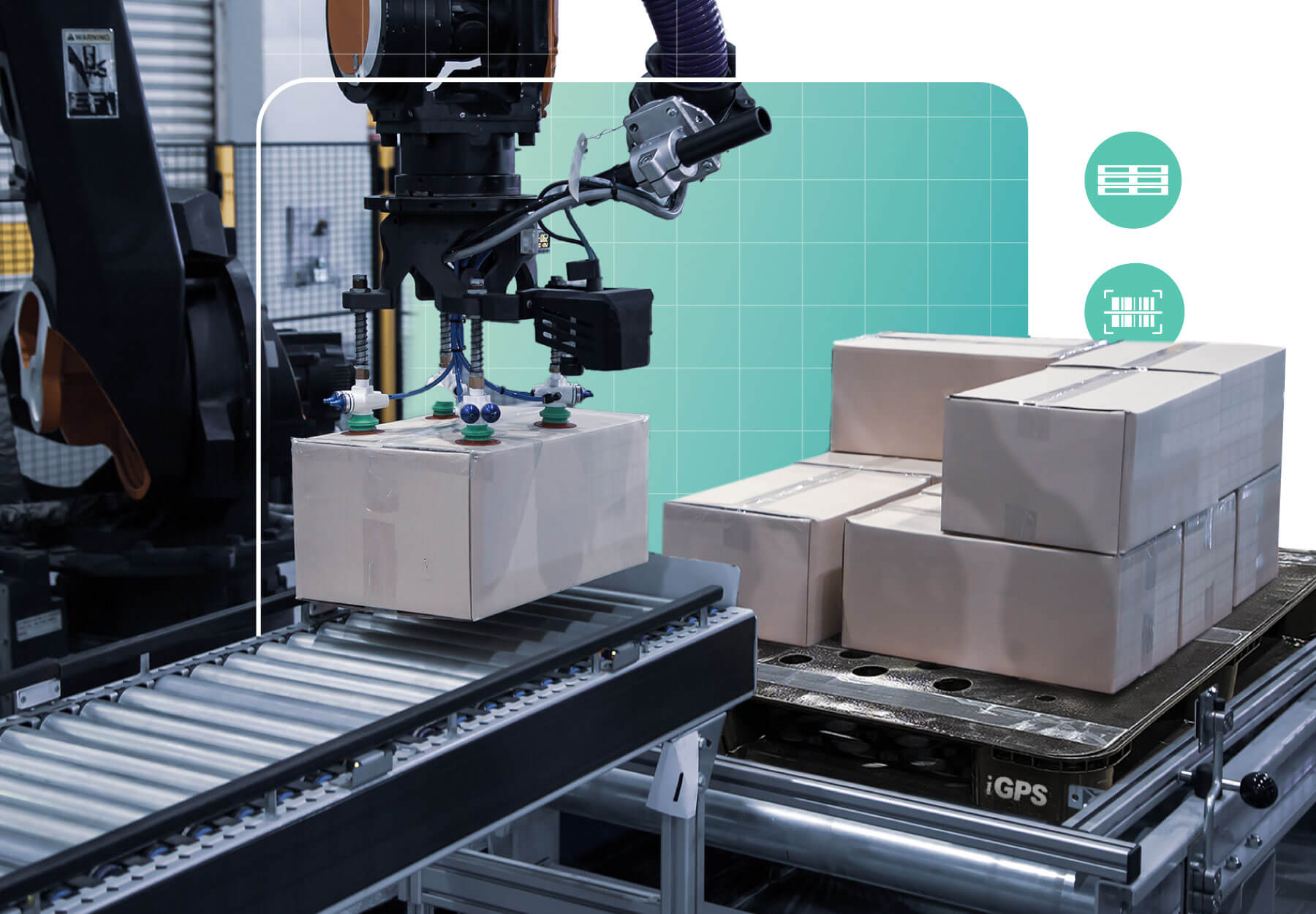
- Robotic palletizing is gaining traction where operations frequently change SKUs, case sizes, and pallet configurations. (PMMI)
The financial effects can also be significant. A 2025 L.E.K. Consulting case study found that SKU proliferation at one Fortune 500 food and beverage manufacturer contributed to supply chain complexity, declining margins, and lower service levels. Its SKU rationalization and supply chain simplification program identified changes that increased production capacity by 14% and generated more than $10 million in annual EBIT improvement. (L.E.K. Consulting)
There is no single SKU count that signals a problem. What matters is whether the sales and customer value of each product justify the inventory, production, storage, handling, and distribution requirements it adds.
Example of SKU Proliferation
Consider a beverage company that sells one drink in two flavors and two package sizes. Adding new flavors, zero-sugar versions, multipacks, and retailer-specific packaging can quickly turn four SKUs into dozens.
Consumer trends can accelerate this growth. In 2026, Oreo introduced three limited-edition flavors at once—Banana Pudding, Deep Fried, and Chicken & Waffles—through TikTok Shop before rolling them out to retailers nationwide. Consumers then voted on which flavor should return in 2027.
PepsiCo took a similar approach with its 2026 Flavor Swap products, using TikTok Shop ahead of nationwide retail distribution after testing different brand and flavor combinations with consumers.
For operations teams, each successful variation can mean more:
- Ingredients and packaging materials
- Production runs and changeovers
- Inventory, forecasting, and storage requirements
- Picking and retail fulfillment
- Case and pallet configurations
The market can create a new product opportunity much faster than operations can build the processes behind it. Supply chain teams still have to forecast, produce, store, and distribute every SKU that makes it into the lineup.
How SKU Proliferation Affects Logistics
The impact of SKU proliferation spreads across the supply chain. Each additional SKU can create new forecasting, inventory, production, storage, handling, and data requirements.
| Area | What changes as SKU counts grow | Potential impact |
|---|---|---|
| Inventory | Demand is spread across more individual products | More safety stock, carrying costs, slow-moving inventory, and forecasting risk |
| Warehousing | More products require storage, replenishment, and picking | Greater space requirements, more handling, and added fulfillment complexity |
| Transportation | Orders contain a wider mix of products and case configurations | More mixed-SKU pallets and complex load planning |
| Procurement & production | More ingredients, packaging materials, suppliers, and production runs | More purchasing activity, changeovers, and pressure on production capacity |
| Data & systems | Each SKU requires accurate product and inventory records | More data for ERP, WMS, forecasting, and order management systems to maintain |
Inventory
More SKUs divide demand across a larger product portfolio. Inventory planning becomes harder, particularly for new products without historical sales data, while companies may still need enough inventory to maintain service levels.
The financial effect can include higher carrying and storage costs, more working capital tied up in inventory, and greater exposure to obsolete or slow-moving products. SKU performance should therefore be evaluated on more than sales alone.
Warehousing
SKU growth changes how a warehouse uses space and labor. More products can mean more storage locations, replenishment activity, picks, and opportunities for inventory errors.
Warehouses also have to move a wider range of case sizes and weights through the same conveyors, palletizers, racks, and automated systems. The more the product mix varies, the more useful consistent equipment inputs become.
Transportation
More product variations can lead to more mixed-SKU shipments, particularly in grocery and retail distribution, where companies also have to meet retailer compliance requirements for how products are prepared and delivered. A single pallet may carry several products with different case sizes, weights, and destinations.
This makes load planning and product protection more important. Damage to one mixed load can affect several inventory lines and create additional handling, replacement picking, inventory adjustments, or delivery issues.
Procurement and Production
SKU proliferation can increase the number of ingredients, components, labels, packaging materials, and suppliers procurement teams manage. Smaller production runs can also require more frequent line changeovers.
These costs may be easy to overlook when evaluating a new product. Understanding the full impact of SKU proliferation means looking beyond unit sales and margin to the purchasing, production, inventory, and distribution resources required to support each SKU.
Data and Systems
Every SKU needs accurate information across inventory management systems, enterprise resource planning (ERP), warehouse management systems (WMS), forecasting, and order fulfillment.
As SKU counts grow, maintaining accurate product, inventory, and location data becomes more demanding. Clear SKU management and reliable tracking become especially important when products move through multiple facilities, channels, and retail destinations.
SKU Proliferation vs. Product Variety
Product variety is the range of choices a company intentionally offers customers. SKU proliferation is the growth in individual SKUs required to support those choices.
A beverage brand may benefit from offering different flavors, sizes, and package formats. The concern is when SKU growth adds more inventory, production, storage, and fulfillment costs than the products justify. That tradeoff is already getting attention across the food industry, as manufacturers become more selective about product assortments and restocking decisions to keep inventory and operations focused.
The goal is to identify which SKUs support customer demand and profitability and which create unnecessary operational costs.
How Companies Can Control SKU Proliferation
SKU rationalization helps companies review their product portfolio and determine which SKUs to keep, consolidate, change, or discontinue. Sales data alone does not show the full picture. A useful SKU analysis can consider:
- Demand: Is customer demand consistent or tied to a short-term trend?
- Profitability: Does the product justify its inventory, production, storage, and distribution costs?
- Inventory turnover: How quickly does it move, and how much working capital does it require?
- Operational requirements: Does it add unique packaging, suppliers, changeovers, storage, or handling?
- Portfolio overlap: Do multiple SKUs serve the same customer need?
Companies can also improve demand forecasting, set requirements for adding new SKUs, and regularly review slow-moving inventory.
The goal is to preserve product offerings that create value without carrying more inventory, cost, and operational work than they justify.
Plastic Pallet Benefits for Complex Product Mixes
As SKU counts grow, companies may handle more case sizes, weights, packaging formats, and mixed-SKU loads. The cases and loads may change, but the pallet underneath them doesn’t have to.
Plastic pallets can support more complex product mixes through:
- Consistent dimensions: Uniform size and shape support reliable movement through conveyors, palletizers, AS/RS, racks, and other automated equipment.
- Product protection: Smooth surfaces without nails or splinters can reduce sources of pallet-related case and packaging damage.
- Moisture resistance: Plastic does not absorb liquids, helping the pallet maintain consistent weight and dimensions in wet or refrigerated environments.
- Consistent handling: Lighter, standardized pallets provide a more predictable platform as case sizes and load configurations change.
These benefits become especially useful with mixed-SKU loads, where damage or handling problems can affect several inventory lines on the same pallet.
How Pallet Pooling Supports Changing SKU Demand
SKU demand can change quickly. A seasonal product may require a short production run, while a new flavor or package format can generate higher-than-expected retailer orders.
With pooling, companies rent pallets from a shared network instead of buying and managing a fleet sized around changing distribution needs. The pool operator also handles pallet retrieval, cleaning, repair, and recycling.
This can help companies:
- Adjust pallet requirements as distribution volumes change
- Reduce excess empty pallet storage
- Avoid purchasing and maintaining pallets around peak demand
- Reduce internal pallet recovery and repair work
- Maintain consistent pallet quality standards across the network
Product variety will continue to change what moves through the supply chain. A consistent pallet and flexible pooling model keep the platform and pallet supply from changing along with it.
Conclusion
Product variety is likely to remain part of how brands respond to changing consumer preferences, retail requirements, new sales channels, and shorter-lived product trends. Supply chain teams cannot eliminate every source of complexity that comes with those decisions.
They can be more deliberate about the complexity they accept.
That means understanding the full operational cost of each SKU, removing products that no longer justify those requirements, and standardizing the processes and assets that do not need to vary with the product mix.
Pallets are one example. Consistent plastic pallets provide a standardized platform beneath changing case sizes and load configurations. A pooled model also shifts pallet purchasing, retrieval, cleaning, repair, and recycling to the pool operator while allowing pallet requirements to adjust with distribution needs.
As SKU counts grow, the goal is not to make every product move through the supply chain in exactly the same way. It is to keep necessary product variety from creating unnecessary variability everywhere else in the operation.
FAQ
Why does SKU proliferation create logistics problems?
SKU proliferation creates logistics problems because each additional SKU can add inventory, forecasting, storage, picking, production, and fulfillment requirements. As SKU counts grow, companies may face more changeovers, mixed-SKU loads, carrying costs, and operational complexity across the supply chain.
What is the impact of SKU proliferation on inventory management?
SKU proliferation makes inventory management more complex by spreading demand across a larger number of products. Companies must forecast and stock more individual SKUs, which can increase safety stock, carrying costs, storage requirements, and the risk of slow-moving or obsolete inventory.
What causes SKU proliferation?
SKU proliferation often occurs as companies add new flavors, sizes, package formats, seasonal products, retailer-specific offerings, or products for new sales channels. These additions may respond to customer demand or market opportunities, but each one can create another SKU for the supply chain to manage.
How can companies manage SKU proliferation?
Companies can manage SKU proliferation by regularly reviewing SKU performance, demand, profitability, inventory turnover, and operational requirements. SKU rationalization can identify products to keep, consolidate, change, or discontinue, while better forecasting and controls for introducing new SKUs can help prevent unnecessary complexity.
How does SKU proliferation affect warehouse operations?
SKU proliferation can increase the number of storage locations, replenishment tasks, picks, and product configurations a warehouse must handle. More varied case sizes and mixed-SKU loads can also add complexity to palletizing, automation, storage, and fulfillment processes.
How does SKU proliferation affect supply chain costs?
SKU proliferation can increase costs across inventory, procurement, production, warehousing, and transportation. More SKUs may require additional safety stock, packaging materials, production changeovers, storage space, handling, and working capital, which is why companies should consider the full operational cost of supporting each product.
More SKUs can mean more case sizes, load configurations, and shifts in distribution volume. iGPS plastic pallet pooling helps keep the platform underneath that changing product mix consistent, durable, and automation-ready, while making it easier to adjust pallet supply as demand changes. To learn how iGPS can help reduce unnecessary complexity in your operation, call 1-866-994-4126, email switch@igps.net, or visit our contact page.