Forklift damage is often treated as a normal part of warehouse operations.
A bent rack upright, a damaged pallet, a dented dock door, or a dropped load may seem like isolated incidents. In reality, most forklift-related incidents are symptoms of larger warehouse conditions. Congested staging areas, unstable loads, poor visibility, damaged pallets, and rushed workflows often create the circumstances that lead to product loss, infrastructure damage, and unplanned downtime.
According to the U.S. Bureau of Labor Statistics, the transportation and warehousing sector recorded more than 250,000 nonfatal workplace injuries and illnesses in 2023, underscoring the importance of safe product movement, forklift traffic, and warehouse design.
As warehouses become faster and more automated, reducing forklift damage is no longer just a safety initiative. It directly affects productivity, maintenance costs, equipment uptime, inventory protection, and overall warehouse performance. The financial impact often extends well beyond repair costs, affecting throughput, labor efficiency, and customer service levels.
Common Forklift Damage Drivers
Most forklift damage doesn’t stem from a single mistake. They often develop from recurring conditions that increase risk throughout the warehouse. Unstable loads, poor visibility, damaged pallets, and congested traffic patterns can create problems long before an accident occurs.
| Warehouse Condition | Safety Risk | Potential Business Impact | Common Solution |
|---|---|---|---|
| Unstable Loads | Rollovers, falling inventory | Product loss, rejected shipments, downtime | Create more predictable load configurations |
| Damaged or Inconsistent Pallets | Load shifts, handling incidents | Product damage, vehicle wear, cleanup costs | Improve pallet quality and consistency |
| Poor Visibility | Pedestrian collisions | Worker injuries, facility damage, delays | Improve visibility and traffic management |
| Congested Staging Areas | Traffic conflicts, impacts | Reduced throughput, workflow disruption | Reduce congestion and organize staging areas |
| Narrow Travel Paths | Rack strikes, collisions | Infrastructure damage, repair costs | Protect infrastructure and improve travel routes |
| Improper Load Distribution | Tip-overs, falling loads | Inventory loss, shipment delays | Improve load preparation and handling practices |
Warehouse teams often focus on the incident itself rather than the conditions that created it. Addressing these issues proactively can help reduce injuries, protect inventory, and improve overall facility performance.
Common Types of Forklift Accidents
While warehouse safety encompasses many activities, forklifts remain one of the most significant sources of risk. According to data highlighted during National Forklift Safety Day 2025, 67 workers died in incidents involving forklifts, order pickers, and platform trucks in 2023. Forklift overturns, struck-by incidents, and falling loads remain among the most common causes of serious forklift-related injuries, according to OSHA. Understanding the most common types of forklift accidents is an important first step toward reducing those risks.
Forklift Rollovers or Tip-overs
A rollover occurs when a forklift loses stability and tips onto its side or overturns completely. These incidents are among the most serious warehouse safety events because they can result in driver injuries, product loss, and costly downtime.
In many cases, the problem begins before the forklift starts moving.
Conditions that commonly contribute to tip-overs include:
- Overloaded forklifts
- Uneven or shifting loads
- Damaged pallets that compromise load support
- Excessive speed around corners
- Sharp turns in narrow travel lanes
- Sudden directional changes
Load stability, pallet condition, and proper weight distribution all play a role in keeping forklifts operating safely throughout the facility.
Pedestrian and Forklift Collisions
Pedestrian collisions occur when staff and forklifts occupy the same space without adequate separation, visibility, or communication.
These incidents are most common near staging areas, cross aisles, loading zones, and other locations where vehicle traffic and foot traffic intersect.
High-risk conditions include:
- Blind corners and obstructed sight lines
- Large loads that limit visibility from the driver’s seat
- Congested staging lanes
- Poorly marked pedestrian crossings
- Inconsistent traffic flow patterns
- Distracted employees or forklift drivers
Many facilities reduce risk by maintaining dedicated pedestrian paths, improving visibility, and creating clear travel routes for forklift traffic.
Loads Falling off a Forklift
A falling load occurs when inventory shifts, slides, or drops from the forks during transport, staging, or placement.
While forklift issues can contribute, load failures are often tied to pallet condition, load preparation, or product configuration before movement begins.
Common load stability issues include:
- Uneven weight distribution
- Damaged pallets
- Broken deck surfaces
- Product overhang
- Inadequate stretch wrapping
- Forks that are not fully engaged
Even a minor load shift can damage inventory, interrupt workflow, and create safety hazards for nearby employees.
Emission Poisoning
Unlike collisions or tip-overs, emission exposure develops gradually when exhaust gases accumulate inside enclosed facilities.
Warehouses using propane, diesel, or gasoline-powered equipment should maintain adequate ventilation and air circulation to protect employees from harmful exhaust exposure.
Situations that increase exposure risk include:
- Poorly ventilated work areas
- Extended indoor equipment operation
- Older combustion-powered machinery
- Limited airflow near loading zones
- Failure to monitor air quality
Facilities operating indoor fleets should routinely review ventilation systems and air quality controls as part of broader workplace safety programs.
High-Risk Forklift Impact Zones in a Logistics Facility
Forklift damage tends to repeat in the same areas of a facility.
These are the places where vehicle traffic, pedestrian movement, product staging, and infrastructure meet under time pressure. When visibility is limited or travel paths are tight, even a minor impact can damage equipment, slow down material flow, or create a safety risk.
| Impact Zone | Why It Becomes High Risk | Common Damage or Safety Concern | Prevention Focus |
|---|---|---|---|
| Pedestrian paths | People and equipment share space | Worker injury, near misses, traffic conflicts | Clear walkways, floor markings, mirrors, separation barriers |
| End of aisles | Blind corners and turning traffic | Collisions, rack strikes, damaged pallets | Stop points, warning signs, convex mirrors, speed control |
| Rack uprights and columns | Tight turning radius near stored product | Rack damage, structural risk, product loss | Column guards, rack protection, wider clearance |
| Dock doors | Heavy traffic and trailer movement | Door damage, dock impact, equipment downtime | Door guards, bollards, traffic control, staged loading rules |
Pedestrian Paths
Every warehouse has locations where foot traffic and forklift traffic intersect. These crossing points are often where visibility matters most.
Pedestrian paths connect break rooms, workstations, production areas, offices, and shipping operations. Throughout the day, employees cross active travel lanes while forklifts are moving inventory through the facility.
In most cases, visibility is the issue.
Large loads, stacked inventory, and busy staging areas can make it difficult for both forklift drivers and employees to see one another until they are much closer than intended.
Areas that deserve extra attention include:
- Crosswalks near dock operations
- Intersections between travel lanes
- Staging areas with heavy foot traffic
- Blind corners created by inventory
End of Aisles
Aisle intersections create a different type of risk.
Unlike pedestrian paths, where the challenge is often seeing people, end-of-aisle incidents usually involve two moving pieces of equipment reaching the same space at the same time.
The risk increases during busy shifts when forklifts are moving continuously between storage locations, staging lanes, and outbound shipments.
Conditions that increase exposure include:
- Product stored near aisle exits
- Blind corners
- Congested cross aisles
- Excessive travel speed
- Inconsistent traffic patterns
Aisle intersections often benefit from the same controls used at roadway intersections, including mirrors, stop points, warning signage, and clearly defined right-of-way expectations.
Rack Uprights and Columns
Most rack damage doesn’t happen during major accidents.
It happens one small impact at a time.
Lift trucks spend much of the day positioning, retrieving, and adjusting loads within inches of storage systems. Over time, even minor contact can weaken rack structures and create maintenance concerns that often go unnoticed until scheduled rack reviews occur.
Common contributors include:
- Tight aisle clearances
- Poor fork alignment
- Unstable loads
- Limited maneuvering space
- Pallets positioned too close to storage locations
Because these impacts are often gradual, prevention usually comes down to protecting infrastructure before damage occurs.
Dock Doors
The dock is where warehouse operations meet transportation schedules—and where time pressure is often highest.
Inbound trailers arrive, outbound shipments depart, forklift traffic moves continuously, and staging lanes fill and empty throughout the day. The result is a lot of activity happening in a relatively small area.
That concentration of movement creates several opportunities for impacts.
Common problem areas include:
- Trailer entry and exit points
- Crowded staging lanes
- Limited turning space
- Poor trailer alignment
- Product stored too close to door openings
When facilities experience repeated forklift impacts, dock areas are often one of the first places worth evaluating.
How to Prevent Forklift Accidents and Damage
Reducing forklift accidents starts with controlling the conditions that create risk.
Most facilities see the best results when they focus on forklift maintenance, load stability, traffic control, and consistent handling practices. Small improvements in these areas can help prevent injuries, reduce damage, and minimize costly downtime.
Maintain Forklifts Regularly
Preventive maintenance is one of the simplest ways to reduce equipment-related incidents.
Small maintenance issues rarely stay small for long. A worn tire, damaged fork, or hydraulic leak can quickly become a productivity or safety problem if left unaddressed.
Focus areas should include:
- Tires, brakes, and steering systems
- Hydraulic components
- Warning lights and alarms
- Fork condition and alignment
- Battery or fuel systems
Routine maintenance also helps extend service life and reduce unexpected downtime.
Reduce Handling Variability with Consistent Pallet Quality
Most warehouses don’t struggle with one bad pallet. They struggle with hundreds of small handling inconsistencies that accumulate over time.
Load failures often begin with pallet condition rather than the forklift itself. Broken boards, exposed nails, pallet debris, and dimensional variation can all affect load stability before a shipment ever starts moving.
Facilities often evaluate pallet quality based on its impact on:
- Load stability
- Fork entry and retrieval
- Product protection
- Housekeeping requirements
- Automation compatibility
- Consistent handling conditions
| Handling Condition | Reused Wood Pallets | Pooled Plastic Pallets |
|---|---|---|
| Dimensional consistency | Can vary by age and condition | Consistent size and shape |
| Debris | May produce splinters or loose boards | No splinters or exposed nails |
| Moisture absorption | May absorb moisture | Impervious to liquids |
| Load support | Can vary by condition | Consistent platform |
| Automation compatibility | May create variability | Reliable dimensions for automated systems |
| Pallet management | Internal inspection and replacement often required | Managed through pooling network |
How Plastic Pallets Support Forklift Safety
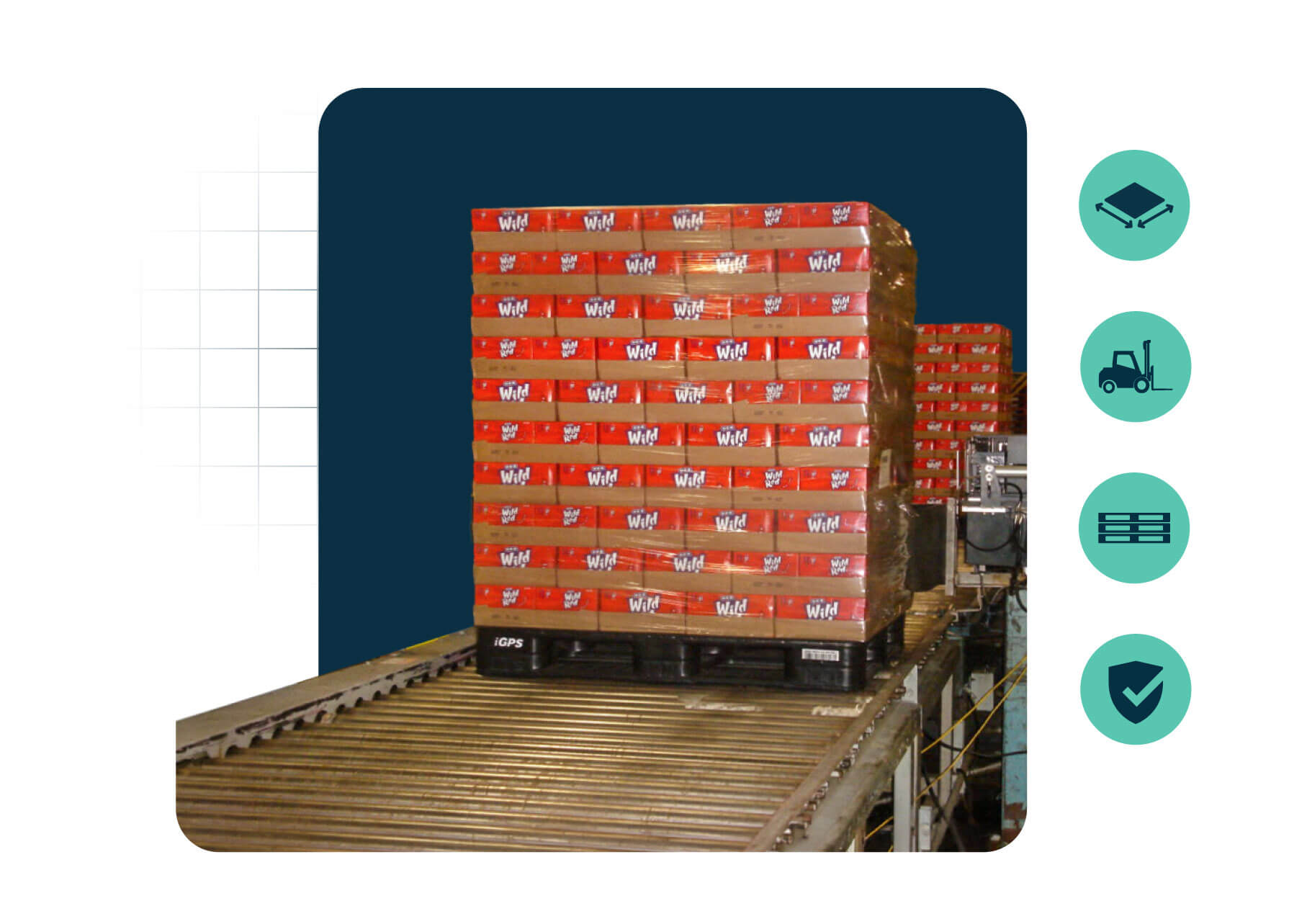
Plastic pallets provide a more standardized handling platform than many reused wood pallets.
Because they maintain consistent dimensions and do not splinter, shed debris, or absorb moisture, they create more predictable handling conditions throughout the warehouse.
Potential benefits include:
- More predictable fork entry
- Improved load stability
- Reduced pallet debris on warehouse floors
- No exposed nails or broken boards
- Consistent dimensions for automated systems
- Lower risk of product damage caused by pallet failure
As warehouses become more automated, many companies are placing greater emphasis on reducing variability throughout the warehouse system, including the pallet itself.
How Pallet Pooling Supports Safer Operations
Pallet quality is influenced not only by the pallet design, but also by how pallets are managed throughout the supply chain.
In many facilities, damaged pallets remain in circulation because sorting, replacement, and recovery processes vary by location.
Pallet pooling helps address that challenge by creating a managed system for pallet quality and circulation. Pool operators handle pallet retrieval, quality management, recycling, and circulation, helping facilities maintain more consistent pallet quality without operating their own recovery programs.
Operational advantages may include:
- Fewer damaged pallets entering circulation
- More consistent handling conditions across facilities
- Reduced pallet storage requirements
- Less time spent sorting, repairing, or replacing pallets
- Improved standardization throughout the network
- More predictable pallet quality from shipment to shipment
For many supply chains, safer forklift operations are not simply the result of better driving practices. They are also influenced by the consistency of the handling environment employees work within every day.
Install Bollards in High-Risk Zones
Bollards provide a physical barrier between moving equipment and critical infrastructure.
They are commonly installed near:
- Pedestrian crossings
- Building entrances
- Utility equipment
- Dock approaches
- Structural columns
Strategically placed bollards can help absorb impacts before damage reaches more expensive assets.
Build Safety Impact Barriers
Impact barriers help separate forklift traffic from employees, critical assets, and facility infrastructure.
These systems are often used in areas with:
- Heavy forklift traffic
- Pedestrian activity
- Automation equipment
- Production workstations
- Battery charging areas
Physical separation helps reduce the likelihood of accidental contact while creating clearer travel paths throughout the facility.
Set Trak-Shield Door and Column Guards
Doors and structural columns are among the most frequently impacted areas in a warehouse.
Protective guards help shield these assets from repeated contact that can occur during daily operations.
Facilities often install protection around:
- Dock door openings
- Building columns
- Rack support structures
- High-traffic intersections
- Tight turning areas
Protecting infrastructure early is typically less expensive than repeated repairs over time.
Avoid Overloading Forklifts
Every forklift has a rated load capacity that should never be exceeded.
Overloading affects vehicle stability, increases stopping distance, and raises the likelihood of tip-overs or dropped loads.
Operators should always:
- Verify load weight before transport
- Keep loads balanced and secure
- Follow manufacturer capacity ratings
- Travel at appropriate speeds
- Lower loads during movement when possible
Proper load management remains one of the most effective ways to prevent forklift accidents and protect both employees and inventory.
6 Ways to Reduce Forklift Damage
Most forklift-related incidents are traced back to a relatively small number of operational issues. Facilities that focus on forklift condition, load stability, traffic flow, and predictable handling practices are often better positioned to reduce injuries, equipment damage, and workflow disruption.
| Prevention Strategy | Primary Benefit |
|---|---|
| Maintain forklifts regularly | Reduce equipment failures |
| Improve pallet quality | Increase load stability |
| Protect high-risk impact zones | Reduce facility damage |
| Separate pedestrian and equipment traffic | Lower collision risk |
| Improve visibility and traffic flow | Reduce handling errors |
| Avoid overloading forklifts | Improve stability and control |
The common theme across these practices is consistency. Safer forklift operations rarely come from a single policy, training program, or corrective action. They result from creating an environment where loads are more stable, traffic is easier to manage, and variability is reduced throughout the operation.
Conclusion
Preventing forklift damage starts long before a forklift makes contact with a rack, dock door, pallet, or product.
Most incidents can be traced back to conditions that exist throughout the operation, including unstable loads, poor visibility, congested traffic patterns, damaged pallets, and inconsistent handling practices. While training remains essential, the most effective prevention strategies focus on reducing the conditions that create risk in the first place.
Forklifts operate within a larger warehouse system, and their performance is influenced by every part of that system. Load stability, pallet quality, facility design, traffic flow, infrastructure protection, and equipment maintenance all play a role in reducing accidents, product damage, and downtime.
As warehouses become faster, more automated, and increasingly dependent on predictable flow, many organizations are shifting their focus from individual incidents to operational consistency. Predictable pallet quality, standardized material flow, and fewer sources of handling variability help create safer conditions for employees while improving overall warehouse performance. In that environment, pallet management becomes more than a purchasing decision—it becomes part of the system that helps keep people, products, and equipment moving safely.
FAQs
What is the most common cause of forklift fatalities?
Forklift overturns are among the leading causes of forklift-related fatalities, according to OSHA. These incidents often occur when forklifts are overloaded, carry unstable loads, travel too quickly, or make sharp turns. Maintaining load stability and following capacity limits are key parts of preventing tip-overs.
What is the golden rule of forklift operations?
The golden rule of forklift operations is to stay within the forklift’s rated capacity and maintain control of the load at all times. Operators should maintain clear visibility, keep loads stable, follow designated traffic routes, and inspect equipment before use. Consistent handling practices help reduce both accidents and equipment damage.
Are plastic pallets better for reducing forklift damage and accidents?
Plastic pallets can help reduce handling variability by providing consistent dimensions and load support. Unlike reused wood pallets, they do not splinter, shed debris, or contain exposed nails. When combined with a pallet pooling program that helps maintain consistent pallet quality, plastic pallets can support safer and more predictable material handling operations.
What causes most forklift damage in a warehouse?
Forklift damage is often linked to unstable loads, poor visibility, damaged pallets, congested traffic patterns, and inadequate infrastructure protection. While operator error can contribute, many incidents begin with conditions that exist throughout the material handling environment.
How does pallet pooling support warehouse safety?
Pallet pooling helps maintain more consistent pallet quality by managing pallet retrieval, inspection, recycling, and circulation. Consistent pallet quality supports load stability, predictable handling conditions, and smoother material flow throughout the warehouse.
What areas of a warehouse experience the most forklift damage?
Dock doors, aisle intersections, rack uprights, columns, and pedestrian crossings are among the most common forklift impact zones. These locations combine high traffic volume, limited visibility, and frequent turning movements, making them more susceptible to collisions and infrastructure damage.
Reducing forklift damage often starts with improving the conditions surrounding the forklift itself. iGPS plastic pallets help create more consistent handling conditions through standardized dimensions, durable construction, and a managed pooling system that supports pallet quality across the supply chain. For more information, call 1-866-556-8611, email switch@igps.net, or visit our contact page.