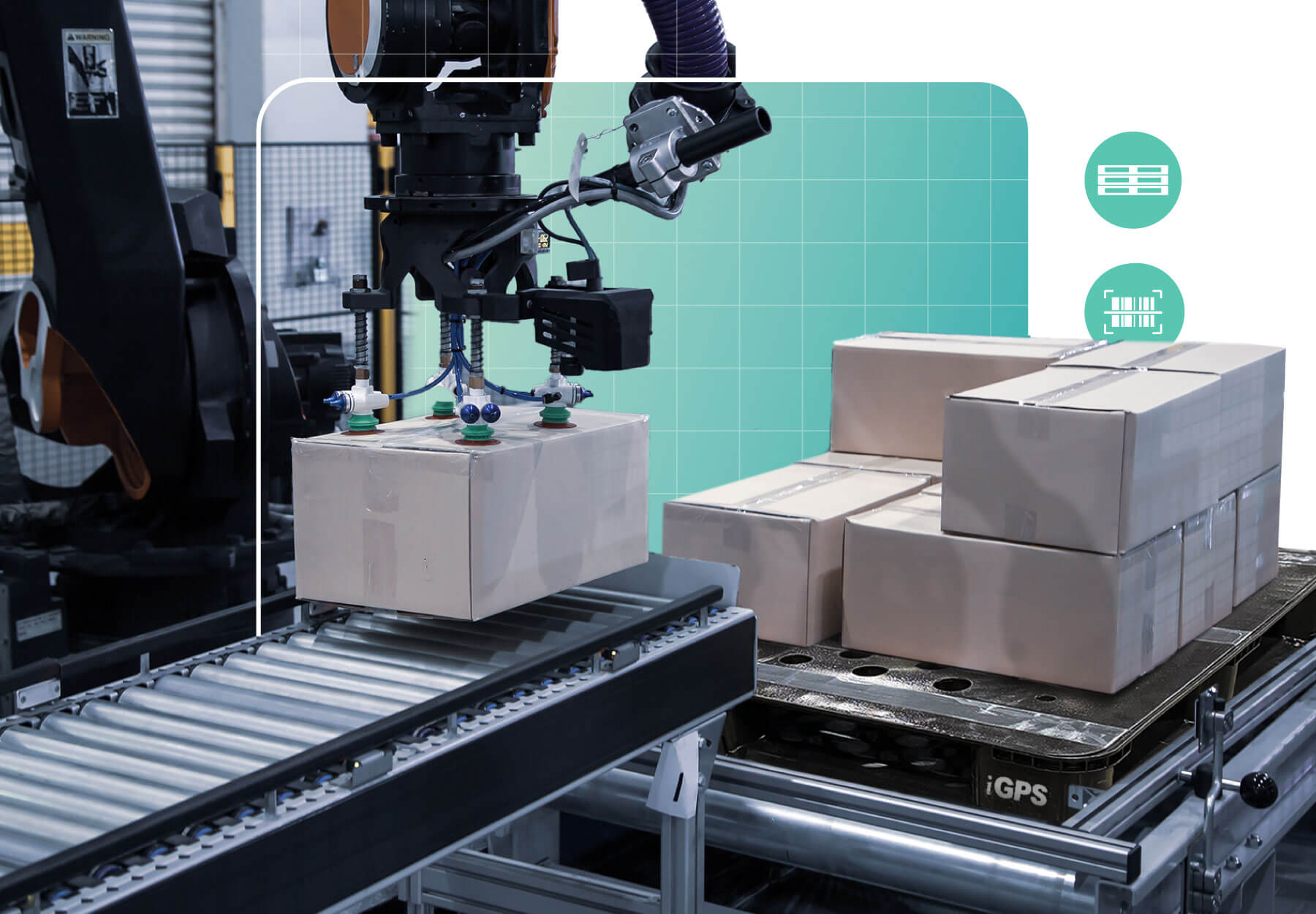
Cold storage warehouse requirements are the infrastructure, environmental controls, and operational practices needed to maintain defined temperature ranges while protecting product quality, worker safety, and cold chain performance.
Key Takeaways
- Cold storage warehouses must maintain defined temperature ranges and humidity to protect product integrity and shelf life.
- Facility design, insulation, airflow, and refrigeration performance directly affect throughput and food safety.
- Worker safety in cold environments depends on floor conditions, equipment reliability, and OSHA-aligned controls.
- Energy efficiency in cold storage is driven by insulation, dock discipline, and refrigeration system management.
- Pallet selection influences hygiene, automation uptime, labor strain, and traceability across cold storage operations.
Cold storage operations depend on more than refrigeration. Facilities must control airflow, humidity, infrastructure performance, worker safety, and material handling reliability while product moves through temperature-controlled zones. When these systems drift, the result is product loss, safety risk, and slower throughput.
Demand for temperature-controlled logistics continues to grow across food, pharmaceutical, and e-commerce supply chains. According to the Cold Storage Market Size & Industry Report (Grand View Research), the global cold storage market was estimated at $185.75 billion in 2025 and is projected to reach $474.21 billion by 2033 as companies invest in modern refrigerated warehouse infrastructure.
Cold Storage Warehouse Requirements
Cold storage facilities operate under a specific set of environmental, structural, and operational requirements. Maintaining these environments goes beyond refrigeration alone; facilities must coordinate temperature control, infrastructure performance, equipment reliability, worker safety, and energy management.
The sections below outline the operational requirements that keep cold storage facilities running reliably.
Thermal & Environmental Control
Temperature management is the foundation of cold storage operations. Small variations can shorten shelf life, damage packaging, or create ice hazards inside the facility.
Key environmental control requirements include:
- Defined temperature ranges by product type
- Fresh produce: typically 34–40°F
- Frozen food: typically 0°F or below
- Pharmaceutical storage may require ultra-low conditions
- Consistent airflow across storage zones
Uneven airflow can create hot spots or frost accumulation in racking aisles. - Humidity control
Excess humidity creates condensation that freezes on floors, racks, and equipment. - Temperature monitoring systems
Continuous sensors and alarms are essential for food safety and regulatory compliance. - Dock-to-storage temperature transition control
Large temperature swings increase frost buildup and refrigeration load.
When environmental control drifts, problems appear quickly: ice buildup, damaged product, and unsafe working conditions.
Specialized Infrastructure
Cold storage requires infrastructure designed specifically for freezing environments. Standard warehouse construction cannot handle sustained cold temperatures.
Critical infrastructure elements include:
- Insulated wall and ceiling panels to prevent thermal loss
- Vapor barriers to stop moisture infiltration
- Underfloor heating systems to prevent frost heave and slab cracking
- Dock seals and high-speed doors to limit warm air infiltration
- Refrigeration systems sized for facility volume and throughput
Equipment also needs to tolerate cold environments.
Operational considerations include:
- Forklift batteries that discharge faster in cold temperatures
- Lubricants that thicken in freezer conditions
- Seals and components that become brittle over time
Facilities designed without these considerations often experience equipment downtime and higher maintenance costs.
Cold Storage Warehouse Design and Construction Considerations
Cold storage design determines how efficiently the facility will operate for decades. The building must maintain temperature while supporting constant product movement.
Important design considerations include:
- Building envelope performance: Insulation quality and vapor sealing directly affect refrigeration demand.
- Ceiling height vs refrigeration load: Taller buildings increase storage capacity but also increase cooling volume.
- Racking layout and airflow paths: Poor spacing can restrict air circulation and create uneven cooling zones.
- Dock placement and traffic flow: Each dock door cycle introduces warm air that the refrigeration system must recover.
- Floor system durability: Freezer floors must resist cracking and long-term structural movement.
Well-designed facilities maintain stable temperatures without overworking compressors or restricting product flow.
Worker Safety (OSHA)
Working in cold environments introduces risks that do not exist in standard warehouse operations. Safety requirements focus on preventing cold exposure injuries and ice-related accidents.
Common safety challenges include:
- Ice buildup creating slip hazards
- Reduced dexterity in freezing temperatures
- Fog and frost limiting forklift visibility
- Worker fatigue during extended freezer exposure
Cold storage safety programs typically include:
- Cold-weather PPE requirements
- Worker rotation schedules to limit exposure time
- Floor inspection routines to remove ice hazards
- Training programs aligned with OSHA guidelines
Facilities handling food products may also need to meet FDA sanitation and food safety requirements.
Safety performance in cold storage often depends on equipment reliability and stable load platforms.
Energy & Sustainability
Energy consumption is one of the largest operating costs in cold storage. According to the U.S. Department of Energy’s Better Buildings refrigeration resource, commercial refrigeration uses roughly 1.3 quads of source energy each year in the U.S., which is why insulation, dock discipline, and refrigeration performance have such a direct effect on cold storage operating cost.
Major drivers of energy use include:
- Thermal loss through doors and building envelope
- Poor insulation or damaged dock seals
- Excess door openings during peak traffic periods
Facilities often invest in:
- High-efficiency refrigeration compressors
- LED lighting designed for cold environments
- Automated door systems that minimize open time
- Tightly sealed building envelopes
Improving energy efficiency reduces operating costs while helping facilities meet sustainability goals across the supply chain.
Best Practices
Efficient cold storage operations rely on disciplined execution across the facility.
Operational best practices typically include:
- Continuous temperature monitoring and alert systems
- Routine airflow audits after layout changes
- Strict dock door management during loading cycles
- Standardized pallet loads to prevent product overhang
- Floor maintenance routines to remove ice hazards
Material selection also plays an important role.
Pallets that maintain consistent dimensions and resist moisture help reduce product damage, sanitation effort, and equipment interruptions.
Facilities that follow these practices maintain stable storage conditions while keeping throughput high.
Types of Cold Storage Facilities and Their Requirements
Cold storage facilities are built around temperature ranges tied to product type.
- Refrigerated warehouse (above freezing): 34°F–40°F for produce, dairy, and beverages. Humidity control protects packaging integrity.
- Freezer warehouse (0°F and below): Designed for frozen food and long-term storage. Floors and racking must tolerate sustained cold temperatures.
- Blast freezer: Rapid temperature reduction with high airflow intensity and refrigeration load.
- Pharmaceutical or ultra-low zones: Require continuous monitoring, documented compliance, and often backup power systems.
Different types demand different insulation levels, refrigeration sizing, and material performance.
Material handling platforms also affect cold storage performance. Pallets interact with forklifts, racking systems, sanitation programs, and automation equipment throughout the facility.
Plastic Pallets vs Wood Pallets for Cold Storage
Inside a cold storage warehouse, pallet performance influences hygiene, safety, and automation uptime.
- Wood Pallets: Wood pallets can perform in cold storage facilities. Wood may absorb moisture in wet conditions; in a freezer, absorbed moisture can freeze, adding weight and increasing the likelihood of board separation over time.
- Plastic Pallets: Plastic pallets maintain consistent size and shape. They do not absorb moisture and do not shed debris. Smooth surfaces reduce ice buildup and simplify sanitation.
Below is a comparison relevant to freezer environments:
| Performance Factor | Wood Pallets | Plastic Pallets |
|---|---|---|
| Moisture absorption | May absorb moisture in humid storage conditions | Do not absorb moisture |
| Dimensional consistency | Can vary in size or quality | Consistent size and shape |
| Debris | May splinter or shed debris | Do not shed debris |
| Automation compatibility | Variation may affect AS/RS performance | Reliable in automated systems |
| Hygiene | May require treatment | Non-porous and easier to sanitize |
| Weight stability | Can gain weight in freezing cycles | Stable weight in cold conditions |
Material performance differences become more pronounced in freezer environments where moisture, temperature swings, and automation demands place additional stress on pallet platforms.
Pallet pooling adds operational stability. Companies rent pallets from a shared network rather than owning them. The pool operator manages delivery, retrieval, cleaning, repair, and recycling, reducing empty pallet storage and internal labor.
Impact of Pallet Selection on Efficient Cold Storage
While the previous section compares pallet materials, the operational impact appears in daily warehouse execution.
Pallet decisions shape how smoothly cold storage operations run because every load platform interacts with forklifts, racking, conveyors, and workers moving product in freezing conditions.
Three operational areas feel the impact first:
Labor efficiency
Freezer work already slows movement. Heavier or unstable pallets increase handling strain and slow lift cycles. Lightweight, consistent plastic pallets move more predictably and reduce operator fatigue.
Equipment uptime
Automation depends on uniform platforms. Dimensional variation can interrupt conveyors or AS/RS systems, forcing manual resets. Consistent plastic pallets support steady automation performance.
Product integrity
Cold temperatures make packaging more brittle. Uneven pallet decks or shifting boards increase the chance of damaged cases. Smooth plastic decks help keep loads stable during storage and movement.
Efficient cold storage depends on consistency. Reliable pallet platforms support faster handling, fewer equipment interruptions, and better product protection under cold conditions.
Cold Chain Risk Management and Traceability
Maintaining temperatures is only part of cold chain control. Movement visibility is equally important.
When perishable goods move between facilities, each handoff creates exposure. Accurate movement records support recall response and regulatory compliance.
RFID-enabled pallets support pallet-level tracking and traceability. Tags embedded inside the structure are protected from damage and provide pallet ID, location when scanned, and movement history. They register data only when read at defined scan points.
Serialized identification strengthens traceability across multiple facilities. When paired with scanning infrastructure, tagged platforms reduce manual entry errors and improve inventory accuracy.
Cold storage to preserve product quality requires both temperature control and documented movement.
Conclusion
Cold storage facilities protect perishable goods through temperature control, infrastructure discipline, and worker safety.
Material selection influences hygiene, airflow, automation reliability, and handling strain.
Stable temperatures protect shelf life. Stable load platforms protect people and equipment. Consistency across both protects the supply chain.
FAQ
What Are the OSHA Regulations for Cold Storage?
The Occupational Safety and Health Administration requires employers to protect workers from recognized hazards in cold environments. That includes preventing slip hazards, providing proper PPE, managing exposure time, and maintaining safe equipment operation. There is no single mandated freezer temperature limit; employers must control risk based on working conditions.
Are Plastic Pallets Better in Cold Storage Warehouses?
Plastic pallets offer consistent dimensions, resistance to moisture, and smooth surfaces that reduce debris in cold storage facilities. Wood pallets can be used, but they may absorb moisture and vary in size. In automated or high-hygiene environments, dimensional stability and cleanability often support stronger operational performance.
What Are the Essential Temperature Control Requirements for Cold Storage Warehouses?
A cold storage warehouse must maintain temperatures within specific temperature ranges based on product type. Fresh produce, frozen food, and pharmaceutical storage each require defined conditions. Continuous monitoring, proper insulation, and a well-designed refrigeration system are essential to maintain temperatures and protect product quality.
What Are the Regulatory Compliance Requirements for Food-Grade Cold Storage in the U.S.?
Food-grade cold storage must comply with FDA food safety regulations and, where applicable, USDA standards. Facilities must maintain sanitary conditions, documented temperature records, and traceability across the cold chain. Storage requirements focus on preventing contamination and preserving product integrity throughout handling and storage.
Why Is Traceability Important in Cold Storage Operations?
Traceability protects product integrity and supports food safety across the cold chain. Documented movement records show where loads traveled and when they were handled. RFID-enabled pallets provide pallet ID, location when scanned, and movement history at defined read points, improving inventory accuracy and speeding recall response in cold storage operations.
What Materials Perform Best in Freezer Environments?
Freezer environments demand materials that resist moisture and maintain dimensional stability in cold temperatures. Wood pallets can absorb moisture, which may freeze and add weight over time. Plastic pallets do not absorb water, maintain consistent size, and provide smooth, debris-free surfaces that support hygiene and automation reliability.
How Do Cold Storage Facilities Reduce Energy Costs?
Cold storage facilities reduce energy costs by limiting thermal loss and maintaining consistent temperatures. Tight insulation, sealed dock doors, and efficient refrigeration systems reduce compressor load. Stable storage layouts and consistent pallet dimensions support predictable airflow, helping maintain temperature and humidity levels while lowering operational costs.
Companies seeking to improve hygiene, traceability, and automation reliability in cold storage operations use pooled iGPS plastic pallets across their distribution networks. Our consistent, lightweight platforms support efficient cold storage and help reduce total cost of business. For more information, contact us at 1-800-884-0225 , email switch@igps.net, or visit our contact page.