Key Takeaways
- Food recalls require more than identifying affected products or lots. Retailers must also know where that inventory moved throughout their supply chain.
- Pallet-level tracking can help retailers connect product and lot information with the physical movement of goods between suppliers, stores, and other destinations.
- Better pallet-level visibility can help retailers isolate suspect inventory with greater precision.
- Pallet tracking works best as part of a traceability system in which suppliers, logistics providers, distributors, and retailers are coordinated.
- In fact, FDA traceability exercises in June 2026 found that proactive supply chain coordination was more important to success than any single technology.
- RFID-enabled pallets, like those available from iGPS, provide vital supply chain data that supports recall response, inventory management, and deeper visibility into product movement.
Food recalls have been making headlines again, underscoring a persistent challenge for grocery retailers. Identifying a contaminated product is only the first crucial step. The real trick is tracing where that product came from and where it went after it entered the distribution network.
This problem has taken on a renewed sense of urgency amid numerous produce-related outbreaks. In September, Reuters reported that the U.S. Food and Drug Administration was investigating a multistate Salmonella outbreak linked to broccoli sprouts. Only days later, federal health officials declared an end to a major Cyclospora outbreak, the largest ever recorded, related to iceberg lettuce.
Crises like these illustrate why effective food traceability must extend beyond identifying a product or lot. Retailers also need visibility into the physical movement of food throughout an increasingly complex supply chain.
During a food recall, this visibility helps address critical questions:
- Which pallets contained products associated with the affected lot?
- Which distribution centers, retail stores, or other destinations received those pallets?
- Is impacted inventory still somewhere in the distribution network?
- How quickly can it be identified and isolated?
This is where the availability of pallet-level tracking can add another practical layer to a retailer’s food safety and traceability strategy.
From Traceability to Visibility
The idea of food traceability is certainly not new, but government regulators and industry experts continue to work through how modern traceability should function in practice. In mid-June, the FDA convened a virtual public meeting specifically focused on challenges and solutions surrounding lot-level traceability.
This discussion came as the agency continues its work on the Food Traceability Rule established under Section 204 of the Food Safety Modernization Act. The rule requires organizations that manufacture, process, pack, or hold certain foods to maintain Key Data Elements associated with Critical Tracking Events as food travels through the supply chain. The goal? To improve consumer safety by enabling potentially contaminated food to be identified and removed from commerce more rapidly.
But this can be easier said than done. Product- and lot-level records are only part of the traceability picture. Once palletized food is loaded onto a truck, sent to a distribution center, and delivered to multiple destinations, retailers face an inherently physical logistics problem. They need to connect information about the affected food to information about how that inventory actually moved. A uniquely identifiable, trackable pallet, like those available from iGPS Logistics, can help facilitate that vital visibility.
Pallet Tracking Narrows the Search
Consider, for example, a retailer learning that cases from a particular production lot are subject to a safety recall. The retailer may know the supplier, product, lot code, and shipment information. But recall managers must still determine where the affected product can be found across the company’s distribution system.
If cases have been electronically associated with identifiable pallets, pallet-level tracking can provide another way to narrow that search. Instead of simply knowing that product departed one facility and was delivered somewhere within the network, logistics teams can potentially trace the movement of the asset that carried it. This can help retailers identify appropriate distribution centers or destinations more efficiently, isolate suspect inventory, and verify whether it may still be in transit or somewhere else in the network.
Improved visibility can also help recalls be carried out with stronger precision. In a food safety event, speed is essential — and so is accuracy. The more specificity with which an organization can identify affected inventory, the better positioned it is to focus recall activities on the products that require action rather than needlessly disrupting unrelated inventory.
Traceability Depends on Connected Data
Pallet tracking is not a substitute for traceability at the product, case, or lot level. Its greatest value comes when those different levels of information can complement one another seamlessly.
This takeaway is reflected in FDA research conducted earlier this year. In a series of 2026 tabletop exercises, participating entities were asked to find relevant records and provide traceability information to the FDA. Most participating firms were able to respond within 24 hours, and the FDA concluded that proactive coordination across the supply chain was more central to success than any one particular technology. RFID chips, barcodes, pallet serialization, and other tracking technologies do not facilitate traceability in isolation. These innovations become more powerful when suppliers, logistics providers, distributors, and retailers work together to marry their respective data.
The Humble Pallet as a Smart Asset
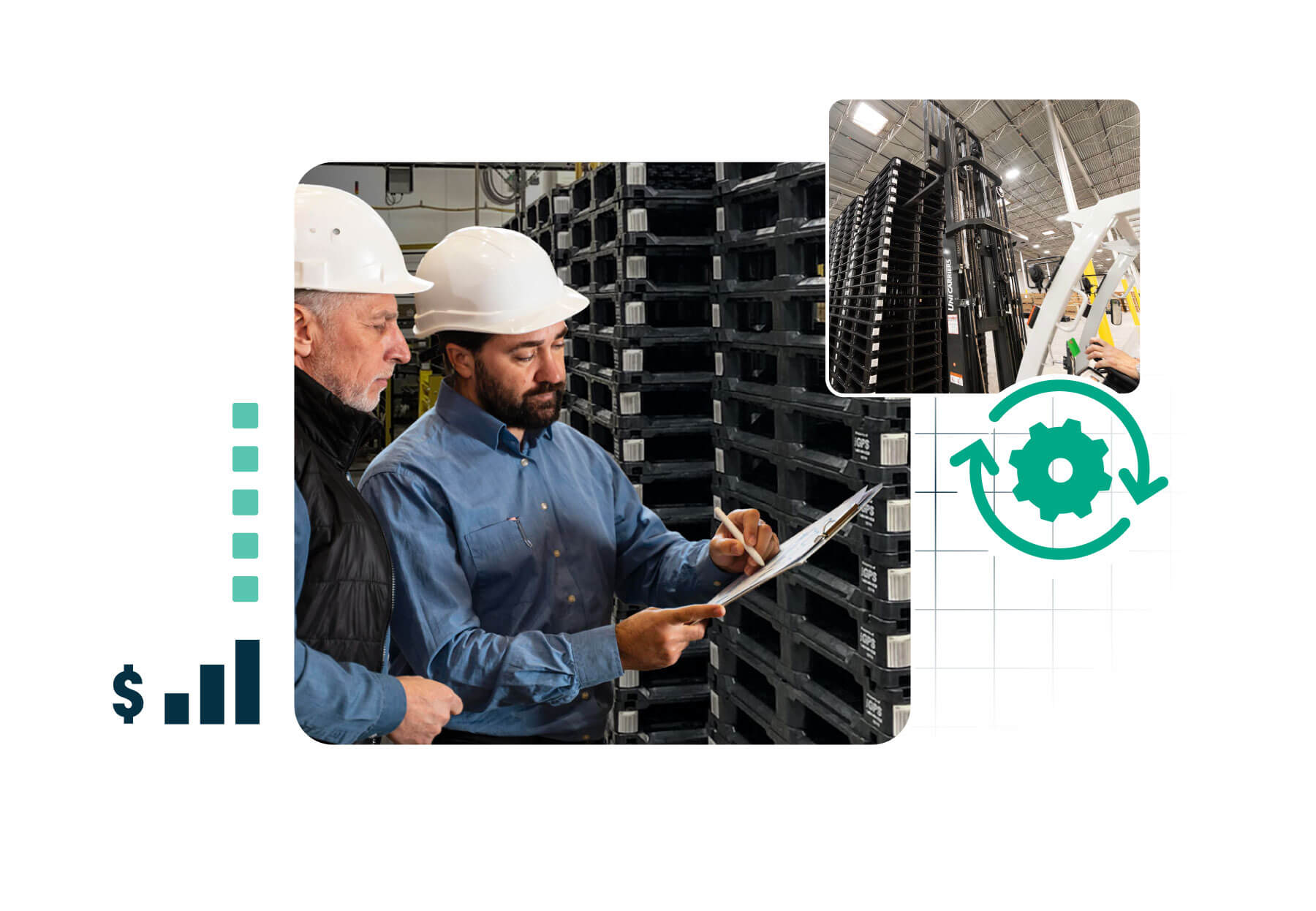
For decades, pallets have primarily been regarded as platforms for moving goods safely and efficiently. But with the addition of tracking technology, the humble shipping pallet becomes a smart asset that serves as a vital source of supply chain information. iGPS plastic pallets have been equipped with RFID technology since the company’s inception. This allows individual pallets to be uniquely identified and tracked as they circulate through the supply chain. And when pallet information is integrated with a retailer’s broader logistics and traceability systems, it can provide another data point to help supply chain leaders understand where products have traveled.
Improved pallet-level visibility supports better inventory management, helps companies investigate supply chain disruptions, and provides additional insight into product movement between facilities.
But food traceability may be one of its most significant applications. And consumers are safer for it.
Frequently Asked Questions
What is pallet tracking and how does it work?
Pallet tracking uses technologies such as RFID tags, barcodes, GPS or other identifiers to monitor individual pallets as they move through the supply chain. When pallet IDs are associated with shipment, product, or lot information, companies can record movements between suppliers, distribution centers and retailers, providing greater visibility into where goods have traveled and where they are located.
What is the #1 reason for a food recall?
Undeclared food allergens are a leading cause of food recalls in the United States, often resulting from labeling mistakes, formulation errors or unintended cross-contact during production. FDA has identified undeclared allergens as a leading source of recalls, with milk among the most frequently involved allergens. Pathogen contamination, including Salmonella and Listeria, is another major cause.
What are the five steps to properly handle recalled food?
First, verify the recall notice and identify affected products using lot codes, dates or other identifying information. Next, immediately remove and segregate recalled inventory so it cannot be sold or distributed. Follow the supplier’s or regulator’s instructions for returning or disposing of it, clean and sanitize affected areas when appropriate, and document the action taken.