Key Takeaways
- Choosing the right pallet supplier means evaluating operational performance, risk exposure, and long-term cost — not just unit price.
- Plastic pallets are better suited for automation, sanitation-sensitive, and multi-facility networks where dimensional consistency matters.
- Wood pallets can work in lower-velocity or cost-sensitive operations where performance variability is tolerable.
- The right partner reduces full cost impact over time by lowering downtime, product damage, fuel consumption, and administrative burden.
Choosing the right pallet supplier affects more than material cost. The pallet is more than the platform under each shipment, it influences equipment performance, product stability, sanitation control, and how much coordination your team absorbs behind the scenes.
In many networks, pallets move quietly until something fails — a conveyor stop, a damaged shipment, a missed compliance standard. Those moments tend to trace back to supplier selection, not daily handling.
Selecting a pallet partner is an operational decision. The impact shows up in uptime, labor efficiency, and cost exposure across every facility the pallet touches.
Key Factors To Consider When Choosing A Pallet Supplier
Most pallet decisions begin with price, then get justified later. That sequence tends to reverse after the first unexpected line stop or rejected load.
Supplier fit shows up in three areas:
- Handling performance: uniform sizing supports conveyors, racking, and automation.
- Quality discipline: inspection standards determine what reenters circulation.
- Network execution: delivery and retrieval capability influence how much internal coordination your team absorbs.
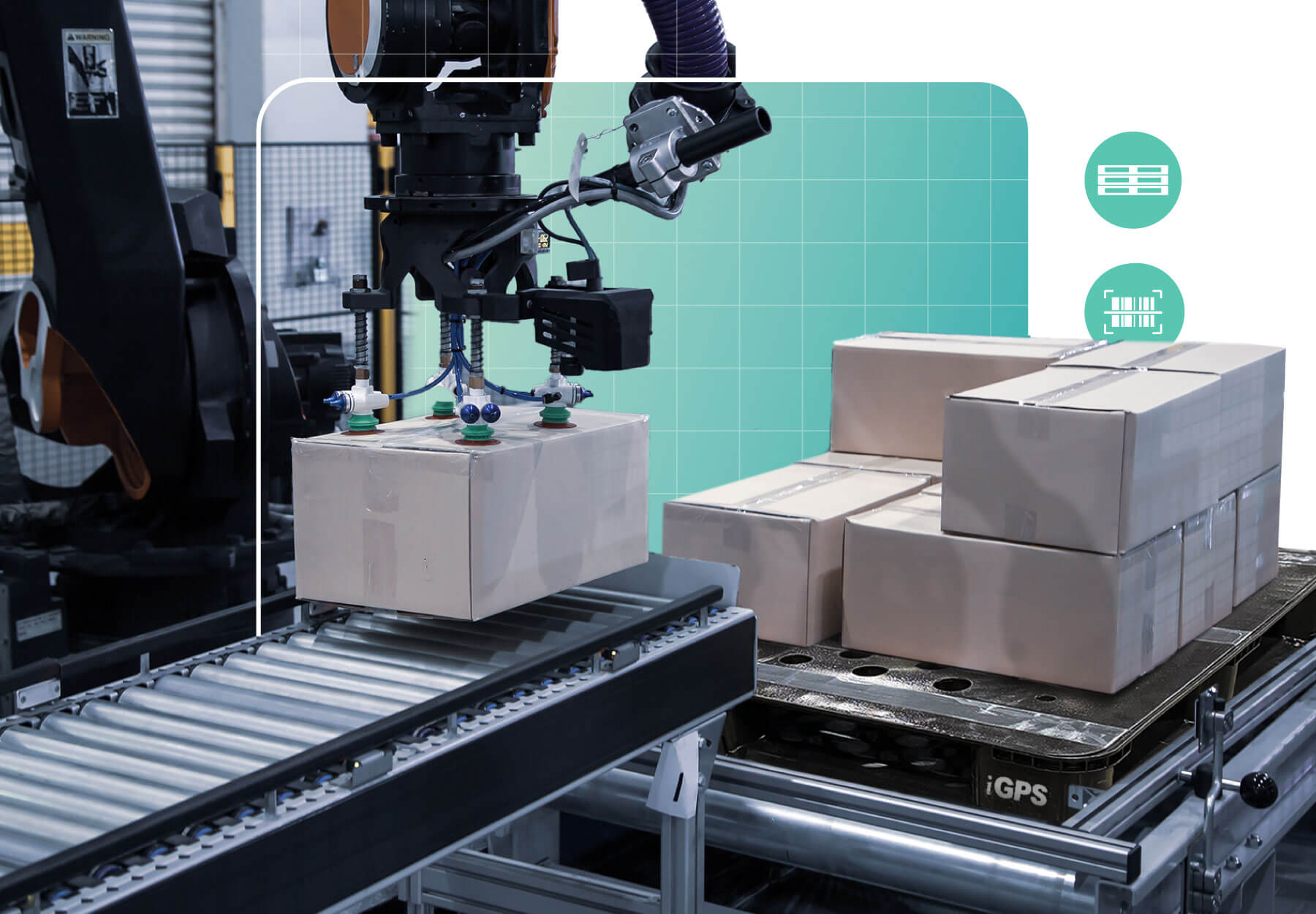
Dimensional reliability deserves focused scrutiny. In a high-speed distribution center (DC), even slight variation can create a stop-and-clear event when pallets enter conveyors or racking. Those interruptions look minor in isolation; over a week, they add up.
Material performance under stress also carries weight. Moisture exposure, refrigerated environments, and heavy dynamic loads reveal weaknesses quickly. When structural behavior becomes unpredictable, operators build workarounds that slow throughput.
Traceability also belongs in the evaluation process. Pallets with RFID generate serialized movement records at defined read points, strengthening inventory accuracy and reinforcing accountability across facilities.
Some pallet renters or suppliers manage circulation, not just supply. Delivery, retrieval, inspection, repair, and recycling should operate as one coordinated system that keeps assets moving and performance consistent.
Plastic vs. Wood Pallets: How to Choose the Right Pallet Supplier
The choice between plastic and wood comes down to how much consistency your operation requires.
Choose plastic pallets when your supply chain depends on automation, tight tolerances, sanitation control, or multi-facility consistency. Plastic platforms maintain reliable dimensions, resist moisture, and perform predictably under load. In high-speed distribution, cold storage, or regulated environments, that stability reduces equipment disruption and variability.
Choose wood pallets when cost sensitivity is higher than performance sensitivity. In slower-moving, less automation-dependent operations, wood can perform effectively, especially where repair networks are strong and environmental exposure is limited.
Plastic supports control and repeatability. Wood supports flexibility and lower upfront cost.
The right choice depends on how much variation your network can tolerate without affecting throughput.
Pallet Ownership vs. Rental vs. Pooling: What’s the Operational Difference?
The financial structure behind your pallet strategy affects labor, storage, retrieval, and long-term cost control. Each model shifts responsibility differently across your operation.
Owning Pallets
You purchase pallets outright and manage them internally.
- Capital expense upfront
- Responsible for retrieval from customers and retailers
- Must store empty inventory and comply with fire codes
- Manage sorting, repair, and disposal
- Carry loss, shrink, and replacement risk
Ownership provides asset control; it also requires ongoing labor and space.
Renting Pallets
You lease pallets for a defined term or quantity.
- Lower upfront capital compared to ownership
- Typically rent a fixed number of specific units
- Customer often coordinates return logistics
- May remain responsible for tracking and condition
Rental reduces purchase cost, yet much of the operational coordination can still sit with the shipper.
Pallet Pooling
You access pallets through a shared, managed network.
- Draw from and return to a common asset base
- Provider handles delivery, retrieval, inspection, washing, repair, and recycling
- Reduces empty pallet storage and backhaul coordination
- Maintains consistent quality standards across circulation
- Supports serialized tracking and pallet-level visibility
Pooling shifts pallet management to infrastructure. Your team focuses on moving product, not platforms.
Steps for Evaluating Pallet Suppliers
The right supplier aligns performance, infrastructure, and cost structure with how your network actually operates. Use the following evaluation steps to compare providers objectively.
Step 1: Verify Structural Performance
- Confirm rack, static, and dynamic load ratings
- Validate testing standards and documentation
- Ensure true 48×40 dimensions for standard applications
Performance claims should be supported by documented data.
Step 2: Assess Automation Compatibility
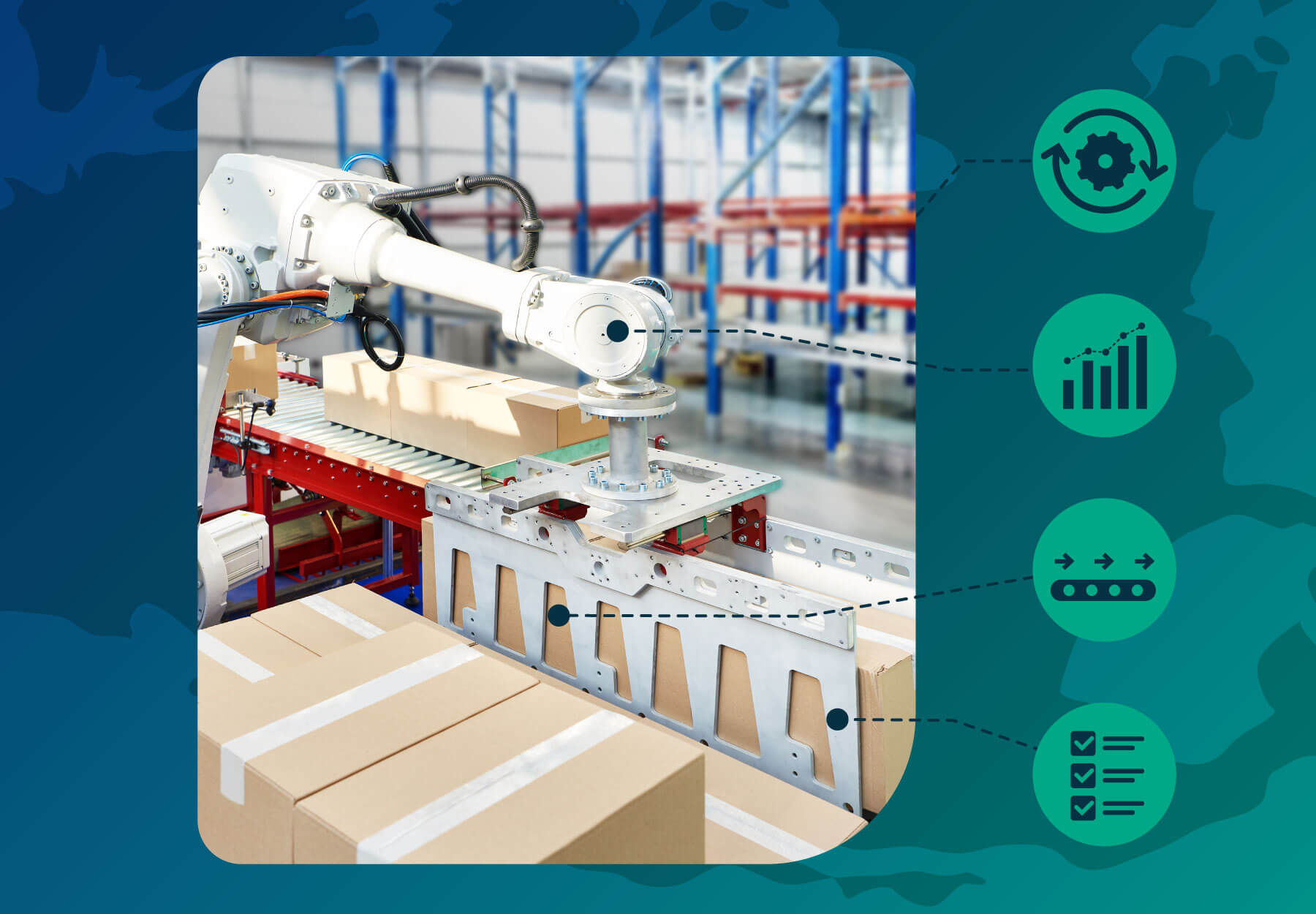
- Confirm conveyor and AS/RS compatibility
- Review manufacturing tolerance and dimensional repeatability
- Evaluate deck coverage and load stability
Automation environments amplify small inconsistencies.
Step 3: Examine Inspection and Quality Control
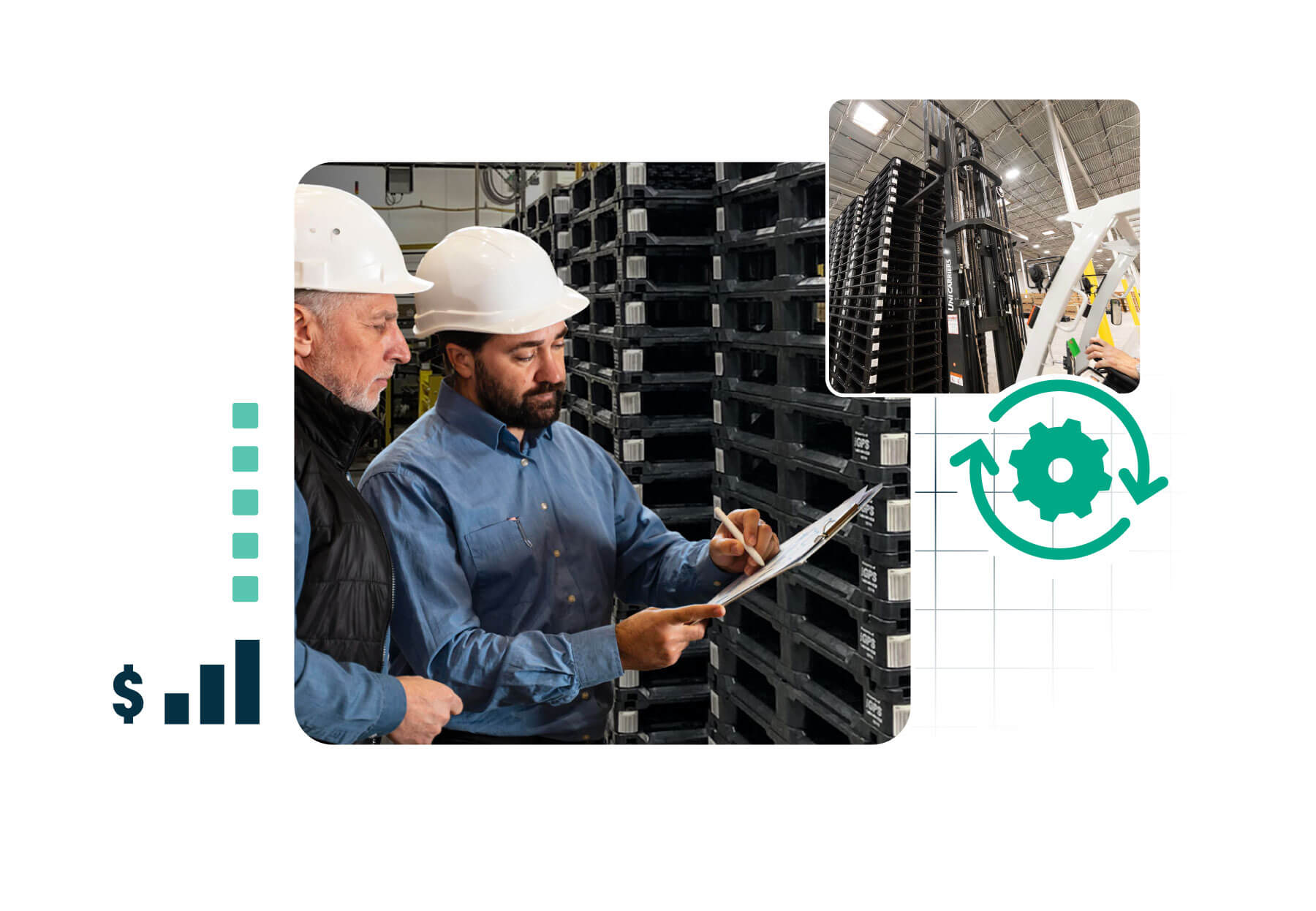
- Ask how pallets are inspected before redeployment
- Review repair thresholds and removal criteria
- Confirm sanitation and washing protocols
Quality discipline determines field performance.
Step 4: Evaluate Network Infrastructure
- Depot coverage aligned to your shipping footprint
- Defined delivery and retrieval timelines
- Surge capacity during seasonal peaks
Infrastructure strength reduces internal coordination work.
Step 5: Analyze Total Cost Impact
- Transportation weight considerations
- Product damage reduction potential
- Labor tied to empty pallet management
- Lifecycle and recyclability factors
Compare long-term operational impact, not just purchase price.
Top Questions to Ask When Choosing a Pallet Supplier
Ask these questions when evaluating potential pallet suppliers and selecting the right pallet supplier for your supply chain.
- What performance can I rely on for my pallet needs?
Confirm rack, static, and dynamic load ratings under full span conditions. Ensure the pallet type supports your automation level, storage design, and handling environment. - How does the supplier control pallet quality?
Review inspection standards, repair thresholds, and quality control processes before pallets are redeployed. Consistency across facilities protects supply chain efficiency. - Who manages pallet supply and retrieval?
Clarify whether you are purchasing shipping pallets, renting, or working with a pallet pooling provider. Understand who handles returns, repairs, pallet recycling, and empty inventory so your team can focus on core business execution. - Do these pallets meet industry standards and compliance requirements?
Confirm whether wood pallets comply with ISPM 15 for international shipping and international trade. Verify that the supplier complies with applicable standards for your industry. - What happens during peak demand?
Evaluate network coverage, local pallet availability, surge capacity, and response time. A reliable supplier should support volume shifts without disrupting operations. - What visibility do I gain?
If working with RFID-enabled pallets or tagged platforms, confirm how pallet ID and movement history are captured at read points. Understand what data is shared and how it supports accountability. - What is the total cost of ownership?
Compare purchase price against full operating impact — transport weight, product damage risk, storage space, repair responsibility, and replacement frequency. The right partner should help you evaluate total cost of ownership, not just unit price.
Service quality and corporate social responsibility may also influence your decision, especially if sustainability and long-term alignment matter to your business needs.
Benefits of Working with a Plastic Pallet Pooling Company
A plastic pallet pooling company reduces the operational burden your team carries every day.
Instead of purchasing pallets, storing empties, coordinating returns, managing repairs, and tracking loss, the provider handles those responsibilities. That frees labor hours, warehouse space, and management attention for higher-value work.
Standardized pallets across facilities support more stable automation performance and more predictable load handling. Fewer equipment interruptions and less product damage protect throughput and margin.
For supply chains operating at scale, pooling shifts pallet management out of your internal workflow. The benefit is not theoretical. It shows up in fewer distractions, cleaner execution, and stronger control over operating cost.
Conclusion
Pallet selection is closer to infrastructure planning than routine purchasing.
Pallets influence automation reliability, product protection, labor time, and how much internal energy goes into managing assets instead of serving customers. The material you choose, the management model you adopt, and the network support behind it all shape how smoothly your supply chain runs.
Companies that align pallet performance with their operating model gain steadier throughput, fewer distractions, and tighter cost control. That consistency becomes a competitive edge over time.
FAQ
How Do I Find Reputable Pallet Suppliers Near Me?
Identify providers with depot coverage inside your shipping footprint and documented inspection standards. Review load ratings, sanitation processes, and automation compatibility. Ask for industry references and confirm whether the supplier offers pooling services that manage retrieval and redeployment across your network.
How Can I Find Companies That Offer Sustainable or Recycled Pallet Options?
Begin by reviewing whether the supplier provides documented lifecycle data, recyclability details, and average trip counts. Confirm that pallets are fully recyclable at end-of-life and ask how damaged units are reclaimed and processed. Closed-loop recycling systems and third-party lifecycle assessments signal a serious sustainability program.
One place to start is by evaluating iGPS. The company operates a 100% recyclable HDPE pallet pool, diverts post-consumer plastic from landfills, and maintains a cradle-to-cradle recycling model designed to keep material in circulation rather than disposal streams.
How Do I Compare Plastic and Wood Pallet Suppliers Effectively?
Compare dimensional consistency, load ratings, sanitation performance, and automation compatibility under real operating conditions. Request documented testing data and review how each supplier manages inspection and quality control before redeployment. Material performance should align with your handling environment and compliance requirements.
What Should I Calculate Before Choosing a Pallet Supplier?
Model total cost of business rather than focusing only on unit price. Include transport weight impact, product damage risk, equipment maintenance, labor tied to empty pallet management, and lifecycle replacement rates. A higher purchase price may produce lower long-term operating cost.
How Important Is Network Size When Selecting a Pallet Partner?
Network scale directly affects delivery reliability, retrieval efficiency, and surge capacity. Suppliers with broad depot coverage reduce empty miles and prevent pallet shortages during peak demand. Evaluate whether their infrastructure matches your geographic footprint.
How Do I Evaluate a Supplier’s Inspection and Quality Standards?
Ask how pallets are inspected before reissue, what repair thresholds apply, and how damaged units are removed from circulation. Consistent inspection discipline protects automation performance and load stability. Quality control should be documented and standardized across facilities.
Companies looking to improve supply chain performance often turn to pooled iGPS plastic pallets to support automation, sanitation control, and cost stability across their network. Our lightweight HDPE pallets are built for high-volume distribution and backed by a managed national circulation system.
To discuss your pallet needs, call 1-800-884-0225, email switch@igps.net, or visit our contact page to speak with a pallet specialist.