Key Takeaways
- Pallet tracking improves control by tying movement directly to the asset.
- RFID captures movement automatically at scan points without manual input.
- Plastic pallets support more consistent scans through standardized design.
- Pallet loss drives cost across labor, freight, and operational flow.
- Pooling systems combine standardized assets with built-in traceability.
What Is a Pallet Tracking System
A pallet tracking system is a combination of physical identifiers, scan points, and software that records pallet movement at each handoff, creating a time-stamped history of location and flow across the supply chain. Most tracking systems don’t fail because of technology, they fail because they’re not built into how pallets actually move through the network.
A pallet tracking system connects physical movement to digital records. It assigns a unique ID to each unit and captures location and movement data as it moves through the network.
Each handoff, from production, storage, outbound load, to return, is recorded at defined scan points. Over time, that creates a usable history of where assets have been and how they move across facilities.
Most operations don’t struggle because of a lack of data. They struggle because data isn’t tied to the asset moving through the system. A tracking system closes that gap and gives teams a way to see where pallets actually are, not where they were expected to be.
8 Types of Pallet Tracking Technologies
Different operations use different tracking technologies depending on scale, cost tolerance, and system maturity. Each option solves a piece of the problem, but not all provide the same level of reliability.
How to think about your current tracking approach
| System Level | Typical Technologies | Scale | Cost Tolerance | System Maturity |
|---|---|---|---|---|
| Manual / Basic | Barcode, QR codes | Low to mid-volume operations | Low | Relies on manual scans and process discipline |
| Structured / Event-Based | Passive RFID | Mid to high-volume distribution | Moderate | Defined scan points; consistent event capture |
| Enhanced Visibility | BLE, IoT tags | Growing or multi-site networks | Moderate to high | More frequent location data; added infrastructure |
| Facility-Level Precision | RTLS, Vision systems | Large, complex facilities | High | Tracks movement within the building |
| High-Precision / Automation | UWB | Automation-heavy environments | High | Exact positioning for robotics and AS/RS |
| In-Transit Tracking | GPS | Over-the-road shipments | Moderate to high | Tracks assets between facilities, not inside them |
RFID (Radio-Frequency Identification)
RFID uses embedded tags inside the pallet that carry a unique ID. These tags are protected within the structure, making them difficult to damage or remove.
Movement is captured when pallets pass fixed read points such as dock doors or conveyors. Each read creates a time-stamped event tied to location and movement history. The system does not track continuously and does not detect pallet condition.
Passive vs. Active RFID
- Passive RFID: No battery; powered by the reader during scans. This is the standard for pallet tracking at scale due to low maintenance and reliability.
- Active RFID: Battery-powered; transmits signals over longer distances. Used in select cases where extended range is required.
Where it shows up: Common in high-volume distribution centers with defined scan points and consistent material flow.
Bluetooth Low Energy (BLE)
BLE uses battery-powered beacons attached to pallets or assets. These devices broadcast signals to nearby receivers placed throughout a facility.
Location updates occur more frequently than RFID, depending on receiver placement. This provides broader visibility within a building, especially between handling events.
Battery life and device management become part of the operation. At scale, maintaining devices requires defined processes.
Where it shows up: Facilities that need more frequent location updates without building a full RTLS network.
GPS Tracking
GPS tracking uses satellite signals to determine location while shipments move between facilities. Devices send updates at set intervals during transit.
This method works outside controlled environments where fixed scan points are not available. Indoor use is limited due to signal constraints.
Device cost and power requirements make it less practical for individual pallets.
Where it shows up: Tracking shipments in transit across long distances, especially for trailers or high-value loads.
Barcode / QR Codes
Barcode systems label each pallet with a scannable code. Staff scan the code during receiving, storage, and shipping events.
Each scan creates a record in the warehouse management system. Accuracy depends on consistent execution at every step.
Missed scans create gaps in tracking data, especially in high-volume operations.
Where it shows up: Early-stage or cost-sensitive operations where manual processes are still in place.
IoT & Smart Tags
IoT-based tracking uses connected devices that transmit data into software platforms. These devices can include location tracking along with additional sensors depending on the setup.
Data feeds into tracking software, ERP platforms, or warehouse systems. This supports broader visibility and more advanced analysis across the supply chain.
Implementation requires integration with existing systems and ongoing device management.
Where it shows up: Multi-site operations building connected tracking environments across facilities.
Real-Time Location Systems (RTLS)
RTLS uses a network of readers and tags to estimate location continuously within a facility. It can be built on RFID, BLE, or other wireless technologies.
Instead of capturing movement at fixed points, it provides ongoing location updates across defined zones. This reduces time spent searching for pallets during staging or dwell periods.
Infrastructure requirements are higher, and accuracy depends on system calibration.
Where it shows up: Large, complex warehouses where pallets sit, move, and get staged across multiple zones.
Ultra-Wideband (UWB)
UWB uses short radio pulses to determine precise indoor location. It can track assets within inches, providing exact positioning.
This level of precision supports automation systems, robotics, and tightly controlled workflows. Deployment is usually limited to targeted areas rather than entire networks.
Cost and system complexity limit broader use.
Where it shows up: Automation-heavy environments where exact positioning supports equipment and process flow.
Vision-Based Tracking (Computer Vision)
Vision-based systems use cameras and software to identify and follow pallets visually. Movement is tracked based on shape, labels, or position as pallets move through the facility.
These systems reduce reliance on manual scanning and work well where visual checkpoints already exist, such as conveyors or dock areas.
Performance depends on lighting, layout, and clear line of sight. Most operations use vision systems alongside other tracking technologies.
Where it shows up: Conveyor-driven environments or facilities working to reduce missed scans and improve data capture consistency.
Choosing the Right Tracking Approach
Most operations don’t choose a tracking technology—they operate at a certain level of visibility based on cost, scale, and system maturity.
| Technology | Best Fit | Pros | Limitations |
|---|---|---|---|
| RFID (Passive) | High-volume distribution networks | Low maintenance; reliable event capture; scalable | No visibility between scan points |
| RFID (Active) | Specialized tracking use cases | Longer read range; fewer fixed readers needed | Higher cost; battery management |
| Barcode / QR Codes | Low-cost or early-stage operations | Simple; low upfront cost | Depends on manual scans; prone to gaps |
| BLE | Indoor tracking with moderate visibility needs | More frequent updates than RFID | Battery upkeep; infrastructure required |
| GPS Tracking | In-transit shipments | Works across long distances | Not effective indoors; higher device cost |
| IoT / Smart Tags | Connected, multi-site operations | Broad data capture; system integration | Higher complexity; integration required |
| RTLS | Large, complex warehouse environments | Continuous location visibility | Infrastructure and calibration required |
| UWB | Automation-heavy facilities | High precision positioning | Expensive; limited to targeted use |
| Vision-Based Tracking | Conveyor and camera-enabled facilities | Reduces manual scanning; uses existing infrastructure | Sensitive to environment; often supplemental |
Key Benefits of Automated Pallet Tracking
Automated tracking improves control where most operations lose it—between facilities, during staging, and across handoffs.
Core benefits include:
- Accurate visibility of pallet locations across the network
- Reduced losses from misplaced or unreturned pallets
- Better inventory management and reconciliation
- Faster root cause identification when shipments are delayed
- Cleaner data for planning and forecasting
For teams dealing with rising transportation costs and tighter labor markets in North America, this level of visibility supports better decisions. It removes guesswork and replaces it with usable data tied to actual movement. Research from McKinsey consistently highlights limited end-to-end visibility as a core challenge in supply chain performance, especially across multi-site networks.
How the Pallet Tracking System Works
A tracking system works by capturing events at defined points.
- A pallet is assigned a unique ID
- It is scanned at key locations (production, storage, shipping)
- Each scan creates a time-stamped record
- Data feeds into tracking software or a warehouse management system
- Teams use that data to monitor movement and identify gaps
The system does not track continuously. It builds a reliable picture through consistent event capture.
When implemented correctly, it provides real-time visibility at operational checkpoints without disrupting workflow.
Traditional Tracking Solutions and Their Limitations
Traditional tracking relies on manual logs, paper records, or inconsistent barcode scans.
These approaches break down for a few reasons:
- Scans are missed during busy shifts
- Data entry errors create mismatches
- No consistent process across facilities
- Limited integration with existing systems
As a result, pallets go missing, inventory counts drift, and teams spend time reconciling instead of moving product.
Traditional tracking systems don’t fail because of technology. They fail because they depend too much on manual execution in fast-moving environments.
Examples of Pallet Tracking System Usage
Tracking systems show their value in day-to-day operations, not just reporting.
Common use cases include:
- Distribution centers tracking inbound and outbound pallet flow
- Manufacturing plants associating pallets with production runs
- Retail supply chains monitoring returns and asset recovery
- Food and beverage networks maintaining traceability across shipments
In each case, the goal is the same: understand where pallets move and where they stop.
Where Pallet Tracking Delivers the Most Value
Pallet tracking has the most impact at the points where visibility typically breaks down—handoffs, staging, and returns.
| Operational Stage | What Happens | Where Tracking Adds Value |
|---|---|---|
| Inbound Receiving | Pallets arrive from multiple suppliers and carriers | Confirms receipt, improves inventory accuracy, reduces disputes |
| Storage & Internal Movement | Pallets move between storage, staging, and production | Reduces search time and improves coordination across teams |
| Outbound Shipping | Pallets are staged, loaded, and shipped under time pressure | Verifies shipments, reduces errors, improves accountability |
| Cross-Facility Transfers | Pallets move between plants or distribution centers | Identifies delays and tracks movement between locations |
| Customer Locations | Pallets leave the network and are harder to recover | Highlights where pallets stop moving and supports recovery efforts |
Most pallet loss happens across these stages where visibility drops and handoffs increase.
Implementation Challenges
Adopting a pallet tracking system requires more than installing hardware.
Common challenges include:
- Integration with existing warehouse systems and ERP platforms
- Defining consistent scan points across facilities
- Training warehouse staff on new workflows
- Managing costs at scale
- Maintaining data accuracy across multiple locations
Success depends on aligning process, technology, and execution. Without that alignment, even strong systems underperform.
The Real Cost of Pallet Loss without Pallet Tracking Solutions
Lost pallets rarely show up as a single line item. The impact spreads across operations.
- Replacement purchases
- Expedited freight to cover shortages
- Labor spent searching and reconciling
- Disruptions to warehouse flow
- Product damage from inconsistent pallet quality
Over time, these costs compound. Ongoing increases in transportation and operational costs continue to put pressure on supply chain performance, making asset control more critical across distribution networks.
What this looks like in practice
In a network managing 50,000 pallets, even a small percentage going missing each year can mean thousands of units lost.
That loss does not stay contained to replacement cost.
Where the cost actually shows up
| Cost Area | Operational Impact |
|---|---|
| Replacement | Ongoing purchasing to maintain inventory levels |
| Expedite | Rush shipments to avoid service failures |
| Labor | Time spent searching, recounting, and resolving discrepancies |
| Flow Disruption | Delays in staging, loading, and outbound execution |
| Product Risk | Increased damage from inconsistent pallet quality |
These costs rarely sit in one place, but they show up across the operation every day.
What changes with tracking
A pallet tracking system reduces loss by making movement visible and measurable.
Teams can identify where pallets stop moving, where they leave the network, and where process breakdowns occur. That shifts pallet management from ongoing replacement to controlled execution.
How the iGPS Pallet Tracking Works
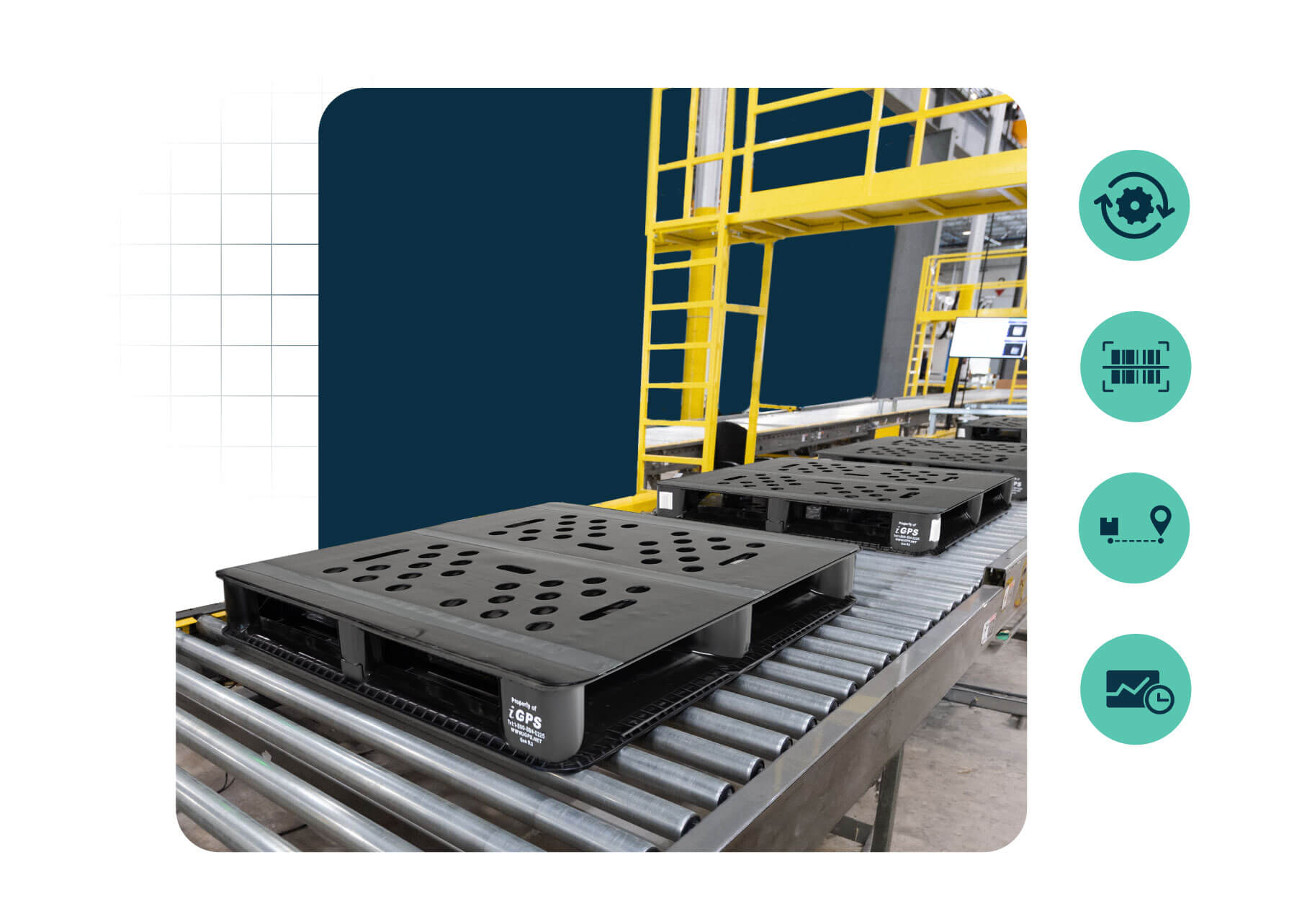
iGPS uses RFID-enabled pallets with embedded tags and unique serialized IDs. Each pallet includes multiple RFID tags and a barcode, providing multiple points of identification.
Tags are molded into the pallet, protecting them from damage during handling. They are read at scan points throughout the supply chain, capturing movement and location data.
This system supports pallet-level visibility without requiring manual tracking at every step. It integrates with existing systems and captures data without disrupting operations.
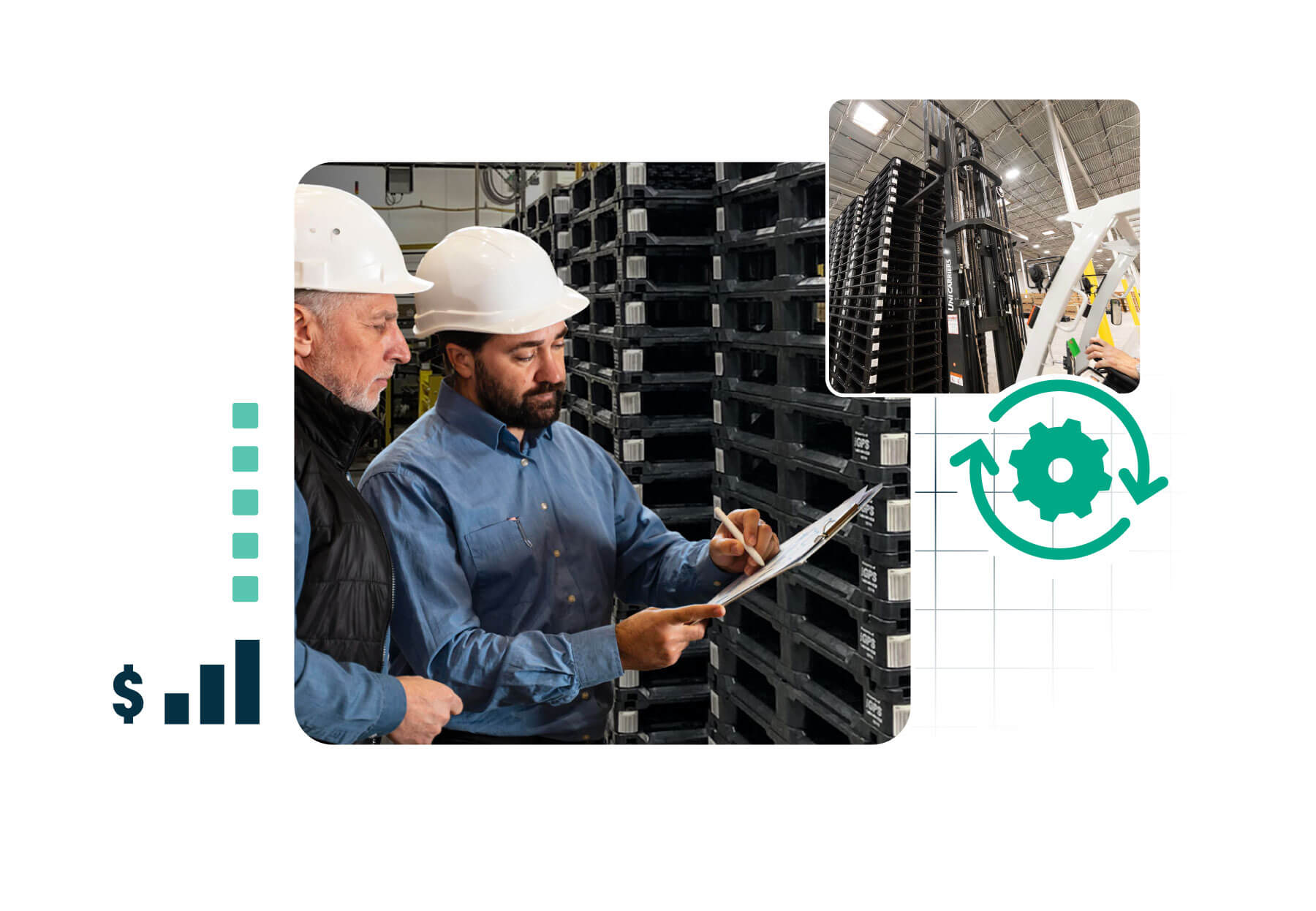
Because iGPS operates a pooled network, pallets move through a managed system. The provider handles delivery, retrieval, cleaning, repair, and recycling. That reduces the need for internal pallet management and improves consistency across facilities.
The result is a combination of physical standardization and digital traceability. Teams know what they are receiving, where it came from, and where it is going next.
Conclusion
Most supply chains don’t have a tracking problem. They have a control problem.
Pallets move across facilities and handoffs where visibility drops. Without consistent tracking, teams rely on assumptions instead of data.
RFID works because it fits how operations run. It captures movement at defined points without slowing the flow. When paired with standardized plastic pallets, scan reliability improves and data becomes usable.
Pallet pooling strengthens that system. It combines consistent pallets, embedded tracking, and a managed network. That reduces variability and removes the need for internal pallet management.
At that point, tracking is built into the operation. Visibility supports decisions, but control is what drives cost savings and performance.
FAQs
How to keep track of pallets?
Use a tracking system that assigns a unique ID to each pallet and captures scan events at key points. RFID-based systems reduce manual work and improve accuracy compared to paper or basic barcode methods.
What are common logistics tracking tools?
Common tools include RFID systems, barcode scanners, GPS trackers for high-value shipments, and IoT-based tracking platforms. Most operations combine these tools with warehouse management systems for better visibility and control.
Where do pallets typically get lost in the supply chain?
Pallets are most often lost during handoffs between facilities, at customer locations, or in staging areas where tracking processes are inconsistent. Gaps in scanning and lack of visibility across locations make it difficult to identify where they stop moving.
What causes pallet tracking systems to fail?
Tracking systems usually fail due to inconsistent scan points, missed manual scans, or lack of integration with existing warehouse systems. Without defined processes, even strong technology will produce incomplete data.
How do you measure the ROI of a pallet tracking system?
ROI is measured by reductions in pallet loss, lower replacement purchases, and less labor spent on reconciliation. Teams also see gains in operational efficiency through faster handling and fewer disruptions. Most value comes from improving control across the network, not just reducing replacement cost.
Why does pallet standardization matter for tracking accuracy?
Standardized pallets improve tracking by ensuring consistent dimensions, durability, and tag placement. This leads to more reliable scans and cleaner data across facilities. Inconsistent pallet quality can create missed reads and gaps in tracking data.
What should you look for in a pallet tracking system?
Look for systems that integrate with existing warehouse management platforms, capture data without disrupting workflow, and provide consistent visibility across locations. Reliability and ease of use matter more than adding new layers of complexity.
Companies working to improve tracking and reduce operational friction choose iGPS plastic pallets for consistent performance and built-in traceability. Embedded RFID and a managed pool help maintain visibility without added internal handling. For more information, contact us at 1-800-884-0225, email a specialist at switch@igps.net, or visit our contact page.