Key Takeaways
- Watermelons act as a stress test for produce distribution networks because they combine heavy loads, seasonal demand spikes, food safety requirements, refrigerated transportation, and limited tolerance for product damage.
- Reliable pallet availability can be as important as pallet performance during seasonal demand surges.
- During peak season, reducing variability often becomes more valuable than simply increasing capacity.
- Plastic pallets support more consistent handling, sanitation, and transportation performance across produce networks.
- Food safety, transportation efficiency, and product protection are closely connected; pallet performance can influence all three.
- Pallet pooling programs help produce shippers manage seasonal demand while reducing the costs and administrative burden associated with pallet ownership.
Watermelon transportation places unique demands on grocery distribution networks.
According to USDA data on watermelon consumption and availability (USDA ERS: Watermelon Consumption and Availability), Americans consume more watermelon than any other melon, with roughly 14 to 15 pounds available per person each year, making it one of the most widely available fresh fruits in the United States, ranking behind only bananas and apples. In 2024, U.S. growers produced approximately 3.7 billion pounds of watermelons. Much of that volume moves through the supply chain during the summer growing season, creating significant demands on transportation, warehousing, and distribution networks.
Watermelons act as a stress test for produce distribution networks because watermelon transportation combines many of the challenges logistics teams face simultaneously: heavy loads, seasonal volume spikes, food safety requirements, refrigerated transportation, and limited tolerance for product damage. For growers, distributors, and retailers, those challenges carry direct financial consequences. Product damage, transportation delays, rejected shipments, and inefficient handling can quickly increase costs during a season when large volumes must move through the network in a relatively short period of time.
In 2026, produce shippers continue to face rising transportation costs, labor constraints, tighter food safety expectations, and increasing pressure to reduce waste. When distribution networks are moving high volumes at peak speed, even small operational inefficiencies can become costly.
Given the volume of watermelons moving through the supply chain each summer, pallet selection and pooling strategies can influence far more than load movement. They affect product protection, sanitation, transportation efficiency, asset visibility, and the ability to maintain consistent operations during periods of peak demand.
Why Watermelon Transportation Creates Unique Logistics Challenges
Peak watermelon season creates several operational challenges:
| Watermelon Distribution Challenge | Operational Impact |
|---|---|
| High seasonal volume | Large quantities move through distribution networks in a short period of time. |
| Product damage risk | Damaged fruit creates waste, claims, and additional handling. |
| Food safety requirements | Produce supply chains operate under strict sanitation and traceability expectations. |
| Transportation constraints | Peak demand places pressure on labor, equipment, and truck capacity. |
| Limited room for delays | Seasonal products depend on fast, reliable movement through the supply chain. |
When facilities are moving thousands of additional pallets each week, consistency becomes increasingly important. Small inefficiencies that go unnoticed during slower periods can quickly become costly during peak produce season.
Why Plastic Pallets Are Better Than Wood Pallets for Watermelon Transportation
The same characteristics that make watermelons challenging to move—high weight, seasonal volume spikes, food safety requirements, and refrigerated storage—also place greater demands on the pallet supporting the load. Many produce shippers choose plastic pallets because they provide consistent performance across transportation, warehousing, and retail distribution while helping reduce variability during peak season operations.
| Watermelon Transportation Challenge | How Plastic Pallets Help |
|---|---|
| Heavy produce loads | Consistent dimensions support stable handling and transportation |
| Product damage risk | Smooth deck surfaces help protect packaging and improve load stability |
| Food safety requirements | Non-porous surfaces support cleaning and sanitation programs |
| FSMA compliance initiatives | Supports traceability and standardized food safety procedures |
| Moisture exposure | Does not absorb liquids or degrade in wet environments |
| Refrigerated storage | Maintains consistent performance in cold chain operations |
| Rising transportation costs | Lower weight can improve trailer efficiency and reduce fuel consumption |
| Network visibility needs | Embedded RFID supports pallet identification and movement tracking |
Consistent Dimensions Improve Handling and Transportation
A trailer loaded with watermelons can carry tens of thousands of pounds of product.
Plastic pallets maintain consistent dimensions throughout their service life, helping support stable load building, predictable trailer loading, and reliable handling from packing facilities to retail distribution centers. During peak season, that consistency helps reduce the handling exceptions that can slow product movement.
Reduced Product Damage During Transportation
Consumers expect a watermelon to arrive exactly as it left the field.
Unlike many grocery products, watermelons do not have a box, carton, or protective package hiding transportation damage. The fruit itself is the package. A crack, puncture, or impact mark can quickly turn a sellable product into waste.
Plastic pallets provide consistent deck support without exposed nails, broken boards, or deck gaps that can affect load stability. For produce shippers moving large seasonal volumes, reducing pallet-related handling issues can help minimize product loss, retail claims, and unnecessary rework.
Improved Food Safety and Sanitation
Fresh produce distribution systems operate under strict food safety requirements, and watermelons often move through fields, packing facilities, refrigerated storage, distribution centers, and retail environments before reaching consumers.
Plastic pallets support food safety and sanitation efforts in several ways:
- Easy to clean and sanitize: Non-porous surfaces can be washed between uses and do not absorb moisture.
- Supports FSMA initiatives: Consistent handling assets can help support preventive controls, sanitation procedures, traceability efforts, and audit requirements.
- Resistant to contamination: Plastic pallets do not generate splinters, loose boards, or wood debris that can create housekeeping concerns in produce facilities.
- Moisture resistant: Plastic pallets are impervious to liquids, making them well suited for washing operations, refrigerated storage, and other environments where water exposure is common.
- Pest resistant: Unlike porous materials, plastic pallets do not provide places for insects or pests to harbor within the pallet structure.
Reliable Performance in Refrigerated Produce Environments
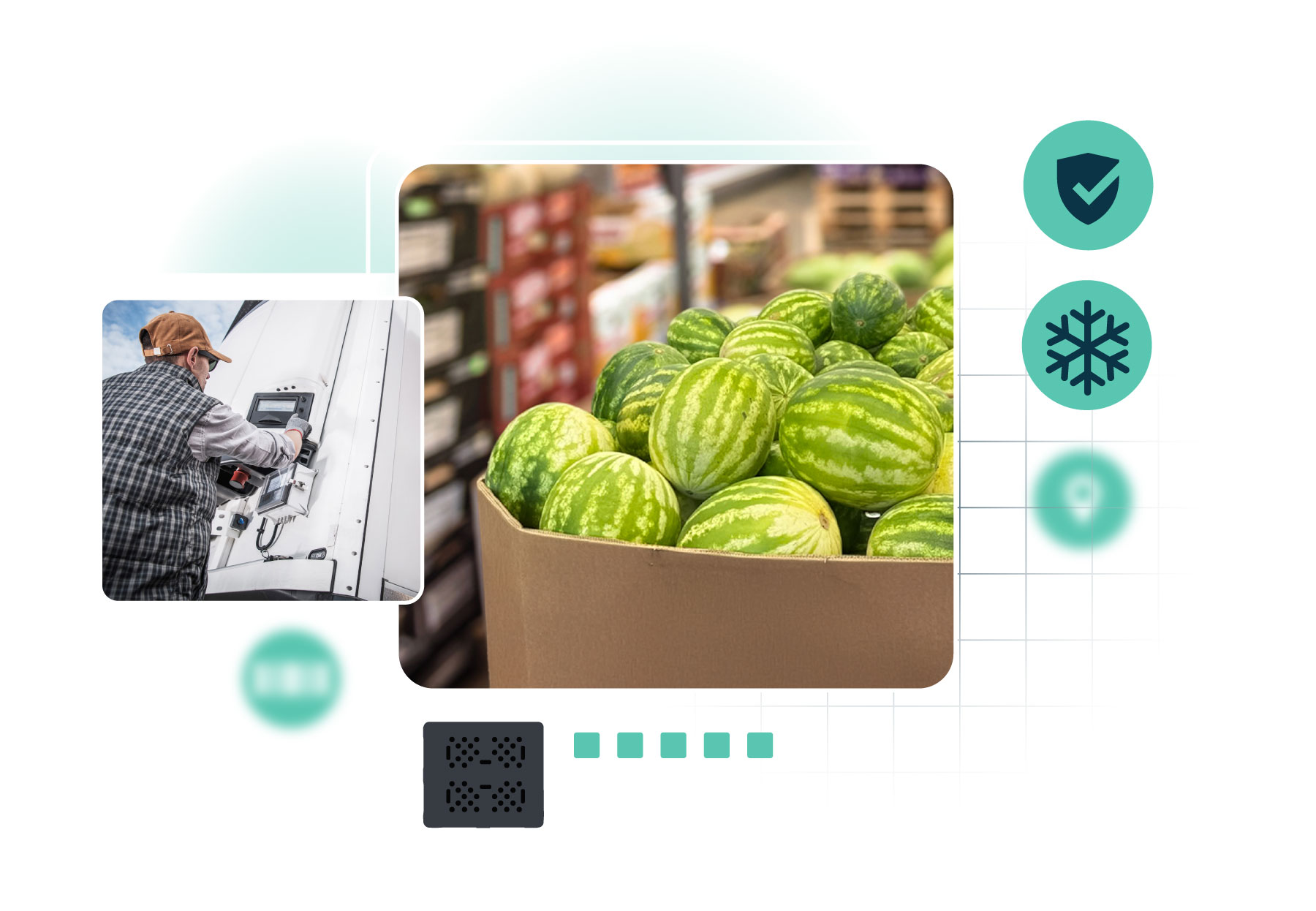
Most watermelons spend at least part of their journey in the cold chain.
Plastic pallets maintain consistent dimensions in refrigerated storage and transportation environments and do not absorb water during use. That reliability helps support efficient handling as product moves between coolers, trailers, and distribution facilities.
Lower Transportation Weight and Fuel Costs
Peak watermelon season creates one simple objective: move as much product as possible without increasing transportation costs.
Lighter pallet weight helps support that goal.
Potential transportation benefits include:
- More trailer capacity available for product
- Reduced gross shipment weight
- Improved trailer utilization
- Fuel savings across high-volume seasonal shipments
RFID-Enabled Tracking and Asset Visibility
Watermelons do not arrive in a protective carton or box that hides damage or handling issues. The fruit itself is the product, making visibility throughout transportation and distribution especially important.
When millions of pounds move through the network in a matter of weeks, RFID data can help support:
- Pallet identification and traceability
- Movement history across the distribution network
- Asset visibility during peak shipping periods
- More efficient pallet and inventory management
Better visibility can help produce shippers identify bottlenecks, improve pallet utilization, and keep product moving efficiently during peak season.
How Pallet Pooling Supports Seasonal Produce Networks
Pallet pooling allows companies to rent reusable pallets from a shared network instead of purchasing and managing their own pallet fleet. For seasonal produce shippers, pooling can simplify operations during peak harvest periods while reducing the administrative burden associated with pallet ownership.
| With Pallet Ownership | With Pallet Pooling |
|---|---|
| Purchase pallets | Access pallets as needed |
| Store empty inventory | Provider manages network supply |
| Retrieve pallets from customers | Provider manages recovery |
| Coordinate repairs | Provider manages maintenance |
| Handle recycling and disposal | Provider manages end-of-life recycling |
Why Produce Shippers Use Pooling Programs
Seasonal commodities such as watermelons can create significant swings in pallet demand. Pooling programs help companies manage those fluctuations while reducing the operational burden associated with pallet ownership.
- Reliable pallet availability during peak season: Access additional pallets during harvest and shipping surges without maintaining excess inventory year-round.
- Consistent quality across locations: Standardized inspection, cleaning, and maintenance programs help ensure uniform pallet performance throughout the network.
- Reduced empty pallet management: Providers handle retrieval and redistribution activities, reducing transportation and storage requirements.
- Simplified repair and recycling: Collection, inspection, cleaning, repair, and end-of-life recycling are managed by the pooling provider.
- Supports circular supply chain goals: Reusable pallets remain in service for multiple trips before being recycled and returned to productive use.
Conclusion
Watermelon transportation highlights a broader reality facing grocery logistics: variability becomes more expensive as volume increases.
During peak season, distribution networks must move large quantities of product while maintaining food safety standards, controlling transportation costs, and minimizing waste. The pallet supporting those shipments influences far more than load movement. It affects product protection, sanitation, trailer utilization, operational consistency, and asset visibility across the network.
For many produce shippers, the decision to use plastic pallets and pallet pooling programs is less about the pallet itself and more about creating a more predictable transportation and distribution system during peak watermelon season. As labor, transportation, and food safety pressures continue to increase, reducing operational variability often becomes one of the most effective ways to improve performance throughout the distribution process.
FAQs
Why are plastic pallets commonly used for watermelon transportation?
Many produce companies use plastic pallets for watermelon transportation because they provide consistent dimensions, support food safety programs, resist moisture exposure, and help reduce product damage during transportation and handling.
How do plastic pallets perform compared to wood pallets during peak produce season?
Peak produce season makes pallet consistency more important. Plastic pallets maintain uniform size and shape, resist moisture, and do not shed wood debris or splinters.
Compared with wood pallets, plastic pallets can support cleaner handling, more predictable trailer loading, and fewer pallet-related exceptions when facilities are moving high volumes through the network.
Why are plastic pallets better for cold chain watermelon logistics?
Cold chain operations depend on consistent handling performance from loading dock to store delivery. Plastic pallets do not absorb moisture and maintain consistent dimensions in refrigerated environments, helping support stable loads throughout transportation and storage.
For watermelon shippers, that reliability can help reduce handling issues while supporting efficient product movement through coolers, refrigerated trailers, and distribution centers.
How does RFID tracking on plastic pallets improve watermelon supply chain visibility?
During peak watermelon season, RFID-enabled pallets create movement records when scanned at designated read points. This visibility helps organizations support traceability, improve asset management, and track pallet movement across packing facilities, distribution centers, and retail networks.
Why do many produce companies rent pallets instead of owning them?
Produce volumes rise and fall quickly during harvest season. Owning enough pallets for peak demand can leave companies storing, tracking, and maintaining excess pallets during slower periods.
Pallet pooling gives produce shippers access to pallets when volume increases. The pooling provider manages delivery, retrieval, inspection, cleaning, repair, and recycling, reducing the work required to manage an internal pallet fleet.
What are the benefits of pallet pooling for seasonal produce shippers?
Pooling provides access to pallets when demand increases, reduces empty pallet storage requirements, simplifies recovery and repair activities, and helps maintain consistent asset quality across distribution networks.
How much money can watermelon distributors save with plastic pallets?
The savings depend on shipping volume, transportation distances, damage rates, and pallet management costs. Many produce shippers evaluate plastic pallets based on total cost of business rather than pallet price alone.
Areas that may contribute to savings include reduced product damage, lower transportation weight, fewer equipment disruptions, reduced housekeeping requirements, and elimination of pallet repair expenses through pooling programs.
Peak watermelon season leaves little room for product damage, transportation delays, or inconsistent pallet performance. Learn how iGPS pooled plastic pallets help produce shippers improve food safety, transportation efficiency, and operational consistency across their distribution network. Talk with an iGPS pallet specialist at 1-800-884-0225 or switch@igps.net