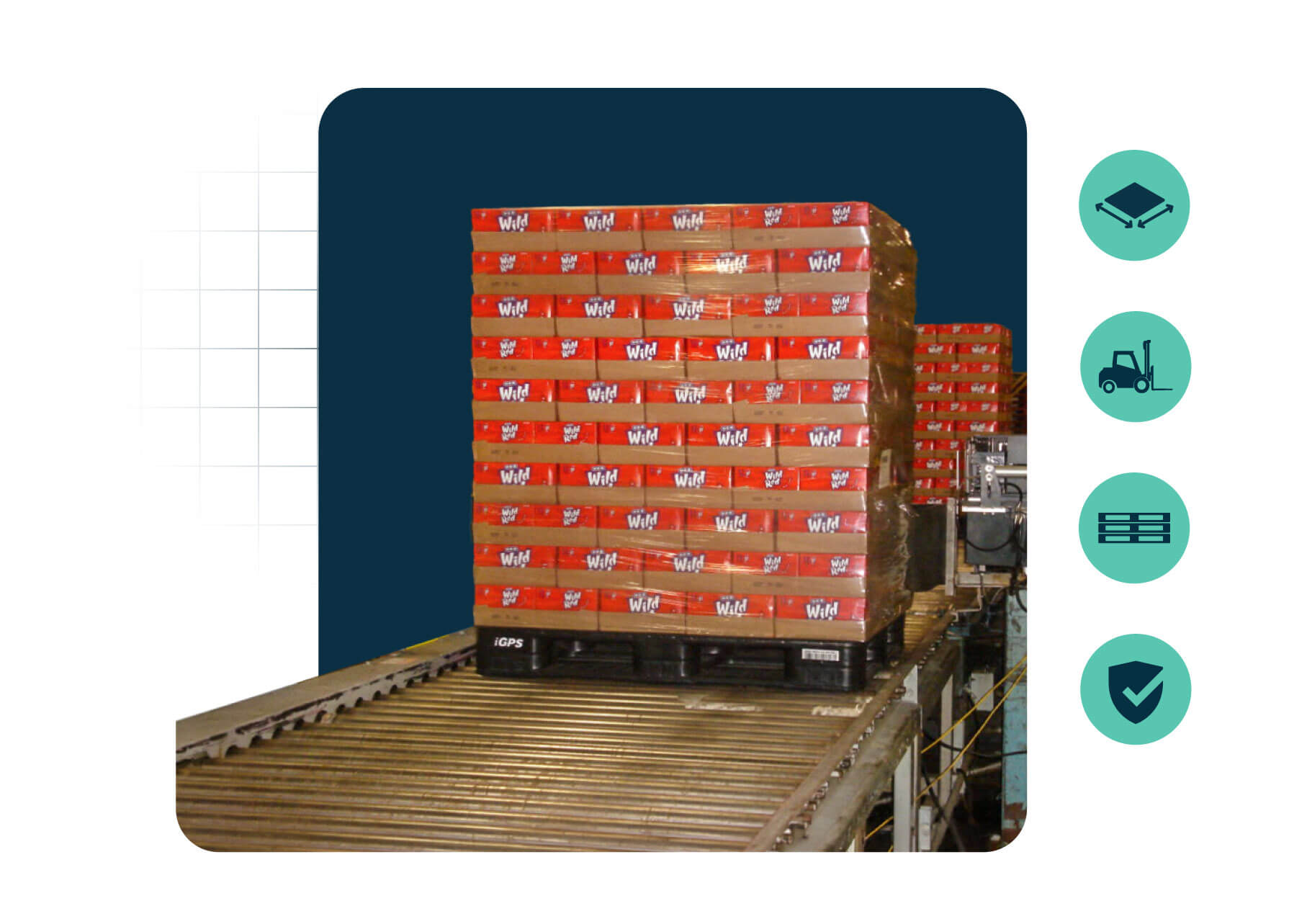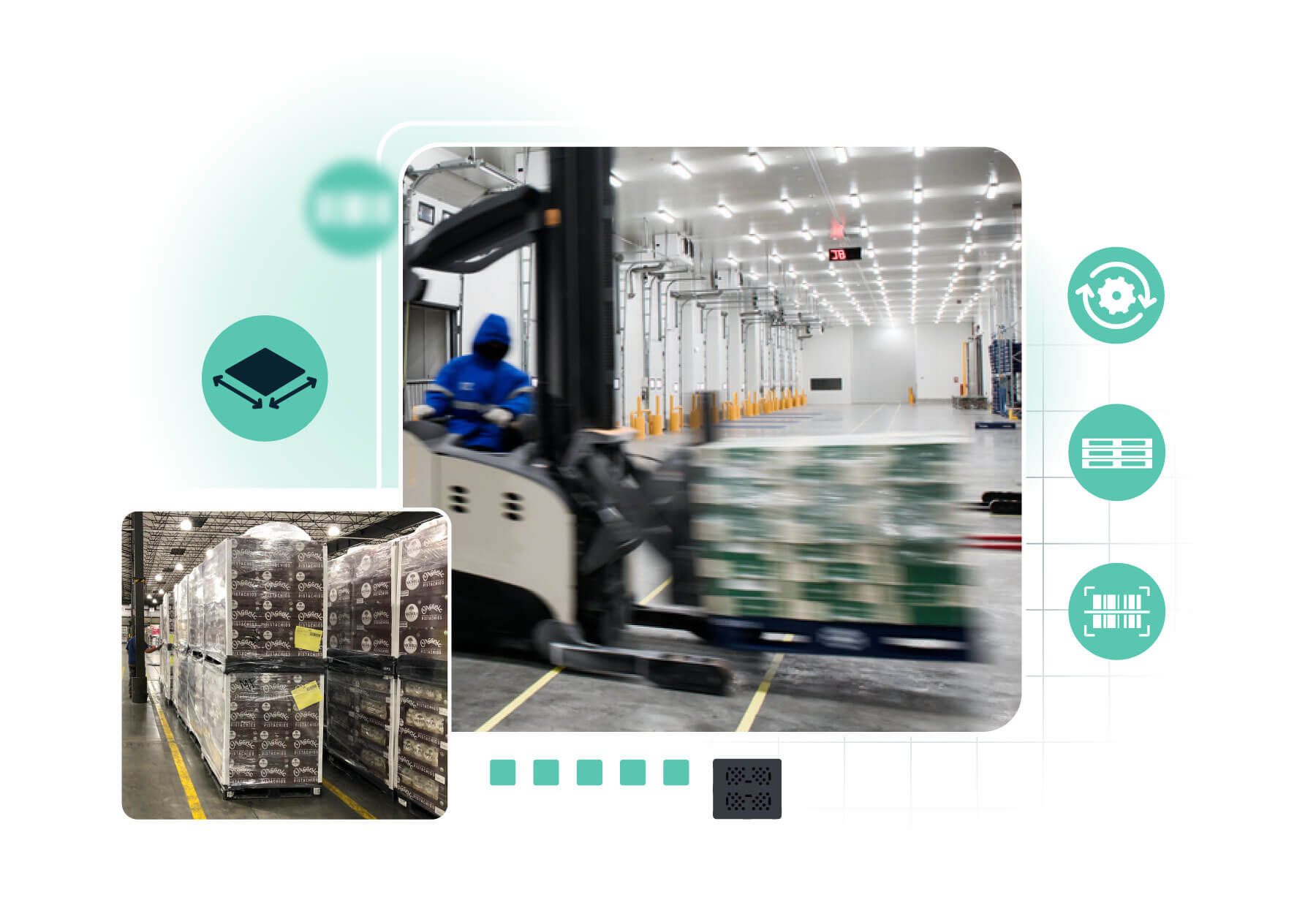
The weight of a pallet influences far more than how much a shipment weighs. It affects trailer capacity, warehouse operations, automation, transportation planning, and ultimately the total cost of moving products through the supply chain. While many organizations focus on finding the average weight of a standard pallet, experienced supply chain teams know that the greater operational advantage often comes from consistency.
Small differences in pallet weight may seem insignificant on a single shipment. Across large distribution networks, however, those differences can create additional planning, handling, and operational complexity.
Key Takeaways
- Standard pallets can weigh anywhere from about 20 to more than 300 pounds, depending on their material and construction.
- GMA wood pallets typically weigh 35–70 pounds, but wood pallets naturally vary in weight throughout their service life due to moisture, repairs, and wear.
- Across large distribution networks, consistency often has a greater operational impact than the weight of any individual pallet.
- More consistent pallet weight supports transportation planning, warehouse efficiency, automation, and lower Total Cost of Business.
- Plastic pallet pooling helps standardize pallet performance by reducing variability across the supply chain.
Pallet Weight Breakdown by Type and Material
According to the American Transportation Research Institute, the average cost to operate a truck exceeded $2.25 per mile in 2024, reinforcing why transportation planning and operational efficiency remain priorities for supply chain organizations.
Every pound in a shipment contributes to transportation costs, including the pallets supporting the load. The weight of a pallet depends largely on the material it’s made from and how it’s constructed. While the size of the pallet plays a role, two platforms with the same dimensions can have very different weights because of their design, material, and intended use.Understanding how much different pallet types weigh helps manufacturers, distributors, and retailers make better transportation, warehouse, and automation decisions.
| Pallet Type | Common Dimensions | Typical Empty Weight | Typical Dynamic Load Capacity* | Common Applications |
|---|---|---|---|---|
| North American Wood (GMA) | 48 × 40 in. | 35–70 lb | Up to 2,500 lb | Grocery, retail, consumer goods |
| European Wood (EUR/EPAL) | 1200 × 800 mm | 55–70 lb | Up to 3,300 lb | European distribution, manufacturing |
| Presswood | Varies | 20–45 lb | Varies by design | Export shipments, one-way distribution |
| Plastic | 48 × 40 in. | 40–60 lb | Up to 5,000 lb (varies by model) | Food, beverage, pharmaceutical, automation |
| Metal (Steel/Aluminum) | Varies | 100–300+ lb | Often 4,000+ lb | Heavy manufacturing, aerospace, military |
*Actual weight limits and dynamic load capacities vary by manufacturer, pallet design, and intended application.
North American Wood (GMA) Pallets
The 48 × 40-inch GMA pallet is the most common pallet used throughout North America. It is widely used in grocery, retail, consumer goods, and general distribution.
- Typical weight: 35–70 lb (16–32 kg)
- Common dimensions: 48 × 40 in.
- Construction: Stringer or block design using hardwood or softwood
- Typical applications: Grocery, retail, consumer goods, warehouse distribution
- Key consideration: Weight can vary based on wood species, moisture content, repairs, and manufacturer.
A Note About GMA Wood Pallet Designs
Most North American GMA pallets are manufactured as either stringer pallets or block pallets. While both typically measure 48 × 40 inches, their construction affects both empty weight and load capacity.
| Stringer Pallet | Block Pallet | |
|---|---|---|
| Typical weight | 35–50 lb | 65–75 lb |
| Support structure | Three longitudinal stringers | Nine support blocks |
| Forklift access | Two-way or partial four-way | Full four-way |
| Common applications | General warehousing, retail distribution | Heavy-duty distribution, manufacturing, automation |
Block pallets typically weigh more because they use additional structural components. Choosing between the two designs depends on load capacity, handling requirements, and transportation efficiency.
European Wood (EUR/EPAL) Pallets
EUR/EPAL pallets are standardized wooden pallets commonly used across Europe. Their consistent dimensions simplify handling throughout European supply chains.
- Typical weight: 55–70 lb (25–32 kg)
- Common dimensions: 1200 × 800 mm (47.2 × 31.5 in.)
- Construction: Standardized wood block design
- Typical applications: European manufacturing, transportation, export logistics
- Key consideration: Like other wood pallets, weight may change over time due to moisture absorption and repairs.
Presswood pallets
Presswood pallets are manufactured by compressing wood fibers into a molded, one-piece structure. Their lightweight design and nestability make them a common choice for one-way shipments and exports.
- Typical weight: 20–45 lb (9–20 kg)
- Common dimensions: Vary by manufacturer
- Construction: Molded compressed wood fibers
- Typical applications: Export shipments, one-way distribution, air freight
- Key consideration: Their lighter weight helps reduce transportation costs, but typically comes with lower load capacities than heavy-duty wood or plastic pallets.
Plastic Pallets
Plastic pallets are commonly used in food, beverage, pharmaceutical, retail, and automated distribution environments. While weights vary by design, heavy-duty rackable models typically weigh around 50 pounds, while providing consistent dimensions and load performance.
- Typical weight: 40–60 lb (18–27 kg)
- Common dimensions: Most commonly 48 × 40 in.
- Construction: HDPE or other molded plastics
- Typical applications: Food and beverage, pharmaceutical, retail, automation
- Key consideration: Because plastic does not absorb moisture, its empty weight remains consistent throughout its service life, helping support more predictable transportation planning and automated handling.
Metal Pallets
Steel and aluminum pallets are designed for demanding industrial applications where strength and durability are the primary requirements.
- Typical weight: 100–300+ lb (45–136+ kg)
- Common dimensions: Vary by application
- Construction: Steel or aluminum
- Typical applications: Automotive, aerospace, military, chemical manufacturing
- Key consideration: Their high weight provides exceptional durability but can increase handling and transportation costs.
Factors Influencing Pallet Weight
The weight of a pallet is determined by more than its dimensions. Two pallets with the same footprint can have very different empty weights depending on their material, construction, and intended application. Understanding these factors helps companies select a pallet that supports their products, handling equipment, transportation requirements, and warehouse operations.
Several factors influence pallet weight:
| Factor | How It Affects Weight |
|---|---|
| Material | Metal weighs more than plastic; hardwood weighs more than softwood. |
| Construction | Block pallets generally weigh more because they use additional structural components. |
| Dimensions | Larger platforms generally require more material. |
| Load capacity | Designs intended to support heavier loads often require additional reinforcement, increasing pallet weight. |
| Manufacturing | Board thickness and fastener quantity vary by manufacturer. |
| Repairs | Repairs can increase weight as replacement boards and structural components are added. |
No single factor determines the right pallet for every operation. Most organizations evaluate pallet weight alongside load capacity, durability, warehouse compatibility, transportation efficiency, and long-term operating costs.
These factors influence more than the weight of an individual pallet. Transportation planners rely on accurate pallet weights when estimating trailer capacity, while warehouse teams depend on predictable pallet characteristics for efficient forklift handling, storage, and product flow. Together, those small decisions affect how efficiently products move through the distribution network.
Small differences may seem insignificant when handling a single pallet, but they become more meaningful across hundreds or thousands of shipments moving through a distribution network. Reducing variability at the pallet level helps create more consistent transportation planning, warehouse operations, and automated handling throughout the supply chain.
Main Reasons Why Wood Pallet Weight Changes Over Time
Unlike plastic or metal, wood is a natural material that continues to change throughout its service life. Moisture, repairs, and normal wear can all affect a wood pallet’s empty weight over time. As a result, two pallets with the same dimensions may not weigh the same, even if they were originally manufactured to similar specifications.
Several factors contribute to these changes:
| Reason | Operational Impact |
|---|---|
| Moisture absorption | Increases or decreases empty weight as humidity and storage conditions change. |
| Repairs | Adds replacement boards and components that increase weight over time. |
| Different wood species | Hardwood and softwood pallets begin with different baseline weights. |
| Manufacturing differences | Board thickness and construction methods vary between manufacturers. |
| Age and wear | Repeated handling, repairs, and environmental exposure change pallet condition over time. |
Unlike changes in pallet dimensions, these weight changes are often difficult to identify during day-to-day operations, making consistency more challenging to maintain across large pallet fleets.
Individually, these changes may seem minor. Across a distribution network, however, they create variability that can affect trailer weight estimates, warehouse planning, and automated material handling. Over time, maintaining more consistent pallet weights helps simplify operations and improve planning across the supply chain.
Why Consistent Pallet Weight Matters Across the Supply Chain
The exact weight of a pallet is important, but the consistency of that weight often has a greater impact on day-to-day operations. When pallets perform predictably from shipment to shipment, warehouse workflows become easier to manage. Across large distribution networks, reducing variability often has a greater operational impact than reducing the weight of any individual pallet.
| Area of Operation | Why Consistency Matters |
|---|---|
| Transportation planning | Improves trailer weight estimates and load planning. |
| Warehouse operations | Supports more predictable handling, staging, and storage. |
| Automation | Helps conveyors, AS/RS, and robotic systems process loads more consistently. |
| Labor planning | Reduces variability during manual handling and material movement. |
| Cost management | Improves forecasting for transportation and operational expenses. |
Transportation and warehouse planning
Transportation planners rely on accurate pallet weights when estimating trailer capacity and shipment weight. Warehouse teams also benefit from predictable pallet characteristics that support consistent forklift handling, staging, and product flow. While a difference of a few pounds may seem insignificant on a single shipment, that variability becomes more noticeable across hundreds or thousands of pallet movements.
Automation and network standardization
Automated storage and retrieval systems, conveyors, and robotic palletizing equipment are designed to process standardized loads. Consistent pallet dimensions and weight help reduce unnecessary variability, allowing products to move more smoothly throughout the facility. Across multi-site distribution networks, standardizing pallet performance also simplifies planning and helps create more consistent operations from one location to the next.
Total Cost of Business
The impact of pallet weight extends beyond transportation costs. Variability can influence trailer utilization, warehouse throughput, equipment utilization, labor planning, and automation performance. Individually, these effects may be small. Across thousands of shipments each year, however, they contribute to the Total Cost of Business by increasing operational complexity and making planning less predictable.
Many organizations address this challenge by choosing pallet systems designed to deliver consistent performance over time. Plastic pallets maintain a consistent empty weight because they do not absorb moisture, and their dimensional reliability supports facility operations. Companies using pallet pooling systems also gain an additional level of consistency through standardized inspection, repair, and quality management processes that help ensure pallets throughout the network meet defined performance standards.
For high-volume supply chains, the objective is rarely to find the lightest pallet. It’s to reduce unnecessary variability while maintaining the strength, durability, and consistency needed to move products efficiently throughout the distribution network.
Conclusion
Knowing the weight of a standard pallet is useful, but understanding how pallet weight affects supply chain performance is even more valuable. Transportation planning, warehouse operations, automation, and cost management all benefit when pallets perform consistently from one shipment to the next.
Plastic pallets and pallet pooling can help reduce unnecessary variability by providing consistent dimensions, stable empty weight, and standardized quality management throughout the pallet’s service life. Together, these characteristics support more predictable transportation planning, warehouse workflows, and automated material handling across the supply chain.
The objective isn’t simply to choose the lightest pallet. It’s to select a pallet system that delivers the strength, consistency, and long-term performance needed to move products efficiently while helping reduce the Total Cost of Business. The most efficient supply chains aren’t built around the lightest pallet—they’re built around the most predictable one.
FAQs
How much does a pallet weigh in kg?
Pallets can weigh anywhere from about 9 to more than 136 kilograms, depending on their material, size, and construction. A standard North American wood pallet generally weighs 16–32 kg, while a typical EUR/EPAL pallet weighs about 25 kg. Heavy-duty plastic models often weigh around 23 kg. Metal platforms can weigh 45 kg or more.
Can a pallet weigh 32kg?
Yes. A pallet weighing 32 kg is approximately 70.5 pounds, which falls within the normal range for many wood block and heavy-duty wooden pallets. Its exact weight depends on the wood species, moisture content, construction, and repairs. The empty weight alone does not determine how much the pallet can safely carry; load capacity must come from the manufacturer’s specifications.
What are the benefits of using plastic pallets when it comes to pallet weight?
Plastic pallets are lighter than many comparable wood block models and maintain a consistent empty weight because they do not absorb moisture. That consistency supports more accurate load planning, transportation estimates, and automated handling. Heavy-duty plastic pallets can also combine a weight of around 50 pounds with high load capacities, reducing the need to choose between a lighter platform and dependable performance.
Why does the weight of a wood pallet change over time?
Wood is porous, so it absorbs and releases moisture as humidity and storage conditions change. Repairs can also add replacement deck boards, blocks, stringers, and fasteners. Differences in wood species, wear, and exposure to rain or damp environments create further variation. As a result, two wood pallets with the same dimensions may have different empty weights.
Are hardwood pallets worth the extra weight for general use?
Hardwood pallets can be a good fit for heavy loads or applications that require greater structural strength. For general use, the additional weight may increase transportation and manual handling requirements without providing a necessary benefit. The right choice depends on load capacity, handling equipment, trip frequency, storage conditions, and cost rather than material alone.
How does pallet weight affect shipping costs?
The weight of an empty pallet contributes to the total shipment weight. While the difference of a few pounds may seem small, it can add up across hundreds or thousands of pallets moving through a distribution network. Consistent pallet weight also improves trailer weight estimates and transportation planning. For many organizations, the goal is to balance pallet weight, load capacity, durability, and overall operating costs rather than simply selecting the lightest option.
Is the lightest pallet always the best choice?
Not necessarily. A lighter pallet may reduce transportation weight, but it also needs to provide the load capacity, durability, and consistency required for the application. Many supply chain teams evaluate pallet performance based on total operating costs, compatibility with material handling equipment, and long-term reliability rather than weight alone.
Supply chain performance depends on more than the weight of a single pallet. It depends on consistent pallet performance across every shipment, facility, and distribution center. iGPS plastic pallet pooling helps support that goal with standardized HDPE pallets, embedded RFID technology, and professionally managed pallet services that help reduce operational variability throughout the supply chain. To learn how iGPS can help improve transportation planning, warehouse operations, and network consistency, call 1-800-884-0225, email switch@igps.net, or visit our contact page.