End-of-line automation can help manufacturers increase throughput, reduce manual handling, and lower operating costs. But how do you know whether the investment will deliver the expected return?
Calculating end-of-line automation ROI requires more than comparing equipment costs with projected labor savings. Actual throughput, downtime, maintenance, and material handling reliability all affect the financial outcome.
Unexpected expenses and handling interruptions can quickly change the financial picture, making realistic operating assumptions essential to evaluating an automation investment.
Key Takeaways:
- End-of-line automation ROI depends on actual throughput, equipment uptime, and measurable operating savings.
- Total investment costs include equipment, installation, integration, training, maintenance, and ongoing operating expenses.
- Accurate ROI calculations account for realized savings, recurring costs, and the time required to recover the investment.
- Consistent pallet dimensions and quality help reduce handling interruptions that can affect automated equipment performance.
- Pallet pooling shifts responsibility for maintaining pallet quality standards to the provider, supporting more reliable automated handling.
What Is End-of-Line Automation
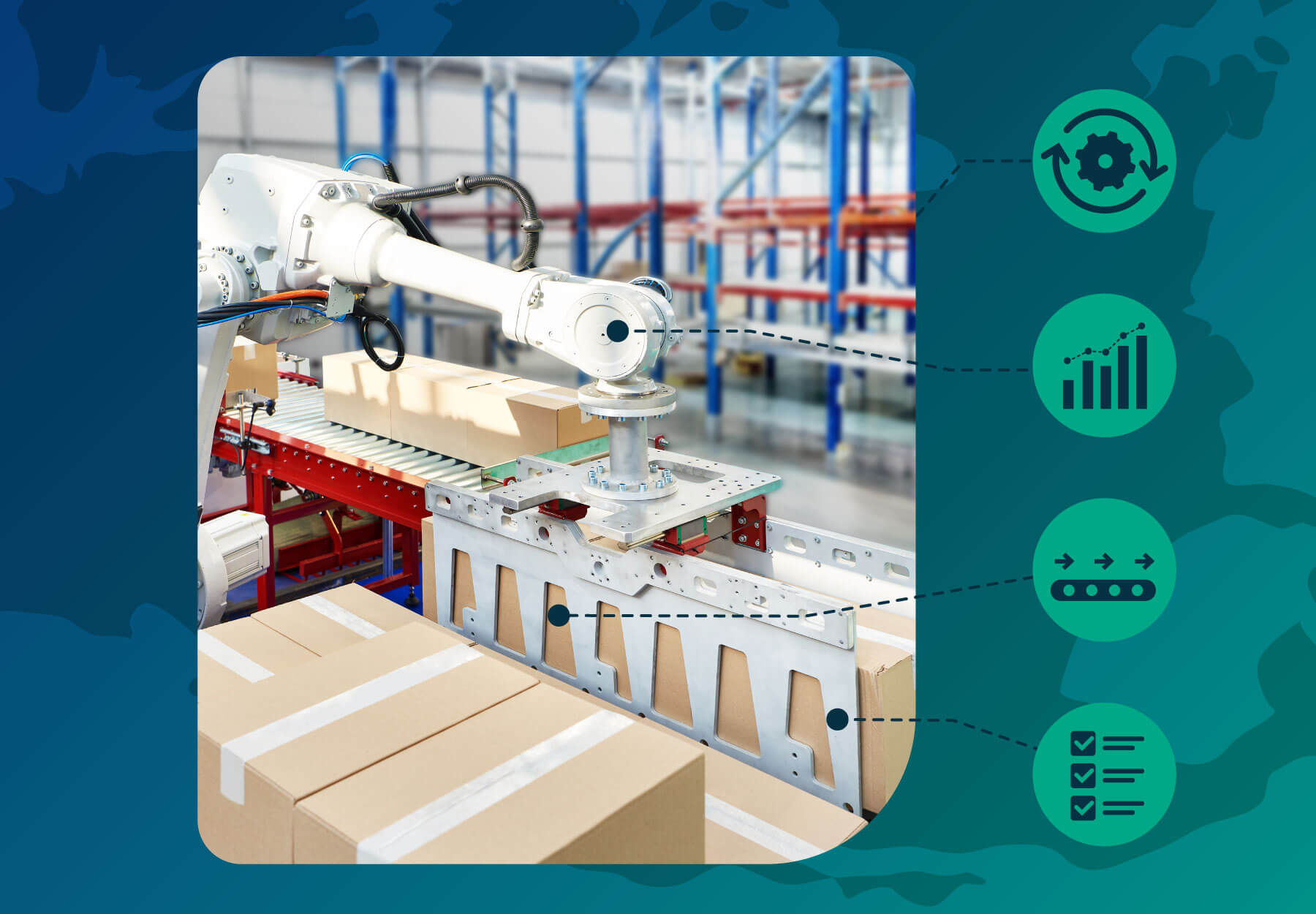
End-of-line automation uses equipment to handle the final stages of production, including case packing, labeling, palletizing, and stretch wrapping. These systems prepare finished products for storage or shipment while improving throughput, reducing manual handling, and maintaining consistent packaging.
The return on investment (ROI) comes down to whether those improvements justify the cost. Actual returns depend on equipment performance, labor savings, and the ongoing expense of keeping the line running.
What Metrics Matter Most for End-of-Line Automation ROI?
Start by measuring how the existing line performs, then estimate what automation could improve. These metrics establish a baseline for comparing production output, labor requirements, and costs before and after installation.
| Metric | What to Measure and Why It Matters |
|---|---|
| Throughput and cycle time | Cases or pallets per hour; increased output and production capacity |
| Labor productivity | Labor hours, overtime, and staffing costs; potential savings or labor reallocation |
| OEE and downtime | Equipment availability, performance, quality, and stoppages; lost production and recovery costs |
| Product damage and waste | Damaged goods, rejected loads, and packaging waste; material and rework costs |
| Changeover time | Time between product or SKU changes; lost production capacity |
| Safety and ergonomics | Manual handling, incidents, and injury-related costs |
| Shipping accuracy | Mispacked orders, labeling errors, and chargebacks; correction and penalty costs |
Use these measurements to check whether the new equipment delivers the improvements used to justify the investment.
What Costs Should Manufacturers Include in an Automation ROI Analysis?
The cost of automation extends beyond the equipment purchase. Include installation, startup, and ongoing expenses, along with any production losses during implementation.
Equipment Purchase, Installation, and Integration
Include robotic palletizers, case packers, conveyors, controls, engineering, installation, and facility modifications. Account for any additional floor space required for equipment, pallet staging, or maintenance access.
Training, Commissioning, and Production Interruptions
Account for employee training, equipment testing, and production ramp-up. Installation may require temporary shutdowns or reduced output, while new equipment can take time to reach its planned production rate.
Workforce readiness is another consideration. PMMI research reported by OEM Magazine in 2025 found that 95% of surveyed end users struggled to find skilled operators and technicians. Include training, technical support, overtime, and other measurable startup costs.
For more on preparing equipment and employees for implementation, see these warehouse automation best practices.
Maintenance, Energy, and Technical Support
Ongoing costs include preventive maintenance, replacement parts, electricity, software updates, and technical support agreements. Include new or increased expenses in annual operating costs when calculating expected returns.
Packaging Materials and Material Handling Costs
Include changes in the cost of corrugate, stretch film, strapping, pallets, and material handling. Account for packaging waste, damaged materials, and labor required to manage supplies.
Pallet costs deserve particular attention in automated operations. Beyond purchase prices or rental fees, inconsistent pallet dimensions or damage can cause handling interruptions, rework, and additional labor that affect operating costs.
How to Calculate End-of-Line Automation ROI
Use the following steps to calculate end-of-line automation ROI and estimate how long it will take to recover the investment.
Step 1: Calculate the Total Initial Investment
Add all one-time costs associated with purchasing and implementing the equipment, including installation, engineering, integration, training, and production interruptions during startup.
Total Initial Investment = Equipment + Installation + Integration + Training + Other One-Time Costs
Step 2: Estimate Annual Operating Savings
Calculate expected savings from reduced labor hours, overtime, product damage, packaging waste, and rework. Include the financial benefit of increased throughput only when additional output can be sold, replaces another expense, or creates measurable savings.
Use actual production volumes and expected equipment utilization rather than relying on rated capacity alone.
Step 3: Subtract Recurring Operating Costs
Identify new or increased annual expenses, including maintenance, replacement parts, energy, software, and technical support.
Net Annual Savings = Annual Operating Savings − Additional Annual Operating Costs
Step 4: Calculate ROI and Payback Period
Once the initial investment and net annual savings are established, use two calculations to evaluate the investment:
- Simple Annual ROI (%) = (Net Annual Savings ÷ Total Initial Investment) × 100
- Simple Payback Period (Years) = Total Initial Investment ÷ Net Annual Savings
Annual ROI expresses net annual savings as a percentage of the initial investment. Payback estimates how long it will take those savings to recover the upfront cost.
These simplified calculations assume relatively consistent annual savings. More detailed capital investment decisions may also consider cash flow timing, equipment lifespan, and the time value of money.
Example: Calculating ROI for an Automated Palletizing Line
Consider a food manufacturer investing $400,000 in an automated palletizing line to reduce manual handling and increase production capacity. The new system is expected to process 60 pallets per hour across one eight-hour shift, 250 days per year, with labor savings from reduced manual palletizing and overtime.
| Investment and Savings | Annual or One-Time Amount |
|---|---|
| Total equipment, installation, and implementation investment | $400,000 |
| Annual labor and overtime savings | $120,000 |
| Annual savings from reduced damage and rework | $25,000 |
| Annual contribution profit from additional production | $35,000 |
| Additional annual maintenance, energy, and support costs | −$20,000 |
| Net annual savings | $160,000 |
Using these figures:
- Simple Annual ROI: ($160,000 ÷ $400,000) × 100 = 40%
- Simple Payback: $400,000 ÷ $160,000 = 2.5 years
The projected 40% annual ROI assumes the facility achieves $160,000 in net annual savings. Equipment stoppages, added labor, or lower production demand could reduce that amount and extend the 2.5-year payback period.
Example figures are hypothetical and provided for illustration.
How Do Pallet Quality and Material Handling Affect Automation ROI?
Automated equipment works best when pallets meet its handling requirements. Differences in pallet size, construction, or condition can interrupt production and create costs that weren’t included in the original ROI projection.
Pallet Consistency and Equipment Uptime
Damaged boards, protruding nails, and variations in pallet dimensions can interfere with conveyors, pallet dispensers, and robotic systems. Operators may need to clear jams, replace pallets, or restart equipment.
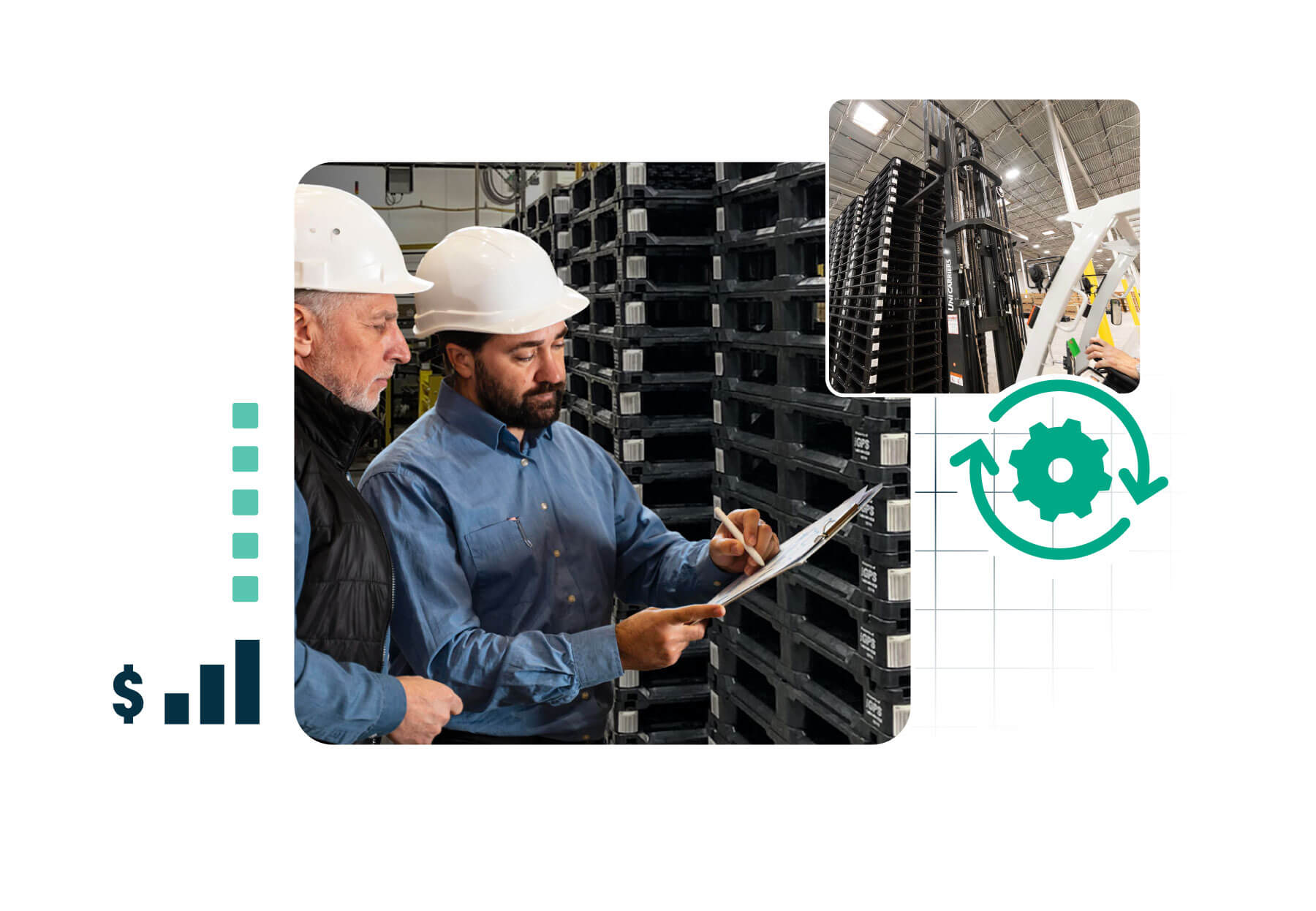
Plastic pallets have uniform dimensions, smooth surfaces, and durable construction that support automated handling. These characteristics are particularly useful in high-volume operations, including automated grocery distribution centers, where handling interruptions can slow production and increase labor requirements.
The Financial Impact of Pallet-Related Interruptions
Small production delays can add up quickly. A 2025 L2L study found that six in ten manufacturers surveyed reported annual downtime costs exceeding $250,000. While pallet-related stoppages represent only one possible cause, repeated interruptions can create measurable costs.
Returning to the food manufacturer’s automated palletizing line, even 15 minutes of pallet-related downtime per shift would affect its annual processing capacity:
- 15 minutes of pallet-related downtime per shift = 15 pallets of lost processing capacity
- 250 operating shifts annually = 3,750 pallets of potential annual capacity lost
Lost processing capacity does not automatically mean lost revenue. If the manufacturer can recover production through overtime or additional operating hours, the financial impact comes from those added expenses.
For example, assume recovering the lost production requires 15 minutes of additional operating time per shift, with incremental labor, energy, and other operating expenses totaling $200 per hour.
- Annual recovery time: 15 minutes × 250 shifts = 62.5 hours
- Annual recovery cost: 62.5 hours × $200 = $12,500
- Revised net annual savings: $160,000 − $12,500 = $147,500
- Revised simple annual ROI: ($147,500 ÷ $400,000) × 100 = 36.9%
- Revised payback period: $400,000 ÷ $147,500 = 2.7 years
Just 15 minutes of recurring downtime per shift could reduce the projected annual ROI from 40% to 36.9%, assuming the recovery expenses weren’t already included in the original calculation. Tracking these interruptions and their actual costs helps identify where projected savings may fall short.
How Pallet Pooling Supports Consistent Pallet Quality
Automated operations need pallets that meet defined size, condition, and quality requirements. With pallet pooling, the provider handles inspection, cleaning, repair, and replacement to maintain those standards across the fleet.
This reduces the time and resources manufacturers spend managing their own pallets. When comparing rental fees with ownership, include the hidden costs of pallet management, such as labor, maintenance, replacement, and inventory management.
Conclusion
A strong return on end-of-line automation starts with realistic expectations. Equipment costs, labor savings, production capacity, and ongoing expenses all factor into the calculation. The real measure of success is whether those projected savings hold up once the system is running.
That means paying attention to the everyday factors that affect performance, from equipment downtime and changeovers to packaging materials and pallet quality. Consistent inputs, reliable equipment, and accurate cost tracking help keep production on schedule and protect the return on the investment.
FAQs
What Is a Good ROI for End-of-Line Automation?
A good ROI is one that meets the manufacturer’s financial targets and justifies the investment. Acceptable returns vary based on equipment costs, production volume, utilization, operating savings, and company payback requirements. Manufacturers should compare projected ROI against realistic operating conditions and internal investment criteria.
How Long Does Payback Take for Robotic Palletizing?
Payback depends on the total investment, labor savings, production volume, equipment uptime, and ongoing operating costs. Calculate the simple payback period by dividing the initial investment by net annual savings. Higher utilization and consistent throughput can shorten payback, while downtime and additional expenses can extend it.
What KPIs Should I Track After Installing EOL Automation?
Track actual throughput, cycle time, Overall Equipment Effectiveness (OEE), unplanned downtime, labor hours, product damage, and operating costs. Compare these results with pre-installation benchmarks and projected performance to identify whether the system is delivering its expected savings.
How Do I Calculate ROI If I Can’t Reduce Headcount?
Automation can generate savings without reducing staff. Measure avoided overtime, reduced temporary labor, lower damage and rework costs, and increased production that generates additional profit or avoids other expenses. Reassigning employees to higher-value tasks can improve productivity, but only count financial benefits that can be measured and attributed to the investment.
How Does Pallet Quality Affect End-of-Line Automation ROI?
Inconsistent pallet dimensions, damaged components, or poor pallet condition can cause jams, misfeeds, and equipment stoppages. These interruptions reduce productive operating time and may increase labor and maintenance costs. Using pallets with consistent dimensions and construction helps automated systems maintain expected throughput and supports more reliable ROI projections.
Can Pallet Pooling Improve the ROI of Automated Palletizing?
Pallet pooling can support automation ROI by providing a consistent supply of pallets maintained to defined quality standards. The pooling provider handles inspection, cleaning, repair, and replacement, reducing the manufacturer’s pallet management responsibilities. Fewer pallet-related interruptions and lower management costs may improve overall operating efficiency, although the financial benefit depends on the facility’s existing costs and performance.
As manufacturers invest in increasingly sophisticated automation, pallet consistency becomes even more important to equipment performance and protecting that investment. iGPS plastic pallets provide the uniform dimensions, durability, and reliable handling that automated systems depend on, while our pooling program helps maintain those standards across the supply chain. To learn how iGPS can support your automation investments, call 1-800-884-0225, email switch@igps.net, or visit our contact page.